
Their potential joint patrols along Finland and the Baltic States’ borders with Russia could become a permanent fixture of the post-war European security architecture.
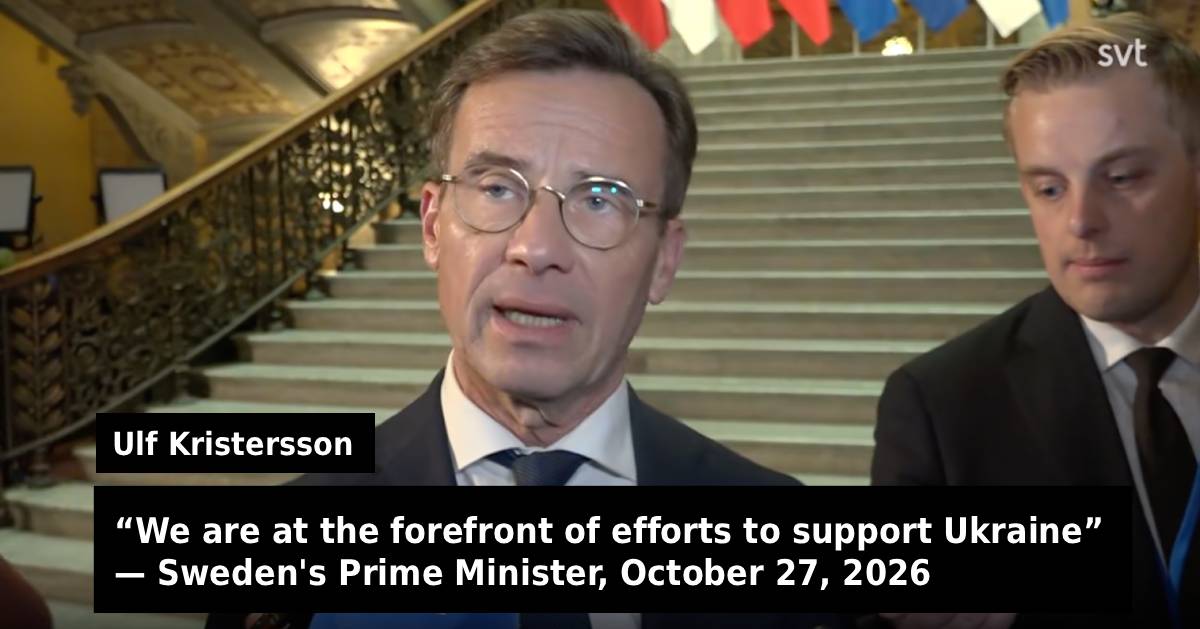
By Andrew Korybko on Substack Oct 27, 2026 | Photo: SVT.se, Oct 27, 2026
Sweden’s late-September announcement that it would deploy Gripen jets to Poland for the second time in as many years was followed shortly thereafter by a related announcement in early October that a Patriot air defense system would complement Stockholm’s effort to protect NATO’s logistics hub in Rzeszów.
The timing coincides with Sweden’s planned deployment of warplanes and warships to Finland to help patrol its border with Russia. It also represents the rapid expansion of military cooperation with Poland.
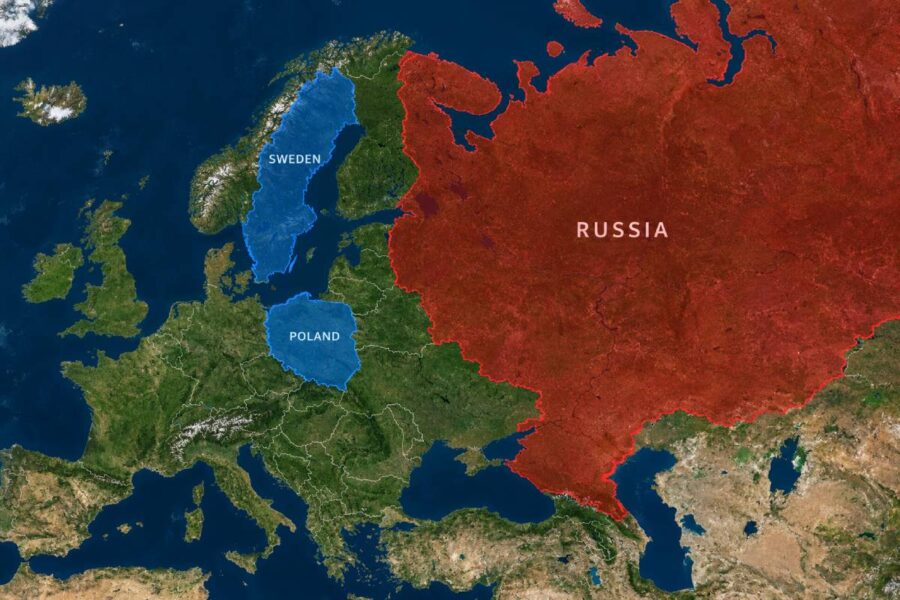
They signed a military-technical cooperation agreement only 13 months ago in September 2025 and then held their first-ever “short-notice exercise” (SNEX) on Sweden’s strategic island of Gotland later that same month.
Two months later in November, Poland announced that it’ll buy three A26 Blekinge-class diesel-electric submarines from Sweden as part of a deal estimated to be worth a little less than €2.5 billion. The overarching trend bringing these two countries closer together is the US’ NATO 3.0 concept.
This essentially refers to the US supervising European NATO’s (E-NATO) containment of Russia while the US “Pivots (back) to (East) Asia” for more robustly containing China. The allies that are expected to accelerate the implementation of this process are part of the US-organized Bergen Group, which notably includes Sweden and Poland.
Both play important roles in the new “cordon sanitaire” around Russia. The first leads the Viking Bloc in the Arctic-Baltic while the second commands E-NATO’s largest army.
It was explained here that Poland envisages connecting the Viking Bloc along the northwestern flank of the “cordon sanitaire” with the Turkish-led Neo-Ottoman Empire along its entire southern one in order to become the geo-military heart of NATO 3.0.
Poland’s grand strategic goal is to assemble the Intermarium under its leadership in order to most effectively contain Russia. Poland doesn’t directly abut Turkiye, only Sweden via the Baltic, ergo why it’s prioritizing this vector of its NATO 3.0 plans right now.
Inviting Sweden to bolster the multifaceted air defense of NATO’s logistics hub in Rzeszów can be considered the spiritual sequel to September 2025’s SNEX on Gotland and a sign of what’s to come.
More complex and possibly even enduring cooperation could soon follow. For instance, Poland might join Sweden’s aerial and naval mission along Finland’s borders with Russia if their shared partners in Helsinki request it. Similar joint missions are also possible in the Baltic States between them.
All of the above could become permanent fixtures of the post-war European security architecture, the purpose of which might be to expand regional states’ direct stakes in each other’s security so that any incident with Russia would prompt a joint response, thus “deterring” the Kremlin as they might believe.
The risk is that a minor incident could snowball into a potentially uncontrollable crisis, however, and the awareness thereof could tempt third parties like Ukraine to carry out false flag provocations to this end.
What’s therefore required in the scenario of joint Swedish-Polish military patronage over Finland and the Baltic States, which might form the core of NATO 3.0, are crisis-control channels between them (at least Sweden and Poland), NATO’s American leader, and Russia.
This could ideally lay the bedrock for new de-escalation agreements, even if they aren’t arms control ones like those that existed before 2022, that would altogether reduce the risk of war by miscalculation. Trump would do well to float this proposal.
By Andrew Korybko on Substack