
 Olle Johansson, associate professor, previously head of the Experimental Dermatology Unit, Department of Neuroscience, The Karolinska Institute, Stockholm, Sweden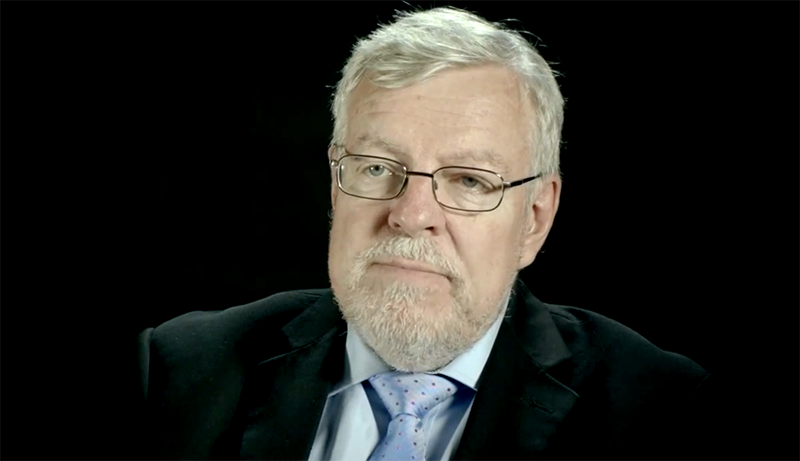
”Now this is not the end. It is not even the beginning of the end. But it is, perhaps, the end of the beginning”. This famous quote was delivered by Winston Churchill on November 10, 1942, following the Allied victory at the Second Battle of El Alamein. It marked a transition from the initial defensive phase of WWII to a more proactive, hopeful, yet long struggle ahead.
By Olle Johansson, associate professor, previously head of the Experimental Dermatology Unit, Department of Neuroscience, The Karolinska Institute, Stockholm, Sweden
We are currently experiencing and living through a moment in time that refuses to be easily understood and managed: ideological wars behind religious makeup, a gigantic reduction of life on the planet with man & woman putting himself & herself over Nature, a climate shift no longer in waiting, and a collapse of the shared good stories that once told us who we are and where we stood.
Technocracy – with its benefits and advantages – nevertheless, has very much replaced respect, understanding, consideration, and love, all based on common sense and old traditions. Our spiritual homes are shifting, and people are looking for comfort and light in soul-searching practices offering mental stability and a sense of safety. Many young people have lost hope for the future and lost belief in societal authority, and in their harsh language, they tell us ”everything is fucked up!”.
A few weeks ago, I had lunch with a very dear friend at a lovely place called Café Blomma (’The Flower Café’), here in Stockholm, Sweden. We were served two different, but equally fantastic, soups primarily made from various vegetables, and enjoyed a highly rewarding conversation; my friend definitely has all her marbles in a perfectly good condition!
Later, during the evening, sitting in my office, it dawned on me that soon the current rapidly increasing shortage of pollinators will mean a shortage of cheap vegetables, which will mean that soon retirees like my friend and I will not be able to afford to eat such soups. (All of these aspects have been brilliantly covered in Christine Zipps’ amazing 5G video documentary, ”5G: Friend or Foe?”)
And that is alright, I would say, for the elderly, but is it okay also for tomorrow’s children, grandchildren and great-grandchildren? And what about tomorrow’s supply of fruits, nuts, etc., for now also dependent on the rapidly declining pollinator populations.
(Of course, at the end of the day, in today’s monetary worths, Elon Musk, and such men & women, can afford buying an orange for 1,000 USD/piece … but can you and your family? No, you can’t!)
Recently, I submitted mine and Daniel Favre’s most recent Letter to the Editor – with the title ”Keep honey bees away from man-made electromagnetic fields !” – concerning the dramatic decline of pollinators, like honey bees and bumblebees, all over the world.
As pointed out in our short Letter, current scientific studies clearly demonstrate that pollinators, like honey bees, thrive in natural electromagnetic fields, but are not well off in situations where they are exposed to man-made non-evolutionary-adapted radiation (aka synthetic radiation), like cell phone and WiFi radiation.
Against this background, we – the authors – now strongly question the introduction of wireless monitoring systems inside hives for control and surveillance of the bee colonies, and the inauguration of the so-called ”connected” bee hives.
(My personal take is always to leave wildlife alone; they don’t need us, they just need their natural undisturbed habitats, may they be in the air, on land, down underground, or in the depths of the oceans, lakes, rivers and streams.)
The clock is now close to 12, only 27% of the planetary wildlife is left…and I am not happy with it, and I know you also are not. As you know, I am constantly trying to wake our ’supreme’ rulers, but it is so hard… (…cf. Johansson O, ”Mitra, C-kupa eller bikupa – vad är viktigast? Några reflektioner en minut i tolv”, Newsvoice.se 4/2, 2026).
What many previously carried quietly as intuition or unease is now visible to everyone. It is no news that life on this planet is quickly deteriorating and disappearing. And from yesterday (April 9, 2026), I also read about the majestic Emperor penguins now at the brink of extinction.
The numbers above are not an interruption to the pattern; they are the new pattern, made suddenly impossible to scroll past. This is a moment for real, uncomfortable systemic reflection.
We must look not just at the outcome, but at the mental architecture that produced it, asking ourselves, where are we heading? And why? Isn’t it obvious to everyone that the current leaderships are not sustainable, and if all the other 8.7 million species were to vote for presidents, prime ministers, politicians, finance experts, civil servants, and so forth, we would see a completely different set of people at the top … or rather at the bottom? The grassroots.
I repeat: where are we heading? And why? I hope, of course, that the current statistics will bend and quickly leap towards a sunny and funny future, but – right now – that is hoping for too much. So it seems we are heading straight downwards.
For the why, it invites us to think about the causes behind. The rapid decrease of species, known as biodiversity loss, is primarily driven by human activities that destroy natural habitats, pollute ecosystems, and alter the climate.
Key causes include agricultural expansion, deforestation, urbanization, overexploitation of resources, and the introduction of invasive species, threatening roughly one million species with soon-to-come extinction.
The five primary drivers of biodiversity loss, according to the UN Environment Programme (UNEP) and Intergovernmental Science-Policy Platform on Biodiversity and Ecosystem Services (IPBES), are:
Land and Sea Use Changes: Deforestation for agriculture, mining, and urban sprawl (collectively known as habitat destruction) is the leading cause of species loss, fragmenting ecosystems and reducing living spaces.
Direct Overexploitation: Overfishing, hunting, and poaching are depleting species faster than they can reproduce, as noted by the World Health Organization (WHO).
Climate Change: Rising temperatures and extreme weather events force species to adapt or migrate, disrupting ecosystems and causing habitat loss.
Pollution: Chemical pollution (pesticides, plastics, heavy metals) and air pollution directly harm or kill species, often harming pollinators like bees. (Here, I definitely want to add the synthetic, artificial electromagnetic fields and signals used for electricity distribution, wireless communication, radio, TV, and likewise.)
Invasive Species: Non-native species introduced to new areas can destroy local ecosystems, outcompeting native wildlife.
The key impacts and statistics underpinning the above are:
High Extinction Rates: Species extinctions are currently 10 to 100 times higher than the natural baseline, with roughly 1 million species threatened with extinction.
Ecosystem Damage: Over three-quarters of ice-free land and two-thirds of marine environments, like oceans, have been significantly altered by humans, disrupting vital ecological processes, report The London School of Economics and Political Science, LSE’s Grantham Research Institute.
Marine Decline: Ocean acidification, warming, and overfishing have devastated marine life, particularly coral reefs.
Wetland Loss: Global wetland coverage has declined by 35% since 1970.
I have always said: ”Curiosity may have killed the cat, but stupidity definitely killed mankind”. Perhaps now I need to rephrase it to ”Curiosity may have killed the cat, but stupidity definitely killed …life on the planet”…?!
So, with Winston Churchill in mind, perhaps we must say ”Now this is not the beginning. It is not even the end of the beginning. But it is, perhaps, the beginning of the end”…!