
When you open a history book, you are often confronted with the same image: Africa before the slave trade is portrayed as a continent without history, a place of “tribes,” “myths,” and “undeveloped societies.” However, this image is not only inaccurate, but it also results from a deliberate falsification of history.
By Olive Carlson for NewsVoice
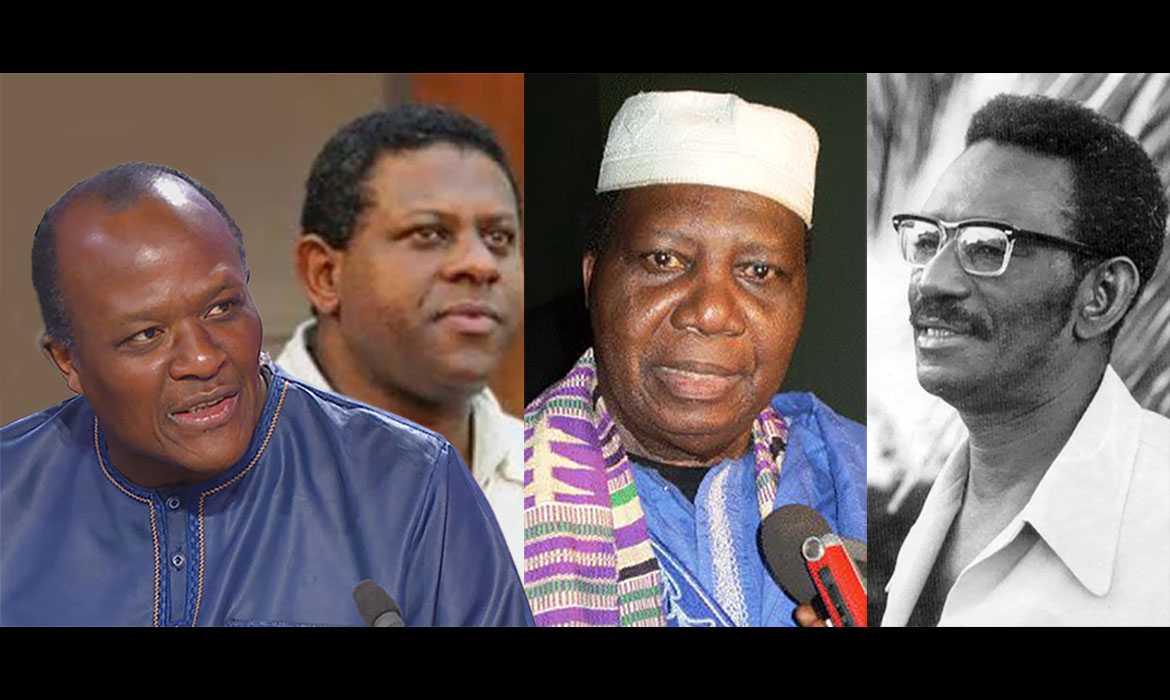
Several African researchers and authors, such as Cheikh Anta Diop, Nioussérê Kalala Omotunde, Coovi Gomez, and Théophile Obenga, have long fought to restore a historically accurate image of the continent.
Africa was a continent with successful civilisations and advanced science in mathematics, physics, medicine, and philosophy long before the Arab and European invasions.
Civilisations long before the slave trade
Senegalese historian and physicist Cheikh Anta Diop (1923–1986) was one of the first to scientifically prove that ancient Egypt (then called Kemet) was a black African civilisation that encompassed other countries and was larger than present-day Egypt (Diop, 1974).
In his book The African Origin of Civilisation: Myth or Reality (1974), Diop shows that the Egyptians were not only black but also developed advanced mathematics, medicine, and statecraft thousands of years before Greek civilisation.
“The ancient Egyptians were Negroes. The moral fruit of their civilisation is to be counted among the assets of the Black world.”
Diop went further than just focusing on Egypt. He showed how empires such as Ghana, Mali, and Songhai had well-developed political and economic systems, with independent institutions, education, and universities in cities such as Timbuktu, where astronomy, jurisprudence, and philosophy were taught several hundred years before, for example, the University of Oxford.
Diop’s most famous research is his extensive analysis of mummies in French museums in the 1970s. He compared ancient Egypt with the African peoples south of the Sahara through skin pigment analysis, including melanin measurements and through studies of art, iconography, language, and cultural expressions.
He concluded that Egypt was geographically and culturally located in Africa and was a black African civilisation long before the Greek, Roman, and Arab invasions.
Diop scientifically demonstrated that African history had been falsified for political and ideological reasons, and he contributed to restoring Africa’s historical heritage.
Economic and cultural sovereignty
Nioussérê Kalala Omotunde (born 1967 in Guadeloupe, died 2022) was an outstanding Afro-Caribbean historian, author, and researcher. His work particularly highlighted Africa’s economic independence before the slave trade.
Omotunde researched economic systems, such as the currency of the pharaohs (La monnaie des pharaons, 2014), and documented how trans-Saharan trade routes connected the continent. He described how exports were organised between empires through advanced social structures, tax systems, and legal systems (Lisoro Magazine, 2024).
Omotunde showed that Africa already had developed diplomatic networks, astronomy, and philosophical systems based on justice, balance, and ethics long before European and Arab religions and colonialism destroyed these institutions.
Omotunde criticised Western school textbooks for reducing Africa’s history to slavery and colonialism, calling this a “crime against African memory”.
Omotunde was active in the African and Caribbean academic sphere and played an international role as project manager for UNESCO’s “Africa Week” in 2017. In this role, he emphasised the importance of education for young people in African mathematics (UNESCO, 2017).
Language cluster for “Black Egypt”
Théophile Obenga (born 1936 in Congo-Brazzaville) is an author, researcher, and professor emeritus at the Africana Studies Centre at San Francisco State University. He has researched Egyptology, linguistics, African history, and philosophy.
Through linguistic research, Obenga has shown that the ancient Egyptian and modern African languages share a common origin, pointing to a common language family (Obenga 2004). Obenga points out the importance of recognising the rich African history and civilisation that has played an essential role in all civilisations worldwide.
Conclusion
A common conclusion unites these researchers: Africa not only had a history before the slave trade, but also advanced and independent civilisations with political, economic, social, cultural, and philosophical systems that deserve recognition.
To continue spreading the image and teaching of a “historyless Africa” is not only ignorant but also an insult to the African people and the history of the world. We must face our wrongdoings and dare to restore the truth in our history books, language, and thought patterns.
By Olive Carlson for NewsVoice (from Burundi, Sweden) for NewsVoice
Sources
- Cheikh Anta Diop, The African Origin of Civilisation: Myth or Reality, 1974
- Théophile Obenga, African Philosophy: The Pharaonic Period: 2780–330 BC, 2004
- Nioussérê Kalala Omotunde, L’origine négro-africaine du savoir grec, 2000
- Lisoro Magazine, Echoes of Maat: Nioussere Kalala Omotunde’s Intellectual Odyssey, 2024
- Afrolegends, So Long to the Baobab of African Classical Humanities and Mathematics, 2022
- UNESCO” Africa Week”, 22 maj 2017
