
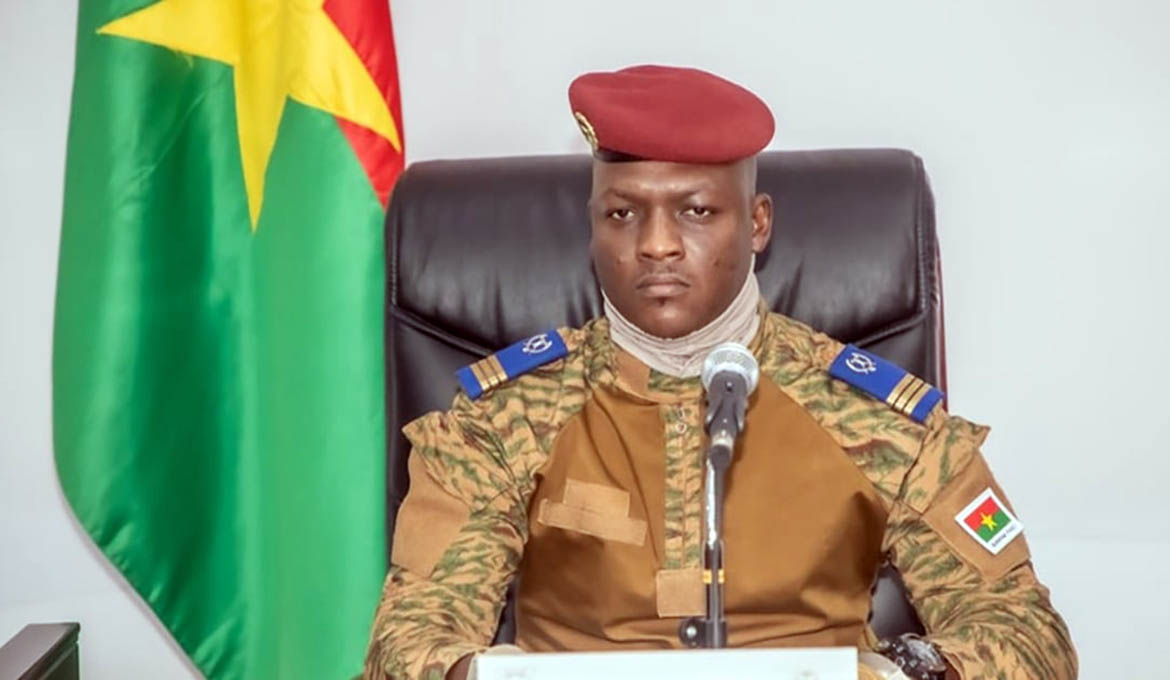
In the heart of West Africa, the people of Burkina Faso are waging a fierce battle for true independence, rejecting the grip of Western neo-colonialism and asserting their right to self-determination. Captain Ibrahim Traoré, the country’s 36-year-old president, is at the forefront of this movement, whose leadership has galvanised a generation of Burkinabé and Africans across the continent.
“We either agree to fight for our country or we remain slaves forever”.
However, his bold vision for a sovereign Burkina Faso has made him a target, with recent assassination attempts and threats from the United States’ Africa Command (AFRICOM) underscoring the high stakes of this struggle.
On April 21, 2025, Burkina Faso’s military government announced it had foiled a “major plot” to overthrow Traoré and sow chaos in the nation. Security Minister Mahamadou Sana revealed that the coup, allegedly orchestrated from neighboring Ivory Coast, involved current and former soldiers collaborating with terrorist groups.
The plot aimed to attack the presidential palace on April 16, with the ultimate goal of placing Burkina Faso under the control of an international organisation—a thinly veiled reference to Western influence.
This was not an isolated incident; Traoré has reportedly survived multiple assassination attempts since seizing power in September 2022, with sources citing up to 20 such plots, including one in January 2024 allegedly funded by foreign actors.
The Burkinabé people have responded with unwavering resolve. On April 30, thousands rallied in Ouagadougou to support Traoré and denounce foreign interference. Sekou Ansumariam Dukaly, a Liberian who travelled to join the protests, captured the sentiment:
“Captain Ibrahim Traoré represents hope for Africa, hope for Black people, hope for all freedom fighters around the globe.”
For many, Traoré embodies the spirit of Thomas Sankara, Burkina Faso’s revolutionary leader assassinated in 1987, whose vision of self-reliance and anti-imperialism continues to inspire.
Traoré’s rise to power followed a coup against Lieutenant Colonel Paul-Henri Damiba, who had himself ousted President Roch Marc Kaboré earlier in 2022.
🇺🇲America and 🇫🇷France are after Ibrahim Traore to eliminate him just like they k!lled Gaddafi🇱🇾
🇺🇲US general Michael Langley, a house negro, accused him of looting Burkina Faso’s gold reserves. If America touches Traore, the AU must consider it a declaration of wâr against… pic.twitter.com/DYDmt1aJ4L
— VDM (@thatverydarkma1) April 22, 2025
His administration has taken bold steps to reclaim Burkina Faso’s resources, nationalising two gold mines and halting the export of unrefined gold to Europe. A new national gold refinery, capable of processing 150 tonnes annually, symbolises this push for economic independence.
Traoré has also rejected loans from the International Monetary Fund (IMF) and World Bank, declaring that Burkina Faso can develop without Western conditionalities.
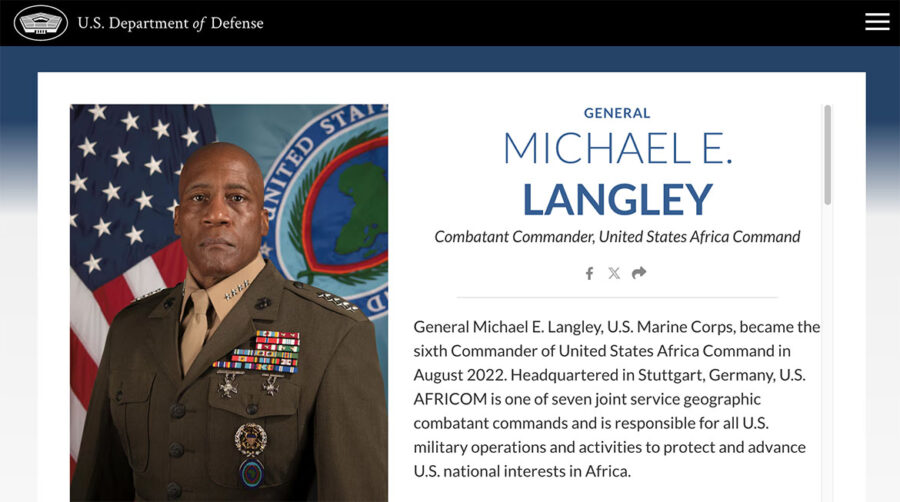
However, these moves have drawn ire from Western powers, particularly the United States. On April 3, 2025, General Michael Langley, head of the generally undesirable AFRICOM, accused Traoré of misusing Burkina Faso’s gold reserves to “protect his junta” rather than benefit the people, a claim widely criticised as hypocritical given AFRICOM’s own $2 billion budget to secure U.S. interests in Africa.
Langley’s remarks, made during a Senate Armed Services Committee hearing, were perceived as a thinly veiled threat, prompting outrage across the continent. Posts on X reflected the sentiment, with users like @Thuso1Africa warning that targeting Traoré would be seen as “a declaration of war against Africa” by the African Union.
Others drew parallels to the assassination of Libya’s Muammar Gaddafi, noting that Libya descended into chaos after Western intervention.
AFRICOM’s presence in Africa has long been contentious, with its 30 military bases viewed by many as tools of neo-colonial control rather than security partnerships.
Burkina Faso Military head of state, Ibrahim Traore’s Guards Were Offered $5M To Assassinate Him, No One Expected What Happened Next
More Details on this coming soon, stay tuned pic.twitter.com/mL1oAhumDH
— African Hub (@AfricanHub_) April 9, 2025
Burkina Faso, alongside Mali and Niger, has expelled French troops and withdrawn from the Economic Community of West African States (ECOWAS), forming the Alliance of Sahel States to prioritize regional sovereignty. This shift has deepened tensions with Western-aligned neighbours like the Ivory Coast, accused of hosting coup plotters.
Despite Traoré’s popularity, challenges persist. Jihadist groups control an estimated 40% of Burkina Faso’s territory, displacing over 2.1 million people and leaving 6.5 million in need of humanitarian aid.
Critics argue that Traoré’s focus on security has delayed democratic reforms, with the transition to civilian rule now extended to 2029. Some accuse him of authoritarian tactics, including the arrest of dissenters and forced conscription. Yet, for many Burkinabé, these measures are a necessary response to existential threats, both internal and external.
Nevertheless, the people of Africa regard Traoré as a symbol of Africa’s broader fight for liberation. “We either agree to fight for our country or we remain slaves forever,” Traoré declared in response to U.S. threats, a statement that has resonated deeply across the continent.
From Ouagadougou to the African diaspora, the message is clear: Burkina Faso’s struggle is not just about one nation or leader but about reclaiming Africa’s dignity and forging a future free from foreign domination.
Russia has provided personal security for Traoré. Reports indicate that Russian specialists, including members of the Africa Corps (successor to the Wagner Group), have been deployed to Ouagadougou to protect Traoré from potential threats, including coup attempts and assassination plots.
Russia has also supplied arms and military equipment, including free weaponry, to help Burkina Faso fight jihadist groups linked to al-Qaeda and the Islamic State. The Alliance of Sahel States, including Burkina Faso, has benefited from Russian military trainers to enhance local forces’ capabilities.
Sources
- AP: Thousands rally in Burkina Faso in support of military junta following alleged coup attempt
- Black Westchester: When Defenders of Sovereignty Are Branded as Threats: The Hypocrisy of General Langley’s Words on Burkina Faso
- Institute for Security Studies: In Burkina Faso, Traoré’s legacy could extend beyond popularity and promises
- Peoples Dispatch: Burkina Faso’s government announces the dismantling of another coup attempt
- BBC: Burkina Faso army says it foiled ’major’ coup plot
