
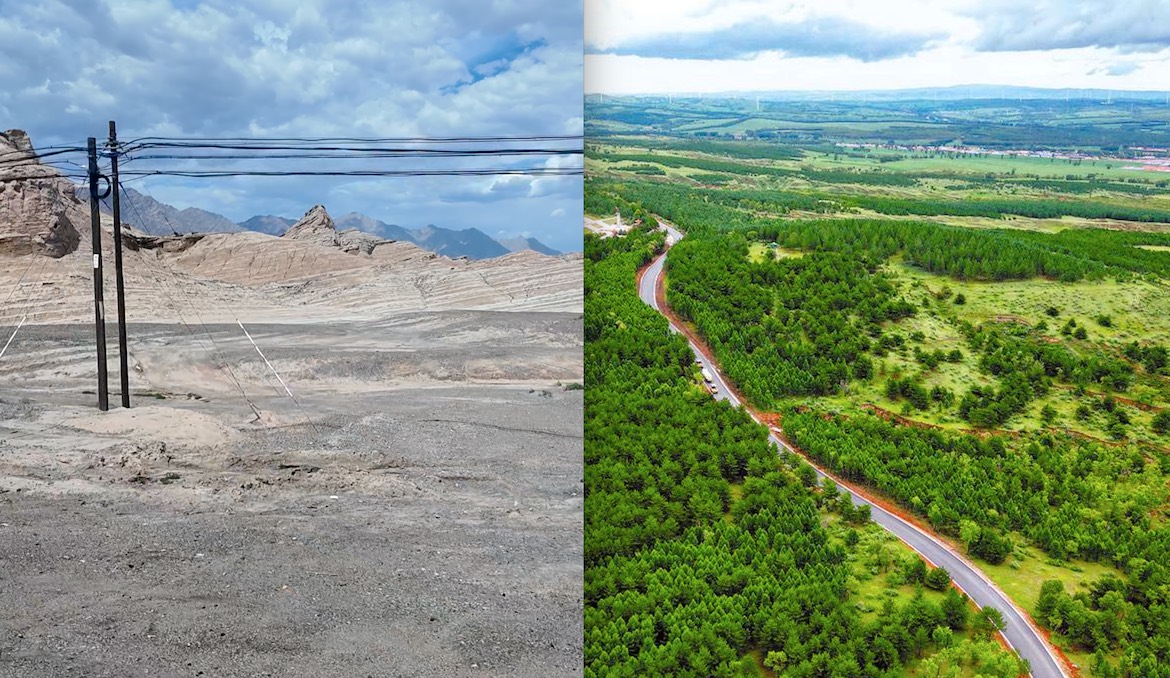
China celebrated the National Ecology Day on August 15, and President Xi Jinping links environmental protection with economic development in his speeches. NewsVoice visited the edge of the Taklamakan Desert, which is shrinking thanks to reforestation projects.
China has recently intensified its ambitious efforts in nature and ecosystem protection, with initiatives ranging from reforesting deserts to reviving entire ecosystems.
The nearly five-decade-long Three-North Shelterbelt Project, also known as the “Great Green Wall,” consists of a 3,000-kilometre-long green tree belt around the Taklamakan Desert in the autonomous region of Xinjiang in China.
Reforestation of deserts
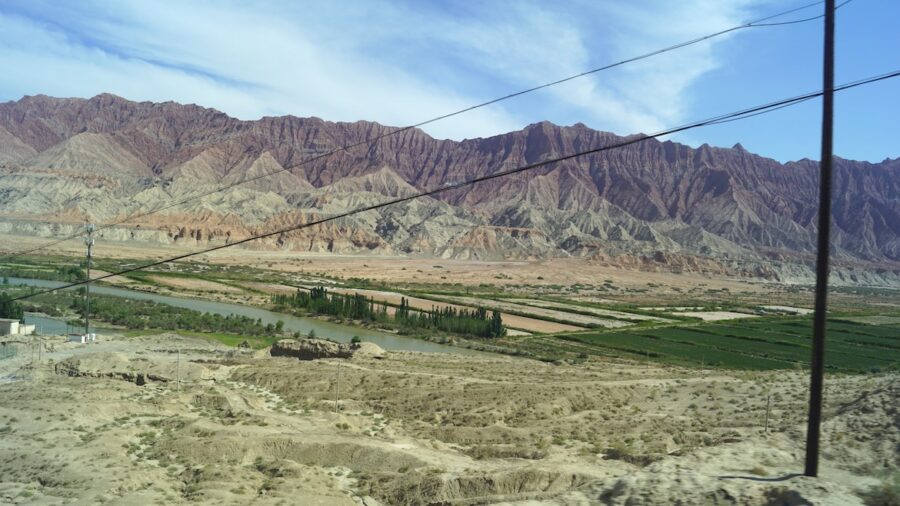
The Taklamakan Desert is the second-largest sand desert in the world. It extends eastward to the Gobi Desert.
Taklamakan, located north of the Xizang region (known in the West as Tibet), is slowly becoming greener. The low-lying areas are the first to receive vegetation. There, natural water collections and watercourses emerge.
Water resources for residents, industry, and agriculture are strictly managed. Rainwater flowing down from the mountain ranges is systematically collected.
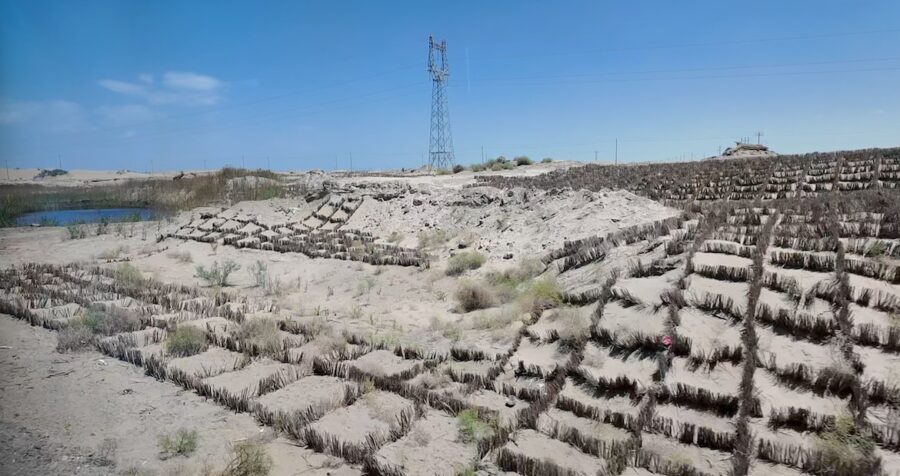
Desertification is being halted in the Taklamakan Desert in Xinjiang by sticking straws into the sand. The small squares prevent erosion and give plants a better chance to take root. The work of placing the straw is often done by hand and is time-consuming, but China has a large, dedicated workforce. The straw is stuck 20-50 cm into the ground, according to local guides NewsVoice has spoken to.
The goal is to turn the desert into a forest. These initiatives have contributed to China’s forest cover growing from around 10% in 1949 to over 25% in 2024. In Xinjiang, the forest area has increased from 1% to 5% over the past 40 years.
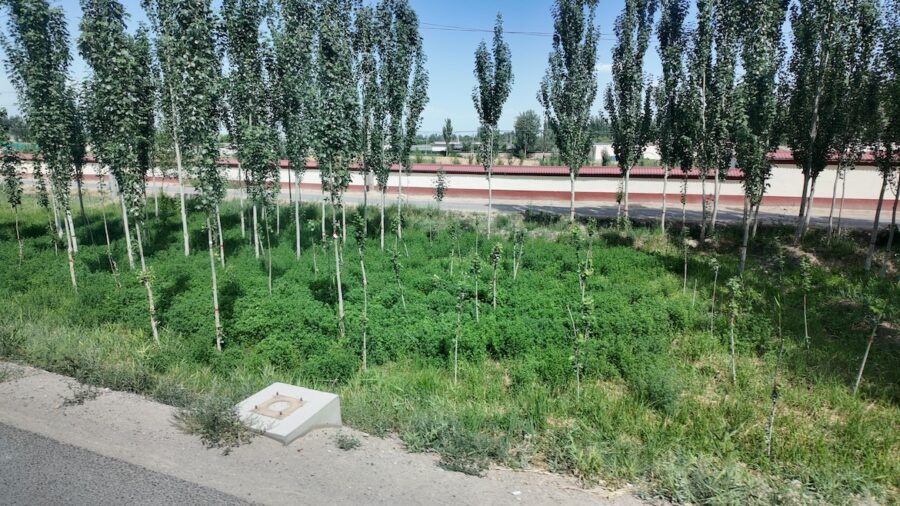
Poplar trees are most commonly planted, initially along the main roads in Xinjiang. Tree planting days are organised locally, with citizens from all walks of life participating without compensation. They do so of their own free will and for the joy of seeing areas become green again.
More in NewsVoice: Chinese Method Prevents Desertification in Several Countries
It feels meaningful, and future generations will be able to experience a greener world, a diplomat from Beijing told NewsVoice.
There are major challenges, but low survival rates for newly planted trees and continuing sandstorms are not stopping people and authorities from continuing with restoration, reforestation, and the planting of new forest networks. Agricultural land is also being protected.
Can you imagine that six decades ago, this area was a barren desert, where constant sandstorms turned the sky yellow? Now, Saihanba in Hebei is the world’s largest planted forest, with forest coverage rising from 11.4% to 82%. A green miracle created by generations of people! pic.twitter.com/JSrnRiHN1y
— Xie Feng 谢锋 (@AmbXieFeng) August 6, 2025
Another example is the Grain-for-Green program on the Loess Plateau, which began in 1999 in an effort to combat massive soil erosion and reduce vegetation. The project has transformed large areas through subsidies, replanting, and long-term land use agreements.
The results have been remarkable: a 25% increase in plant density and reduced erosion.
Så här stoppar Kina ökenspridning och förvandlar öknen till gröna, produktiva områden. Videon postades tidigare av kontot Glyrna Klang, @sambaengi pic.twitter.com/Ia2KLORE2W
— T. Sassersson, Editor@NewsVoice (@newsvoicemag) August 16, 2025
China’s technological innovations have also reached the sphere of nature conservation. A robot antelope, developed by the Chinese Academy of Sciences and Deep Robotics, has been sent to the Hoh Xil Nature Reserve in Qinghai. Equipped with AI and 5G, it has been released into herds of Tibetan antelopes to collect data on behaviour patterns and the environment.
The first robotic Tibetan antelope has been deployed in the heart of Hoh Xil, northwest China’s Qinghai Province. The homegrown robot has successfully blended into the herd, overcoming the limitations of human observation with more precise and reliable footage and data to better… pic.twitter.com/TzDU2hhMKS
— China Science (@ChinaScience) August 11, 2025
The project provides researchers with insights into the ecological patterns of the animals and shows that species monitoring is possible without disturbing the animals.
Urban nature-friendly urban planning and eco-villages
At the city level, China is investing in so-called sponge cities, urban areas designed to collect rainwater and reuse up to 70% of precipitation through green infrastructure such as green roofs, permeable urban surfaces, and water reservoirs.
In addition, the state is promoting the formation of environmentally friendly eco-villages to establish 8,000 eco-villages between 2021 and 2025. These initiatives are rooted in Xi Jinping’s rhetoric that “clearer water and greener mountains are as valuable as gold and silver birch trees.”
By T. Sassersson, Editor-in-Chief, NewsVoice.se, Stockholm, Sweden
Related
- BBC: Briefing: China highlights green achievements with Xi’s ’Two Mountains’ theory
- China.org.cn: China proves economic growth and green progress can go together
- The Media Line: ‘The Deserts of Africa Will Bloom Again’: Israel Deepens African Ties
- TV BRICS republished: China expands desert reforestation and ecosystem protection projects
