
In the wake of China’s high-profile military parade in Beijing on September 3, 2025, showcasing advanced weaponry and signalling a new era of innovation, two prominent voices have offered their assessments of the evolving global security landscape.
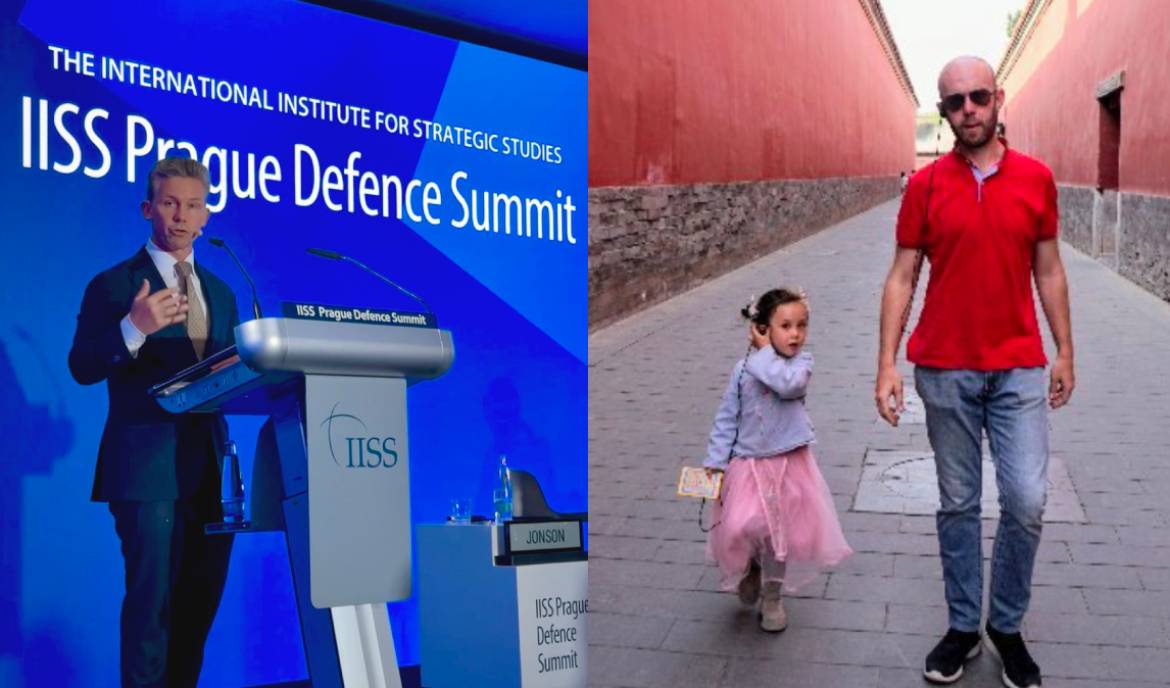
Geopolitical commentator Arnaud Bertrand argues that the United States has slipped to a ”distant third” in military might behind China and Russia. On the same day, Swedish Minister of Defence Pål Jonson emphasised the need for accelerated NATO unity and innovation to counter Russian forces.
Bertrand, posting on X, described the U.S. as no longer holding the world’s leading military position, despite outspending China and Russia combined. He pointed to China’s parade as evidence of its shift from imitation to leadership in military technology.
Bertrand quoted from a Foreign Policy analysis by Sam Roggeveen, director of the International Security Program at the Lowy Institute:
”It is no longer enough to say that China’s military is catching up, or that it is copying foreign military equipment designs. China is now innovating, and it is leading.”
The parade featured new equipment like ”loyal wingman” drones, anti-ship missiles, and uncrewed submarines, underscoring China’s advancements in robotics, AI, and other fields.
Bertrand extended his critique to the ongoing conflict in Ukraine, framing it as a ”proxy war between NATO and Russia” where Russia is prevailing despite NATO’s extensive support for Ukraine.
He highlighted Russia’s superior production, claiming NATO’s Secretary General admitted in July that Russia produces ”three times as much ammunition in three months as the whole of NATO is doing in a year.” Bertrand argued that China’s manufacturing prowess dwarfs Russia’s, positioning it as the ”world’s sole manufacturing superpower.”
According to economic data, China’s gross manufacturing output in 2020 was three times that of the U.S., six times Japan’s, and nine times Germany’s, exceeding the combined output of the next nine largest manufacturers.
This dominance, Bertrand suggested, explains U.S. ”capitulation” in Ukraine and a strategic withdrawal from Asia, leading to increased economic pressure on Europe as a ”path of least resistance.”
Jonson, in a thread on X, warned that Europe remains unprepared for major conflict three and a half years into Russia’s invasion of Ukraine. He celebrated Sweden’s recent NATO accession as a ”historic shift,” noting that Swedish forces are now deployed alongside allies from the Arctic to the Baltic, creating a unified strategic space under NATO planning.
However, Jonson stressed that readiness extends beyond troop deployments: ”Russia, supported by China, Iran and North Korea, is outproducing us in tanks, missiles and drones.” To counter this, he advocated for faster innovation, increased production, and cost reductions in defence materiel.
Jonson highlighted Ukraine as a testing ground for future warfare, where ”small unmanned vehicles, loitering drones and remote-controlled systems are used at scale,” with innovation cycles occurring in weeks rather than years.
”Our response must be unity and urgency,” he urged. ”Supporting Ukraine is the frontline of Europe’s defence. Allies must step up, invest more, and accelerate defence readiness. The outcome of this war will shape European security for decades.”
These perspectives underscore a broader debate on the implications of shifting military balances. Bertrand’s view portrays a declining U.S. empire turning inward on its allies, driven by China’s rapid rise, evidenced by its export growth from 3% of world manufacturing exports in 1995 to 20% in 2020, and increasing self-reliance.
Jonson, meanwhile, frames the challenge as an opportunity for collective action, emphasising technological adaptation and support for Ukraine. As China’s parade signals an ”irrevocable” change in regional power dynamics, particularly around Taiwan, experts warn that the U.S. and its allies must recalibrate strategies.
Sources