The EU imposed sanctions on Hüseyin Doğru, a Berlin-based German citizen and independent journalist of only German origin, on May 20, 2025. His life and his family were profoundly affected. Doğru is forced to live at an economically existential level.
Doğru, founder of the left-wing media platform Red Media (operated through his Turkish company AFA Medya A.Ş.), became one of the first EU citizens targeted under the bloc’s sanctions regime originally designed to counter Russian destabilising activities.
According to the EU statement, Doğru is filed as a Turkish citizen, but he is a German citizen with a Turkish name. He was born in Germany, and he does not have dual citizenship.
The measures, part of a broader package addressing ”hybrid threats” from Russia, have effectively stripped Doğru of his financial independence and professional viability without any criminal trial or conviction.
Doğru’s case highlights the expanding use of anti-Russia sanctions as a tool to suppress dissent within the EU itself. Critics, including human rights organisations and fellow journalists, argue that the sanctions represent an unprecedented assault on freedom of expression, particularly regarding coverage of pro-Palestinian protests in Germany.
Supporters of the measures, reflected in official EU statements, contend they are necessary to combat disinformation and activities that indirectly bolster Russian interests by destabilising EU member states.
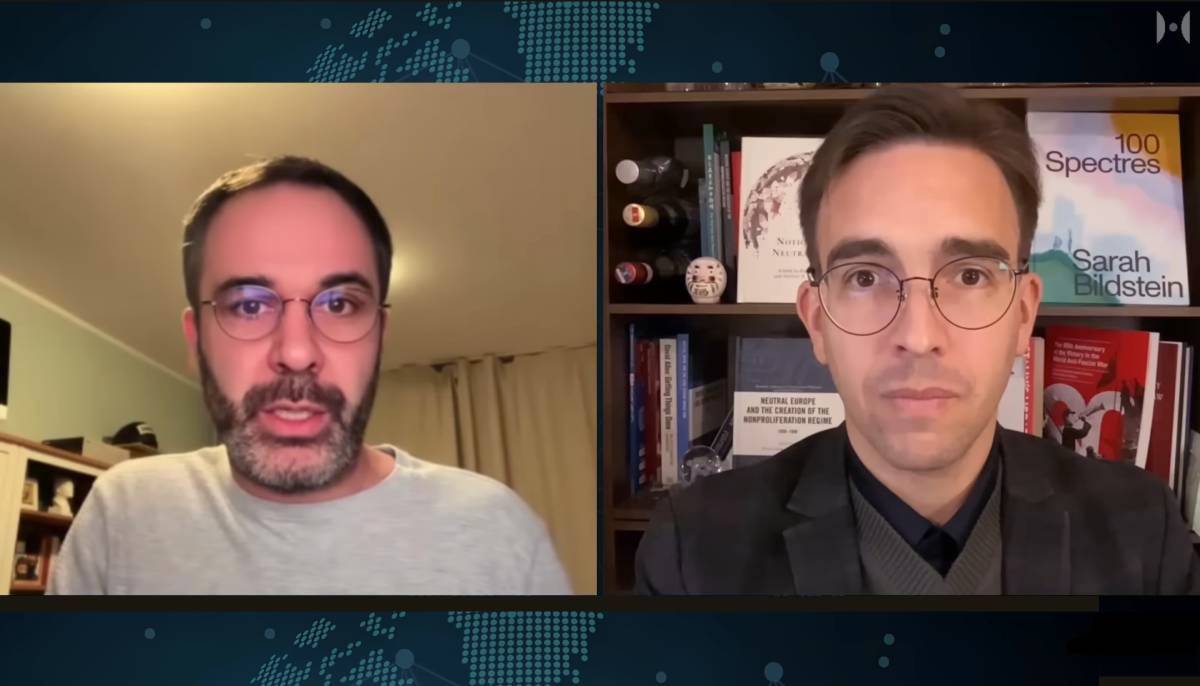
Interview by Pascal Lottaz, Neutrality Studies:
Background on Hüseyin DoğruH
Doğru is an award-winning documentary producer and journalist who has worked across Europe and the Middle East. He previously contributed to outlets associated with Redfish, a media project linked to the now-banned Russian state-funded RT network.
In 2023, he launched Red Media, an English-language platform focused on anti-imperialist, anti-fascist narratives, including extensive reporting on Germany’s crackdown on pro-Palestine demonstrations following the escalation of the Israel-Gaza conflict in late 2023.
Red Media gained attention for on-the-ground coverage of student occupations and protests in Berlin, often portraying police interventions as excessive.
One notable incident involved the platform’s reporting on a 2024 occupation at Humboldt University, where protesters allegedly used symbols associated with Hamas. Doğru’s team coordinated with occupants to broadcast footage, which the EU later cited as evidence of facilitating ”violent demonstrations.”
Doğru has consistently opposed Russia’s invasion of Ukraine, a stance he reiterated in public statements. However, his critical reporting on German domestic policies, particularly the suppression of Palestine solidarity actions, drew scrutiny from mainstream media and officials.
Reasons for the Sanctions
The EU’s decision stems from Council Decision (CFSP) 2025/966, amending an earlier framework established in October 2024 to target Russia’s ”destabilising activities,” including hybrid operations like disinformation campaigns.
According to the official listing on OpenSanctions and EUR-Lex, Doğru, through AFA Medya and his personal social media, is accused of:
- Propagating false information on politically controversial topics.
- Indirectly supporting and facilitating violent demonstrations, specifically by providing exclusive media access to anti-Israel protesters during the Humboldt University occupation, where acts of vandalism and Hamas symbols were allegedly displayed.
- Engaging in coordinated information manipulation that undermines stability and security in EU member states, particularly Germany.
The EU rationale links these actions to Russian interests: By amplifying narratives critical of Western policies (e.g., support for Israel or repression of protests), Doğru is said to indirectly aid Moscow’s efforts to sow division in Europe.
Some reports suggest past ties to Russian-linked media (via Redfish) imply ongoing ”financial and organisational” connections to state propaganda actors, though no direct evidence of current funding or control has been publicly presented.
Doğru and his supporters vehemently deny any Russian affiliation. In a June 2025 op-ed for DiEM25, he described the sanctions as retaliation for exposing Germany’s ”complicity” in suppressing pro-Palestine voices.
He pointed to a pattern of smears starting with a 2024 Tagesspiegel article alleging coordination with Russian destabilisation efforts, later echoed by U.S. officials like Antony Blinken.
An appeal to revise the sanctions was rejected by the EU in September 2025, with officials upholding the claims without providing new evidence, according to reports in Junge Welt.
Critics from outlets like the World Socialist Web Site and Peoples Dispatch argue the measures were likely initiated by Germany to circumvent domestic legal challenges in silencing dissent.
Germany has faced international condemnation from UN experts for its handling of pro-Palestine activism, including bans on demonstrations and criminal probes.
How the Sanctions Work
The sanctions fall under the EU’s restrictive measures regime for Russia’s destabilizing actions. Designated individuals and entities face:
- Asset Freeze: All funds and economic resources in the EU are frozen. Banks must block accounts, preventing access to savings or income.
- Prohibition on Providing Funds: EU citizens and companies are barred from making any economic resources available to the sanctioned person, directly or indirectly. This includes payments for work, donations, or even basic support like groceries or simply buying a dinner for a sanctioned person.
- Travel Ban: Doğru is prohibited from entering or transiting through any EU member state beyond Germany (his residence). He claims he can’t even leave Germany.
These measures are implemented across all 27 member states without needing national court approval. They are administrative, not criminal, meaning no trial is required, only a Council decision based on intelligence or assessments.
In Doğru’s case, the sanctions also extend to AFA Medya, effectively shutting down ReD Media operations in May 2025.
Consequences for Hüseyin Doğru
The impacts on Doğru have been devastating, as detailed in his own accounts and a December 2025 YouTube video titled ”Death By Sanctions: EU Destroys German Journalist in Germany.”
Financially crippled, Doğru cannot access his bank accounts, receive payments for freelance work, or engage in paid employment. The broad prohibition means even crowdfunding or family support risks violating the rules for donors.
He has described this as a ”civil death,” rendering him unable to pay rent, buy food independently, or sustain himself without relying on informal, potentially illegal aid.
Professionally, the de facto ban prevents him from practising journalism within the EU framework. Red Media ceased operations, laying off staff and erasing years of archival content. Doğru continues to limit personal commentary on social media but faces ongoing threats and investigations in Germany.
Personally, the EU-wide travel ban confines him to Germany, isolating him from networks in other countries. Combined with frozen assets, this has led to reports of severe hardship, with Doğru warning of a precedent where dissent is punished extrajudicially.
His case has drawn solidarity from figures like Yanis Varoufakis and progressive groups, who view it as part of broader authoritarian trends in Europe, militarism masked as defence against disinformation. Conversely, some pro-Israel and conservative voices have framed Red Media as promoting extremism.
As of late 2025, the sanctions remain in force, with no indication of review. Doğru’s plight underscores tensions between security imperatives and democratic rights in the EU, raising questions about whether anti-Russia tools are now being wielded against internal critics.
For a journalist who once documented global struggles for justice, the irony is stark: sanctioned not for supporting Russia, but for challenging power closer to home.
Sources and related
- EU Sanctions tracker: Hüseyin Doğru
- EU: Russian hybrid threats: EU lists further 21 individuals and 6 entities and introduces sectoral measures in response to destabilising activities against the EU, its member states and international partners
- Reuters: Germany says Russia using media platform Red to sow discontent
- Diem 25: How the EU is using anti-Russia sanctions to criminalise journalism