
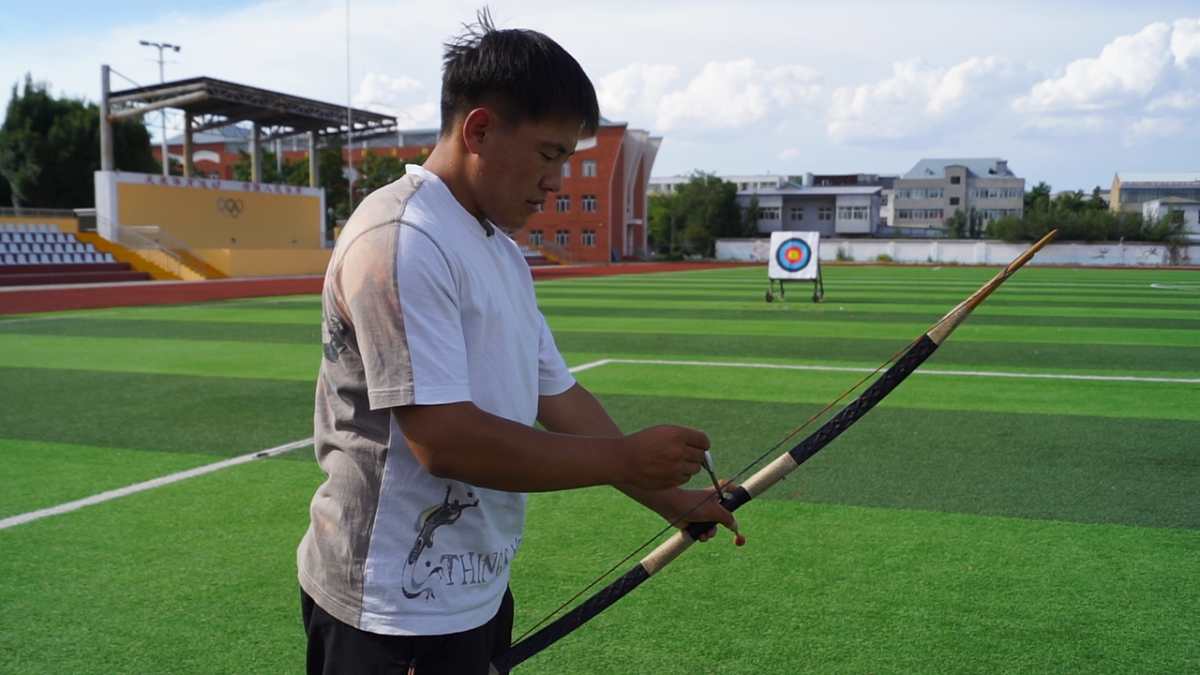
In the Kazakh Autonomous Prefecture of northwest China’s Xinjiang Region, the Qapqal Archery Sports School preserves the archery tradition, earning it the title of ”Hometown of Chinese Archery.” NewsVoice visited a training arena.
By T. Sassersson, NewsVoice
This border county, home to the Xibe ethnic minority, a Tungusic-speaking people, has woven archery into the fabric of its cultural identity for centuries. At the heart of this legacy is the Qapqal Archery Sports School, an institution that bridges ancient traditions with modern athletic prowess, nurturing generations of archers who excel on national and international stages.
The school’s origins trace back to the 1970s, when it began as an amateur archery team in this remote yet strategically vital region. Over the decades, it evolved into a professional training hub, gaining official recognition as a national key archery school by the Chinese Archery Association in 2003.
Today, it serves as a cornerstone for competitive archery in China, hosting major events such as the 2025 National Archery Olympic Project Championships and producing numerous gold medalists in domestic and international competitions.
The facility emphasises rigorous training, blending Olympic-style recurve archery with elements of traditional techniques, and has become a breeding ground for elite athletes.
Figures like Wu Junliang, a 37-year-old former national team member and now a revered ”champion coach,” embody this evolution. Wu, who joined the school as a student and rose to prominence, returned to teach after retiring, imparting skills to young archers through programs like the ”heritage-in-schools” initiative launched in 2025.
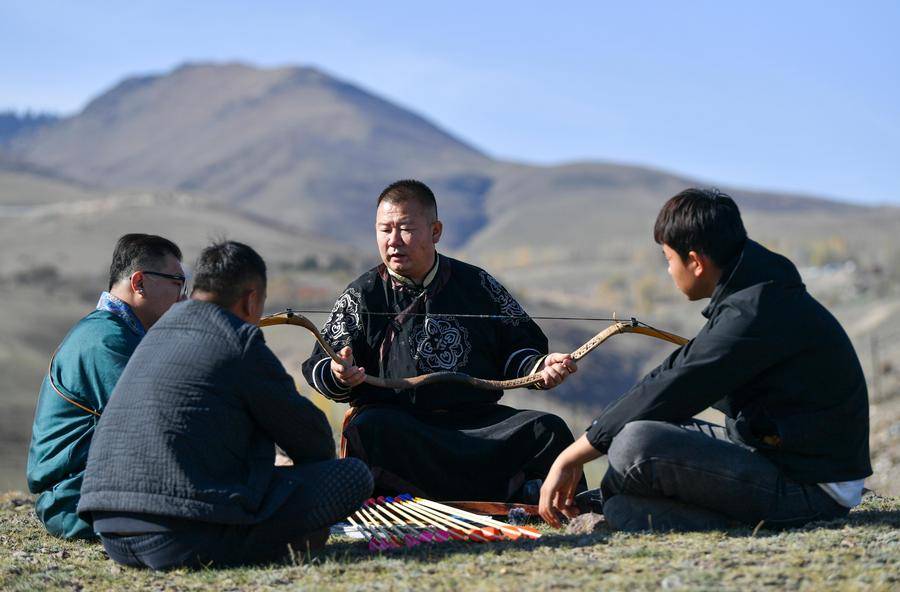
The Xibe people’s archery tradition runs deeper than sport; it’s a cultural lifeline. Descended from Manchu warriors dispatched by Emperor Qianlong in 1764 to guard Xinjiang’s western frontiers, the Xibe brought with them exceptional skills in horseback riding and archery.
Historically, every Xibe male was trained in these arts from childhood; by the age of five or six, boys received their first bows, crafted from local materials such as wood, horn, and sinew. Archery wasn’t merely a skill but a symbol of resilience and community, used in hunting, warfare, and rituals.
Competitions, often on horseback at distances up to 240 steps, tested precision and endurance, with feats like shooting three arrows into a bullseye from a galloping horse 100 meters away becoming legendary.
This prowess is celebrated in festivals such as the Spring Festival, the ”4.18” Festival (commemorating the westward migration), and the Mid-Autumn Festival, where archery displays honour ancestors and foster unity.
Traditional Xibe bow and arrow making, listed as a national intangible cultural heritage in 2008, remains a living craft. Artisans like Zhao Hu, a young Xibe craftsman, continue this meticulous process in workshops, listening to historical tales while shaping bows that echo centuries-old designs.
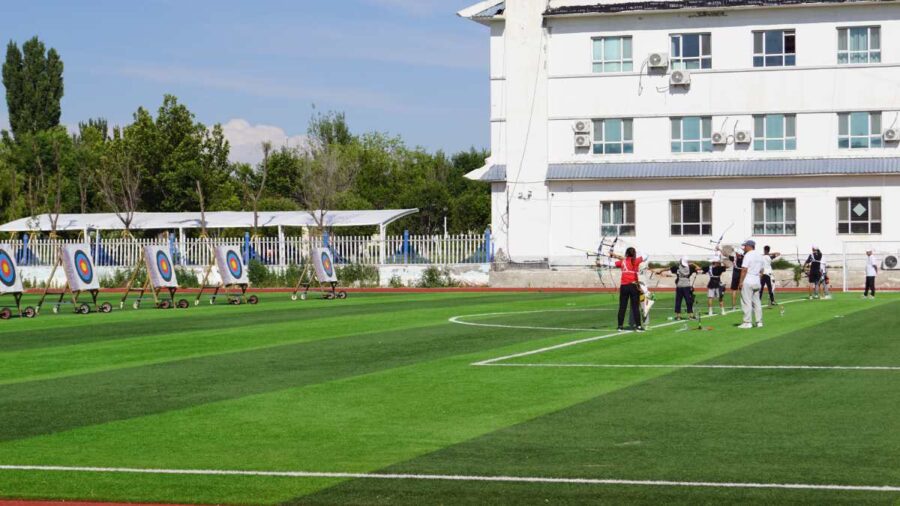
Qapqal Archery Sports School
In 2021, traditional archery joined the heritage list, underscoring its cultural value.
The Chinese Bow and Arrow Culture Museum, established in the Xibe Ancient Town, a site preserving the group’s migration history, showcases these artefacts, drawing visitors to experience hands-on archery and learn about its role in border defence and daily life.
Wu Junliang’s efforts, coaching children in both ancient Xibe methods and contemporary techniques, highlight this fusion, strong arms, steady composure, and a deep respect for heritage.
As elite archers from across China converge here for tournaments, the county’s legacy inspires a new generation, proving that in ”Arrow Town,” the bowstring’s twang echoes eternal cultural pride.
Chinese Archery in the 20th Century
Traditional Chinese archery, once a cornerstone of military training, Confucian ritual, and cultural identity, faced severe decline and near-extinction during much of the 1900s. The process began early in the century when, in 1901, the Guangxu Emperor abolished archery from the imperial military examination system amid the rise of reliable firearms, effectively ending state-sponsored practice and collapsing the supporting industry of bowyers and instructors.
A brief revival occurred during the Republic of China era (1912–1949), with efforts to promote traditional archery as part of national cultural strengthening, but wars, invasions, and social upheaval limited its success.
During the Cultural Revolution (1966-1976) under Mao Zedong a campaign targeted ”old” traditions as feudal or bourgeois remnants, forcing traditional bow workshops, like the renowned Ju Yuan Hao, to suspend operations entirely. Archery practice, tied to historical rituals and ethnic identities, was suppressed or driven underground, leaving almost no active practitioners by the era’s end.
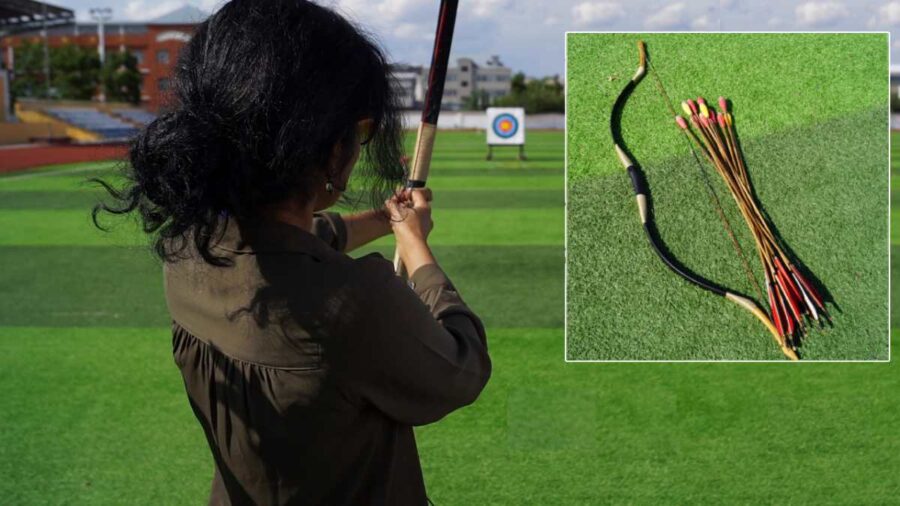
By the late 20th century, traditional Chinese archery teetered on the brink of extinction, only to see a revival in the 21st century through renewed interest in heritage crafts and techniques.
By T. Sassersson, NewsVoice
Related
- Xinhuanet: InPics|Xinjiang coach passes on spirit of traditional Xibe archery
- China Daily: China wins men’s recurve team gold at archery World Cup
- NewsVoice: Shaanxi Grand Mosque – A Living Cultural Treasure in Xinjiang
