
In the wake of the United States’ recent military strikes on Venezuela, which culminated in the capture of President Nicolás Maduro and his wife Cilia Flores, prominent academics have voiced sharp criticisms, framing the operation as a brazen act of modern imperialism.
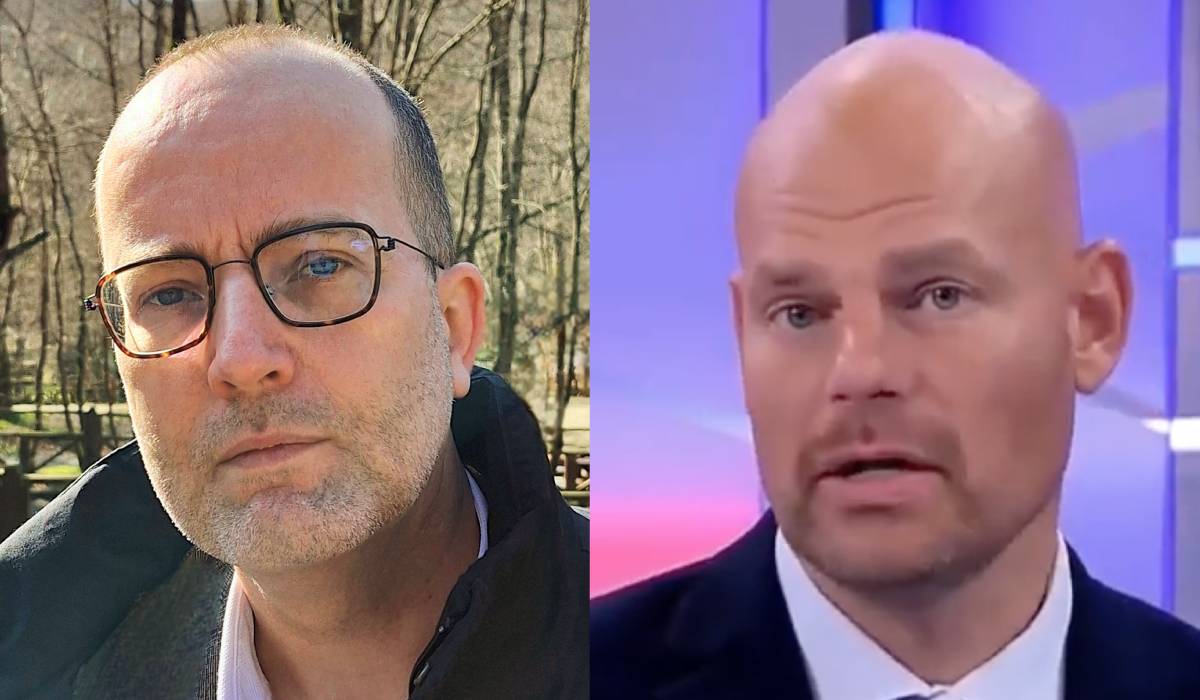
Daniel Shaw, a professor of Latin American Studies at the City University of New York (CUNY), and Tarik Cyril Amar, a historian at Koç University in Istanbul, have both recently articulated concerns that echo historical precedents, including the Vietnam War, warning of potential global repercussions.
Professor Shaw, known for his outspoken advocacy against US interventions in Latin America and the Caribbean, has been vocal on social media and in public statements about the unfolding crisis.
In a series of posts following the January 3 strikes, Shaw denounced the US actions as ”colonial bombing” and ”open colonisation,” emphasising that Maduro’s ”only crime” was refusing to act as a ”US puppet.” He highlighted the operation’s focus on Venezuela’s vast oil reserves and other resources, stating that President Donald Trump has openly confirmed the economic motivations, declaring that the US will now ”run Venezuela” during a so-called ”leadership transition.
Drawing a stark parallel to the Vietnam War, Shaw argued that a prolonged US involvement in Venezuela could devolve into a guerrilla-style conflict reminiscent of the quagmire that bogged down American forces for two decades in Southeast Asia.
”Is this any different from the hundreds of US imperial invasions of South America and the Caribbean?”, Daniel Shaw questioned in one post.
He warns of the historical pattern of US interventions that often led to extended, costly occupations. He pointed to Venezuela’s terrain, three times the size of Vietnam, with dense jungles in the south, and the potential for regional insurgencies from neighbouring countries like Colombia and Brazil as factors that could mirror the asymmetric warfare seen in Vietnam.
Shaw warned that deploying ground troops to patrol Venezuelan cities or extract resources could result in trillions in ”blood and treasure,” much like the Vietnam era, where over 500,000 US troops failed to quell resistance despite overwhelming military superiority.
Shaw’s critique extends beyond Venezuela, linking it to broader patterns of US aggression. In recent discussions on Haiti and other regional hotspots, he has described such interventions as part of a ”war on the people,” where economic sanctions and military actions exacerbate humanitarian crises while serving corporate and geopolitical interests.
His firing from CUNY in 2024 for protesting similar policies has only amplified his platform, positioning him as a key voice in anti-imperialist circles.
American Blitzkrieg
Echoing these sentiments but from a global historical lens, historian Tarik Cyril Amar published a scathing op-ed titled ”The American Blitzkrieg on Venezuela: No one is safe,” just hours after the strikes.
Amar described the operation as a ”full regime-change invasion” that has been building for over two decades through diplomatic, economic, and clandestine means. He condemned it as ”absolutely, irredeemably illegal,” a violation of the UN Charter’s prohibition on wars of aggression, and dismissed US pretexts, such as Venezuela’s alleged role in drug trafficking, as ”flimsy insults.”
Amar characterised the strikes as a ”dirty Blitzkrieg” driven primarily by greed for Venezuela’s unparalleled oil reserves, gold, and rare earths, which Trump has claimed ”belong to the US and its companies.” He argued that the assault is also a geopolitical manoeuvre under the Donroe Doctrine, a revamped Monroe Doctrine aimed at reasserting US dominance in the Western Hemisphere by installing puppets, suppressing resistance, and punishing ties with rivals like China and Russia.
Amar noted Maduro’s support for Palestine as a contributing ”sin” that provoked the attack, linking it to broader US-Israeli alliances.
In a pointed critique, Amar highlighted the operation’s asymmetry: US forces faced minimal resistance, likely due to ”betrayal, subversion, and secret deals,” resulting in no American casualties but significant Venezuelan losses from preparatory strikes on smuggling boats and broader bombardments.
He warned that this overwhelming display sets a dangerous precedent, potentially emboldening other powers. Amar also lambasted the Nobel Peace Prize awarded to Venezuelan opposition figure Maria Corina Machado as a ”heinous” tool in the invasion’s propaganda, ultimately discarded by Trump in favour of direct control.
Both scholars underscore the normalisation of such outrages in US foreign policy.
Amar lamented how ”the absolutely anomalous has become strangely normal,” while Shaw called for combating the ”disinformation machine” surrounding the conflict. Their analyses come amid international outcry, with even US allies in Europe acknowledging the breach of international law, and regional powers like Brazil and Colombia expressing alarm over potential spillovers.
As Trump hails the operation as a ”spectacular” feat of American might—comparing it to World War II victories, the world watches for signs of escalation.
Shaw and Amar’s warnings suggest that what began as a swift ”blitzkrieg” could evolve into a protracted struggle, eroding US credibility and fueling anti-imperialist movements across the Global South, with Maduro now in US custody and American forces poised to oversee resource extraction, the parallels to past debacles like Vietnam loom.
Sources and related
- About.me: Danny Shaw
- Koç University: Tarik Cyril Amar
- Substack: Tarik Cyril Amar
- RT: The American Blitzkrieg on Venezuela: No one is safe
- Rumble: This is like a US colonial occupation — Daniel Shaw
- TRT World: US professor: I was censored, doxed and fired because of Gaza