
The geopolitical landscape surrounding the ongoing Ukraine-Russia conflict grew increasingly complex this week as developments involving the United States, European Union, and Ukraine revealed deepening rifts and strategic recalibrations.
Multiple sources report a flurry of diplomatic manoeuvres, threats, and warnings that could reshape the future of Western support for Ukraine.
Trump just got Baerbocked
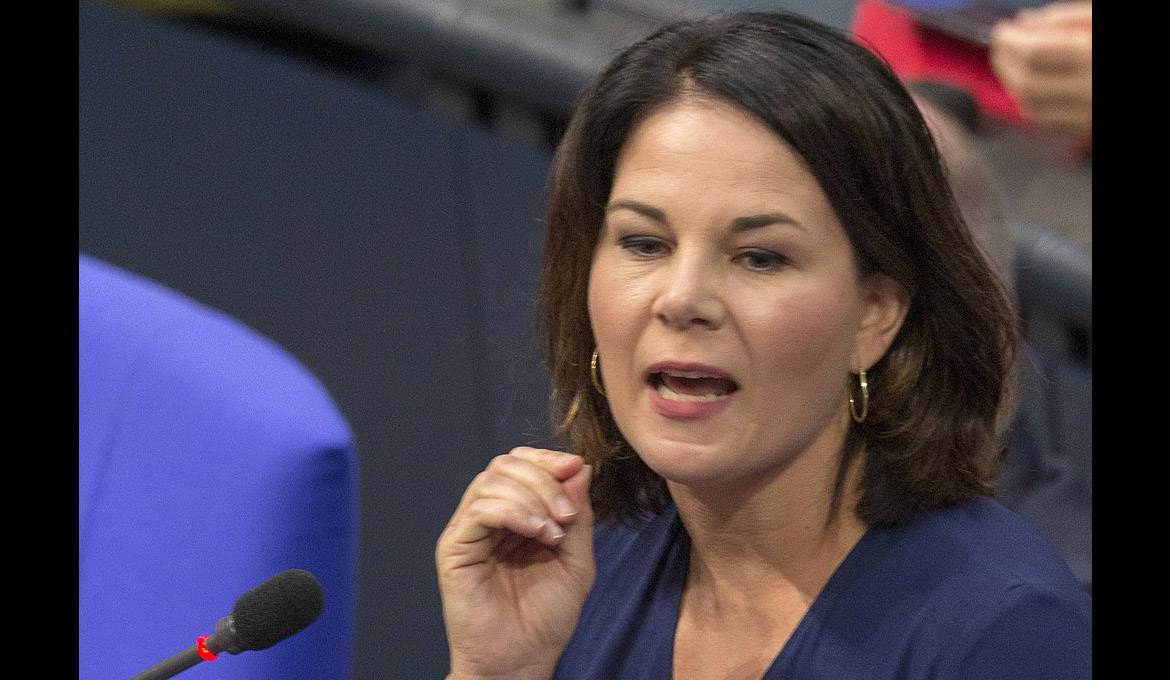
German Foreign Minister Annalena Baerbock issued a stark warning to the United States on Friday, suggesting that Berlin could reconsider its transatlantic ties if Washington wavers in its support for Ukraine against Russia. Baerbock emphasized that a failure by U.S. President Donald Trump to back what she termed “liberal democracies” would carry significant consequences.
Her comments come amid growing concerns in Europe over Trump’s recent statements questioning the legitimacy of Ukrainian President Vladimir Zelensky and his reluctance to involve Kiev in peace negotiations with Moscow. The German Foreign Minister’s remarks signal a potential fracture in NATO unity, with Berlin positioning itself as a staunch defender of European interests against a perceived shift in U.S. policy.
U.S. Threatens to Cut Starlink Access in Ukraine
Adding fuel to the fire, U.S. negotiators threatened to terminate Ukraine’s access to Starlink satellite internet during a tense meeting in Kiev on Thursday. According to sources cited by Reuters, Trump’s envoy, Keith Kellogg, warned Ukrainian officials of an “imminent shutoff” unless Kiev agreed to a deal granting the U.S. preferential access to Ukraine’s critical mineral resources.
This escalation follows Zelensky’s earlier proposal of a partnership involving Ukraine’s rare-earth minerals to secure continued U.S. military aid. The threat to disable Starlink—a vital communication lifeline for Ukrainian forces—underscores the leverage Washington is willing to exert as it reevaluates its commitments in the region.
Zelensky and EU Push Back Against U.S.-Russia Talks
Meanwhile, Ukrainian and European leaders expressed alarm over Kiev’s exclusion from the ongoing U.S.-Russia peace talks. Zelensky has vocally criticized the negotiations, branding them “disreputable” and accusing the U.S. of legitimizing Russia’s actions.
His top aide, Mikhail Podoliak, went further, dismissing the prospect of foreign troop deployments to Ukraine as “unrealistic” in an interview with Polish radio station RMF on Friday. Podoliak urged Europe to prioritize arms development and increased defense spending over peacekeeping missions, reflecting Kiev’s determination to maintain a hardline stance against Moscow.
Concurrently, some EU officials are reportedly exploring options to counter both Russia and a potentially disengaged U.S., raising the provocative question of whether Brussels and Kiev might be planning a new front in the conflict.
U.S. Troop Withdrawal from NATO’s Eastern Flank?
Speculation about a broader U.S. military pullback intensified following a report by German outlet Bild, which suggested that Washington could withdraw troops from NATO’s eastern member states. While the U.S. has not officially confirmed such plans, the possibility has heightened anxieties among European allies already rattled by Trump’s scepticism toward NATO commitments.
Analysts warn that any reduction in U.S. presence could embolden Russia and strain the alliance’s eastern defences, particularly as Germany and other nations grapple with the implications of a less engaged American partner.
A Shifting Global Order
The convergence of these developments paints a picture of a pivotal moment in the Ukraine conflict. Germany’s veiled threat to distance itself from the U.S., coupled with Washington’s apparent willingness to use critical infrastructure as a bargaining chip, suggests a fraying of the Western consensus that has underpinned support for Ukraine since Russia’s invasion.
Zelensky’s exclusion from peace talks and Podoliak’s rejection of foreign troop scenarios highlight Kiev’s precarious position as it seeks to retain influence over its fate. Meanwhile, the spectre of a U.S. withdrawal from NATO’s eastern flank looms as a potential game-changer, testing the resilience of European unity.
For now, the rhetoric from Berlin, Kiev, and Washington signals a period of uncertainty—and possibly unparalleled tension—on the global stage.