
On July 29, 2025, senior U.S. and Chinese negotiators concluded their latest round of trade talks in Stockholm, extending a fragile truce in the ongoing trade war between the world’s two largest economies.
The article is updated 09:45, July 31
The discussions, led by U.S. Treasury Secretary Scott Bessent and Chinese Vice Premier He Lifeng, focused on sustaining a pause on retaliatory tariffs and addressing disputes over rare earth minerals and energy imports.
However, the talks were overshadowed by U.S. threats of punitive tariffs of up to 500% on countries importing energy from Russia and Iran, raising questions about Washington’s commitment to de-escalating tensions.
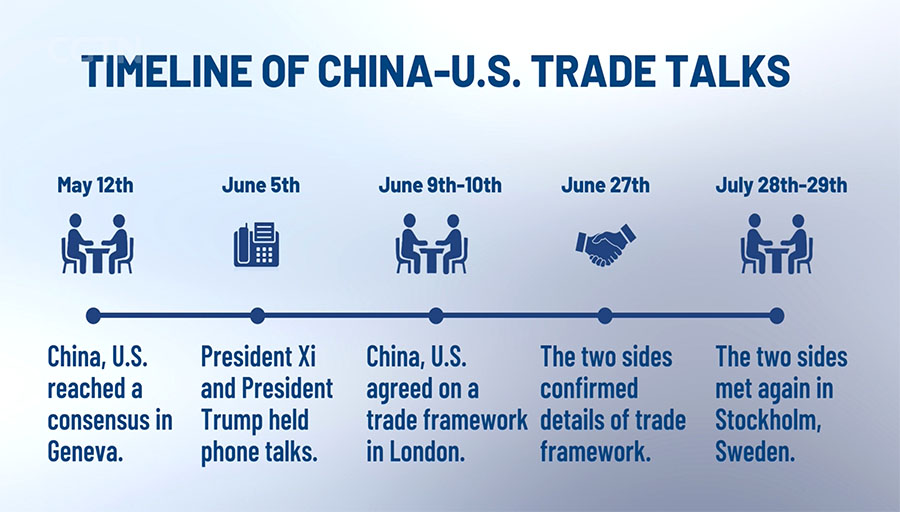
The Stockholm talks build on a series of negotiations that began with a breakthrough consensus in Geneva on May 12, where both sides agreed to suspend 91% of additional tariffs imposed since President Donald Trump’s “Liberation Day” and pause 24% in reciprocal tariffs until August 12.
Subsequent talks in London on June 9-10 established a framework to implement this consensus, with further details confirmed on June 27.
The Stockholm meeting extended the tariff pause for another 90 days, potentially until mid-November, providing temporary relief to global supply chains strained by earlier disruptions.
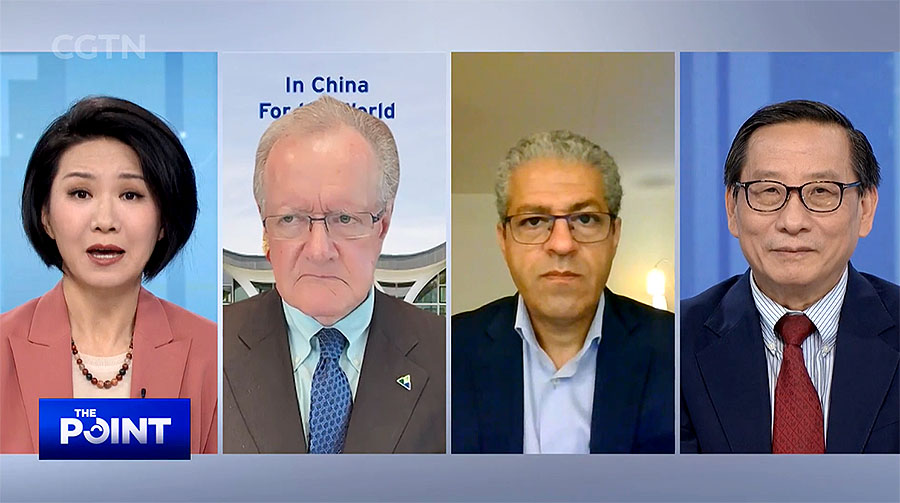
CGTN’s The Point, hosted by Liu Xin, featured a panel discussion with John Quelch, executive vice chancellor and professor at Kunshan Duke University, Victor Zhikai Gao, chair professor at Soochow University Victor Zhikai Gao and vice president of the Center for China and Globalization (CCG), and Hussein Askary, vice chairman of the Belt and Road Institute in Sweden, to dissect the outcomes and implications of the talks.
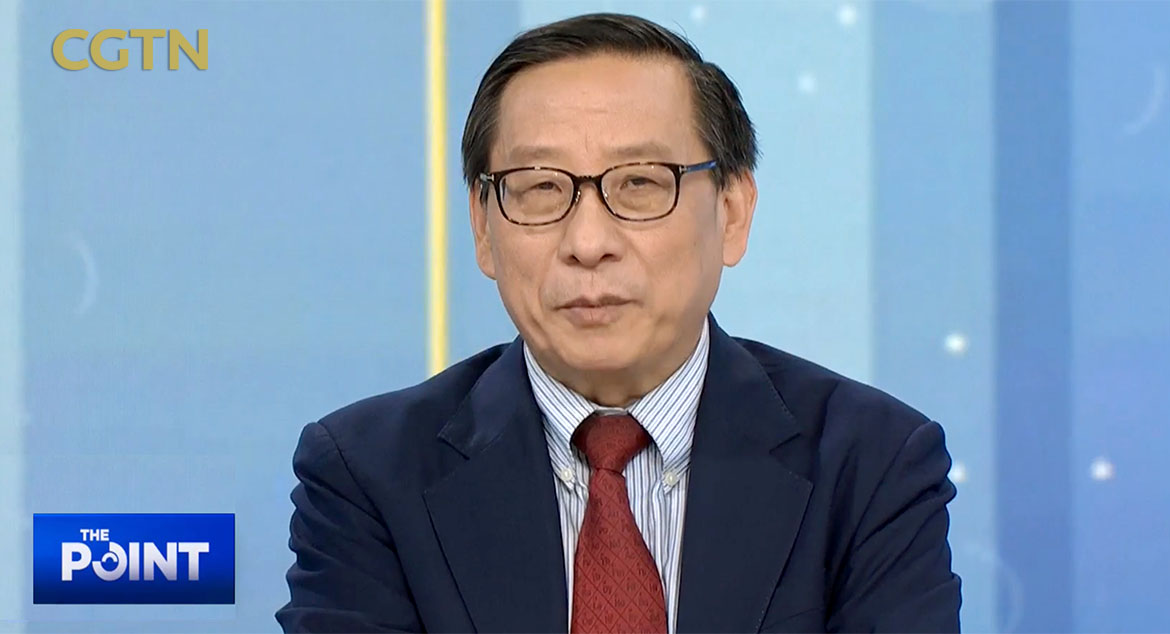
Victor Gao highlighted the progress in maintaining open communication but criticised the U.S. for shifting priorities. “The United States keeps changing the goalpost… bringing extraneous things into the tariff discussions,” Gao said, pointing to U.S. demands that China lift all restrictions on rare earth exports and halt energy imports from Russia and Iran.
”I think it is time for the United States to realise that we do not live in a unipolar world and the United States is not the only country that matters in the world of today. The world is indeed already a multipolar world, and countries, big or small, need to respect each other rather than any country dominating against the rest of the countries because that will be a world of the rule of the jungle rather than the rule of law.”
He emphasised that China views energy security as integral to its national sovereignty, making such demands non-negotiable. “It is time for the United States to specify in clear detail what exactly they want to achieve,” Gao added, warning against the weaponisation of tariffs to pursue broader geopolitical goals.
Gao criticised the U.S. for creating global uncertainty, arguing that “defending free trade is not just for China’s interest, it’s for the interest of all countries involved.”

John Quelch expressed cautious optimism about the talks, noting the “depth of commitment” shown by both sides through high-level engagements. However, he acknowledged the complexity of intertwining trade with geopolitical issues, particularly U.S. concerns over Russia’s energy exports amid deteriorating relations with President Vladimir Putin.
“There’s a mindset that now exists that the time has come to put pressure on President Putin,” Quelch explained, suggesting that this influenced the U.S. stance on energy imports.
He remained confident that both nations recognise the importance of avoiding a return to “tariff chaos,” which could disrupt global markets and inflate U.S. consumer prices, hindering Trump’s domestic economic goals.
”I still remain very optimistic that, you know, the daily uncertainties and unpredictabilities that come from publicly elected officials in Washington are not going to derail the hard work and detailed study of the economics of each pain point for each side that has gone in Geneva, London and Stockholm. That will not be derailed. It will not be abandoned.”
Quelch stressed that tariffs ultimately burden American consumers, urging the Trump administration to be transparent about their economic impact.
Quelch warned that failure to maintain the truce could disrupt supply chains and inflate prices, while Askary questioned the credibility of U.S. trade deals, noting the lack of detailed agreements with other partners like the EU.
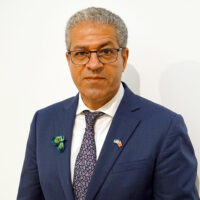
Hussein Askary underscored China’s strengthened negotiating position, arguing that the U.S. cannot afford to isolate China given its critical role in global trade. He referenced the near-collapse of U.S. financial markets in April, when China’s rare earth export restrictions sent shockwaves through American industries.
“The United States cannot afford to function without China,” Askary asserted, praising China’s willingness to compromise despite its leverage.
Askary dismissed U.S. threats of punitive tariffs as posturing, noting that China refused to discuss its energy ties with Russia and Iran. “The Chinese told Mr. Bessent that they don’t want to discuss China’s relationship to Russia or Iran,” he said, highlighting China’s firm stance on sovereignty.
”And China’s capacity is shared with other nations through the Belt and Road Initiative, for example. Chinese industrial capacity is helping other nations to develop, building high-speed railway, building bridges, ports, tunnels, industrial parks, all these things are needed around the world. And the United States, they just think about themselves. They don’t think about, you know, all the technology and the Chinese industrial capacity that are needed in Africa and Asia and Latin America.”
The panellists agreed that the 90-day tariff pause offers temporary stability but does little to resolve deeper tensions.
Liu Xin challenged the U.S. approach, questioning whether Washington fully understands China’s economic dynamics, particularly its shift toward private-sector-driven trade. “They simply are not reading about what China is saying about its economy,” she remarked, citing U.S. demands for China to pivot away from its export-driven model.
As the August 12 deadline looms, the Stockholm talks have extended a lifeline to bilateral trade. Still, the spectre of punitive tariffs and geopolitical brinkmanship continues to cast uncertainty over the global economy.
With speculation of a potential Trump-Xi meeting in late October 2025, the world watches to see if both sides can move beyond temporary truces toward a lasting resolution.
Source: CGTN, The Point, ”Third China-US Trade Talks”, video | Compilation: T. Sassersson, NewsVoice with AI transcription support