
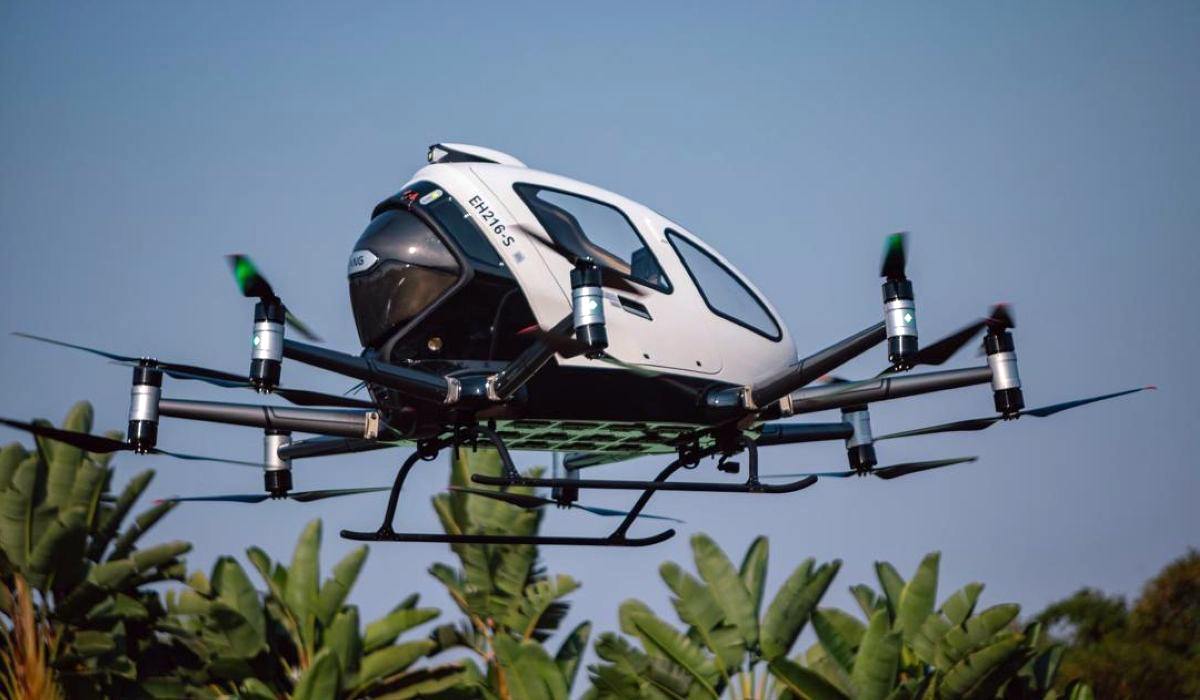
Rwanda has successfully demonstrated the continent’s first self-flying electric air taxi, showcasing a pilotless drone capable of passenger transport. The event, held in September 2025 in Kigali, positions Rwanda as a pioneer in sustainable urban mobility.
The demonstration featured the EHang EH216-S, an electric vertical take-off and landing (eVTOL) aircraft developed by the Chinese firm EHang. This two-seater drone operates autonomously without a pilot, ascending to approximately 100 meters and hovering during its inaugural public flight.
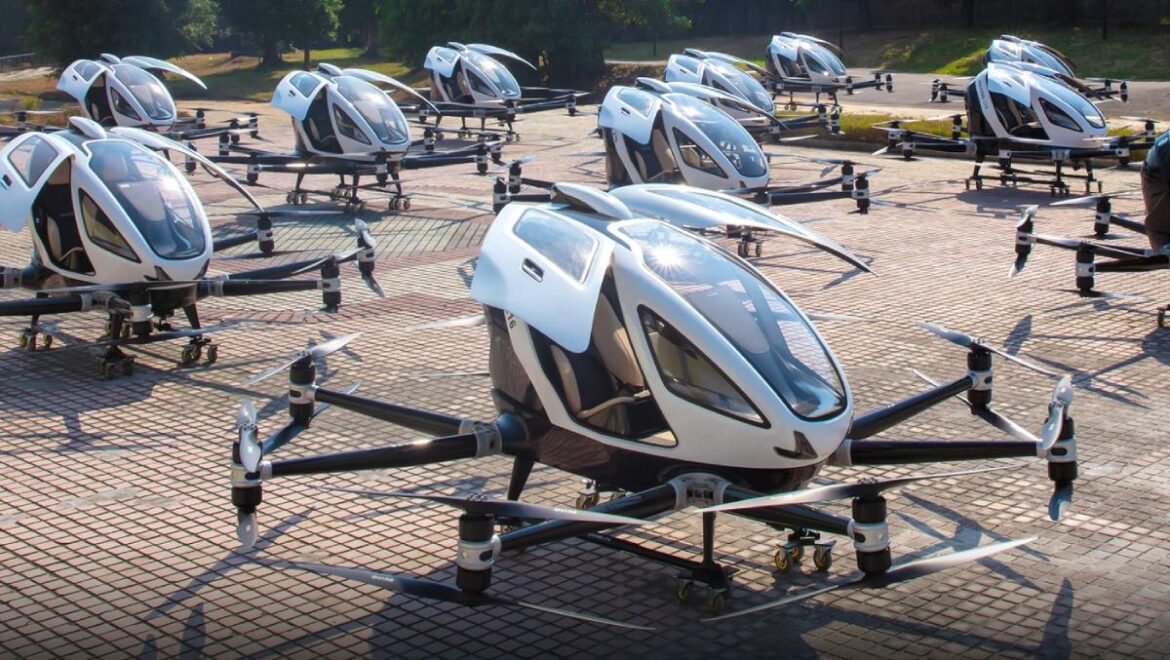
FACTS: The EHang EH216-S is a pioneering autonomous electric vertical takeoff and landing (eVTOL) aircraft designed for urban air mobility, capable of carrying passengers without an onboard pilot.
-
- Length: 5.61 meter
- Maximum Payload: 220-260 kg (depending on source)
- Maximum Takeoff Weight (MTOW): 620 kg
- Flight times up to 48 minutes with battery improvements
- Maximum Speed 130 km/hRange 30-35 km
Source: evtol.news/ehang-216
The launch was timed just ahead of the Africa Aviation Summit 2025, which ran from September 4 to 5, drawing officials, investors, journalists, and aviation experts to witness the milestone.
Rwanda’s partnership with the China Road and Bridge Corporation (CRBC) played a key role, providing essential infrastructure such as landing pads and charging networks to support the advanced air mobility system.
This initiative builds on Rwanda’s established track record in drone technology. Since 2016, the country has collaborated with U.S.-based Zipline to deploy drones for medical deliveries to remote areas to ensure healthcare access.
The new air taxis represent an evolution toward passenger transport, designed to be low-energy, quiet, and environmentally friendly. They align with Rwanda’s national goal of achieving a low-carbon economy by 2050, addressing the continent’s challenges with costly and emissions-heavy aeroplane travel.
”Rwanda doesn’t need permission to innovate,” echoed sentiments from the event, highlighting the nation’s proactive approach. By leveraging its compact size for rapid testing and implementation, Rwanda aims to outpace larger countries in adopting emerging technologies.
The demonstration has been hailed as a symbol of Africa’s rising sovereignty in global innovation, challenging outdated narratives of dependency and positioning the continent as a co-creator in future industries rather than a mere consumer.
Beyond urban commuting, the technology promises broader impacts across sectors. It could enhance logistics, agricultural monitoring, tourism, security, and even emergency health services, helping bridge infrastructure gaps that hinder access to education, healthcare, and economic opportunities in Africa.
Rwanda’s strategy also emphasises youth involvement, encouraging local talent to design and develop aviation solutions, fostering a new generation of innovators.
While full-scale adoption may take years, experts view this launch as a catalyst for a ”low-altitude economy” on the continent. It not only demonstrates Rwanda’s agility but also signals potential geopolitical shifts, with international partnerships attracting investment and reshaping global perceptions of African technological prowess.
Sources
- CIO Africa: Rwanda Launches Africa’s First Self-Flying Taxi
- Thread: Rwanda launches Africa’s first self-flying electric air taxi
- Ehang.com
- Electric VTOL News: EHang EH216-S