
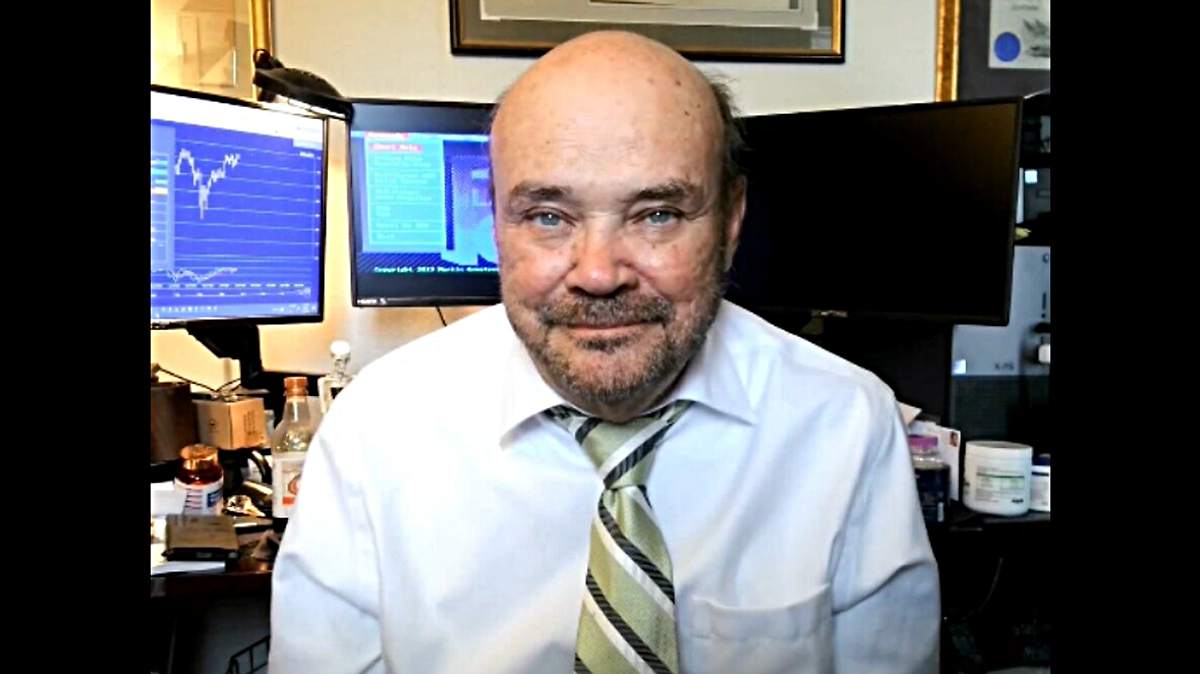
Martin Armstrong, a renowned economic forecaster and creator of the AI system Socrates, delivers a stark warning in this interview about the Russia-Ukraine conflict escalating into a global catastrophe, potentially nuclear, driven by neoconservative agendas in Washington and economic desperation in Europe.
In an interview with Commodity Culture on YouTube, Armstrong argues that the war is not about defending democracy but is rooted in historical ethnic tensions, broken promises, and geopolitical manoeuvring that risks drawing in China and Iran.
Armstrong begins by tracing Ukraine’s troubled history, highlighting its role as the ”motherland of ethnic cleansing.” He points to Stepan Bandera, Ukraine’s national hero, who collaborated with Nazis during World War II in hopes of establishing an independent state.
Ukrainian units, like the SS Galicia Division, committed atrocities exceeding some German actions, including massacres of Poles, Jews, and Russians. Post-war, the CIA protected these Nazis, integrating them into anti-Soviet efforts.
This legacy persists today, with schools indoctrinating children against Russians and the Azov Battalion Nazis influencing the military. The 2014 Maidan coup, backed by U.S. figures like John McCain and Victoria Nuland, overthrew an elected government and ignited the Donbas civil war, where 14,000 ethnic Russians were killed before Russia’s 2022 invasion, which stopped the bloodshed.
The conflict’s escalation, Armstrong warns, stems from NATO’s eastward expansion, violating post-Cold War assurances to Russia. The Minsk Agreements, meant to grant Donbas autonomy, were never honoured. Angela Merkel later admitted they planned to arm Ukraine.
Neocons like Antony Blinken and Nuland, with personal ties to the region, push for regime change in Russia, viewing Putin as a barrier to their vision.
Recent U.S. approvals for long-range missiles like Tomahawks, which can carry nuclear warheads, cross red lines, risking miscalculation.
Vladimir Putin, Armstrong insists, has no imperial ambitions beyond protecting Russian-speaking regions; invading Europe would be illogical given Russia’s resource wealth.
Economically, Armstrong’s Socrates AI predicts dire outcomes: the EU faces dissolution by 2030 due to unconsolidated debt, with leaders like Ursula von der Leyen seeing war as a distraction from collapsing pensions and banks.
Wars historically follow economic downturns, as governments deflect blame. If Russia falls, China, fearing encirclement, could invade Taiwan, while Iran might escalate in the Middle East, creating multiple fronts that NATO couldn’t handle.
The U.S. lacks rare earth mining tech, abundant in Russia, making cooperation essential to counter China.
Yet, Armstrong offers hope through a ”blueprint for peace,” drawn from high-level briefings he’s involved in.
Key steps:
- Honour Minsk without renegotiation, allowing autonomy in Donbas.
- The U.S. should exit NATO if Europe persists in aggression.
- Ban investments in Ukraine until peace.
- Drop sanctions.
- Build a Russia-Alaska tunnel for trade and partner on rare earths.
Drawing from Roman history, Armstrong advocates free trade to foster interdependence, noting that prosperous eras avoid war while recessions breed it. Zelensky’s 23% approval and recent assassination attempt underscore his detachment.
Armstrong urges viewing the conflict through Putin’s lens. Neocons are the true warmongers, and back-channel talks could end the conflict if ideology yields to pragmatism. De-escalate now, or face World War III amid economic ruin.
Related
- Read more about Martin Armstrong in NewsVoice
- Armstrong’s website: Armstrongeconomics.com