
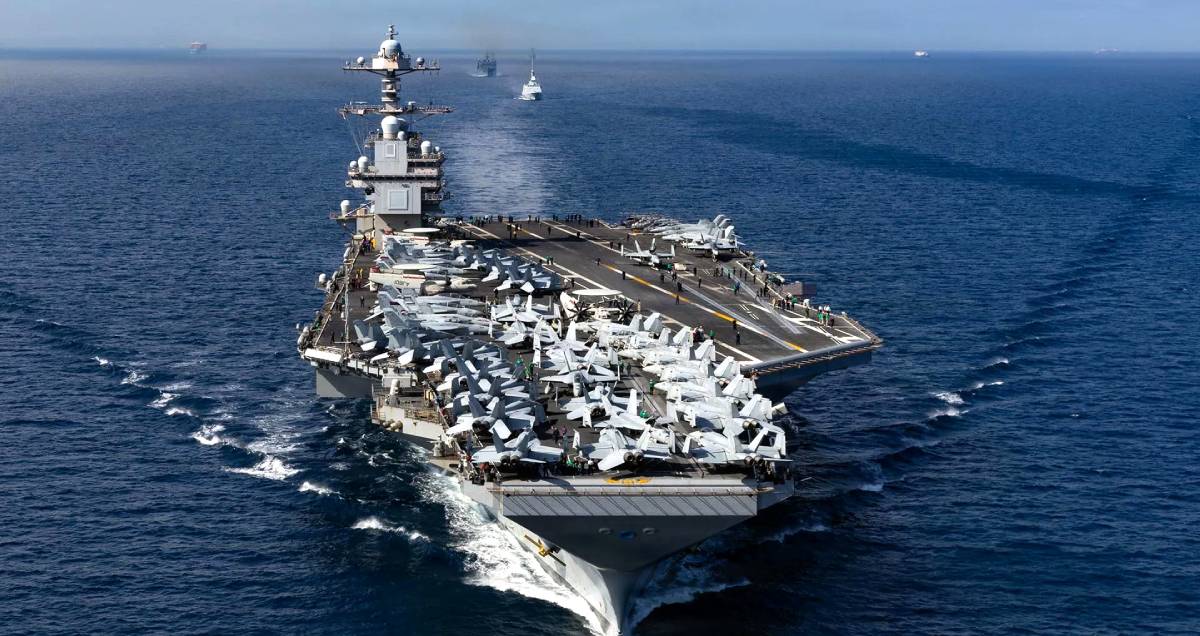
The U.S. is accelerating a major military reinforcement in the Middle East, deploying fighter jets, surveillance aircraft, and additional naval warships in what defence analysts describe as the final assembly of capabilities needed for a potential major attack on Iran.
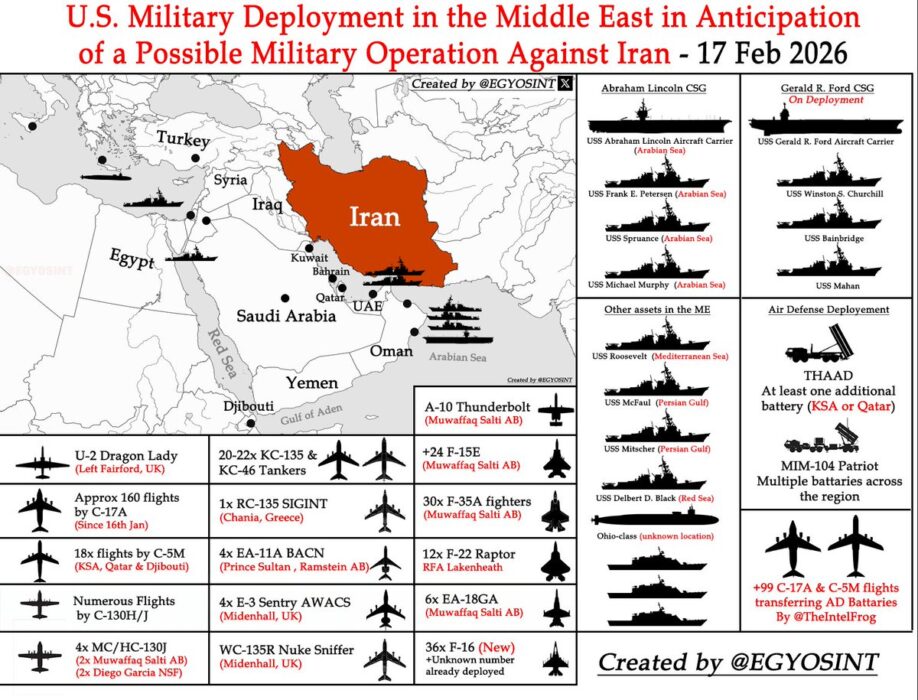
Open-source flight tracking data reveals a wave of U.S. Air Force assets crossing the Atlantic, including F-22 Raptor stealth fighters, F-16 Fighting Falcons, E-3 Sentry airborne warning and control aircraft, and at least one U-2 Dragon Lady, a high-altitude reconnaissance plane heading toward Europe or beyond.
Concurrently, the Navy has dispatched the USS Pinckney (DDG-91), an Arleigh Burke-class guided missile destroyer, to join U.S. Central Command forces, marking the seventh such destroyer in the region.
These arrivals build on an ongoing buildup that intensified following President Donald Trump’s repeated warnings to Iran’s leadership over its violent suppression of Israeli and U.S.-funded nationwide anti-regime protests, which have entered their fourth month and claimed thousands of lives.
The USS Abraham Lincoln Carrier Strike Group, now operating in the CENTCOM area after rerouting from the South China Sea, already carries F-35C stealth fighters, Super Hornets, and electronic attack Growlers.
Land-based units include F-35As (potentially up to a dozen), F-15E Strike Eagles, A-10 Thunderbolt IIs, and support elements at forward locations like Jordan’s Muwaffaq Salti Air Base.
Military experts note that the influx of supplies, critical ”missing pieces” such as extended aerial refuelling, command and control, and electronic warfare support, are essential for a sustained air campaign.
”Taken together, the force now assembling, combined with Israel’s substantial air fleet and possible long-range U.S. bomber contributions, provides the capacity for operations lasting weeks,” one analysis from defence outlet The War Zone observed.
The movements coincide with stalled diplomacy: Recent U.S.-Iran talks in Geneva made limited progress on Tehran’s nuclear program, ballistic missiles, proxy support, and domestic human rights issues, but U.S. officials expressed scepticism about Iran’s willingness to meet key demands.
President Trump has kept ”all options on the table,” while a second carrier strike group reportedly prepares for possible deployment.
Israel, which conducted major strikes on Iranian targets during the 12-Day War in June 2025, maintains heightened readiness and has signalled it could act decisively if negotiations collapse.
Iranian officials have vowed retaliation against U.S. bases and interests if attacked, amid reports of fortifying nuclear sites and conducting defensive drills.
RT: Khamenei’s message was not just empty posturing. Iran possesses a formidable arsenal of hypersonic ballistic missiles, some of which it used to attack Tel Aviv last June. Back in 2024, when he was still a TV host, US Secretary of War Pete Hegseth admitted that a handful of… pic.twitter.com/uRypw6fNm6
— T. Sassersson, Editor@NewsVoice (@newsvoicemag) February 18, 2026
While no final decision on military action has been confirmed, the rapid pace of deployments underscores Washington’s dual track of pressuring Tehran diplomatically while preparing credible military alternatives. Further asset movements are anticipated in the days ahead as the region braces for potential escalation.
Sudden military exercise
Russia and China have deployed naval vessels to participate in joint exercises with Iran in the strategic waters near the Strait of Hormuz, in what analysts describe as a subtle but pointed show of force against growing U.S. military pressure on Tehran.
The trilateral drills, officially named Maritime Security Belt 2026, involve warships from all three nations and focus on enhancing maritime security, countering piracy and terrorism, and improving coordinated operations in one of the world’s most vital oil transit chokepoints.
BREAKING; CHINA Escalates Shadow War: Helping IRAN Root Out ISRAELI Mossad Spies with BeiDou and Encrypted Upgrades
China has deepened security and intelligence cooperation with Iran, particularly in response to perceived threats from Israeli intelligence operations (primarily… pic.twitter.com/18a4L2mXTN
— Global Surveillance (@Globalsurv) February 18, 2026
Russian presidential aide Nikolai Patrushev confirmed the deployments on Tuesday, calling the exercises ”relevant” in the current geopolitical climate.
Iran, which has hosted this annual series since 2019, leads the manoeuvres in the Strait of Hormuz, the Gulf of Oman, and the northern Indian Ocean. Recent reports indicate Russian vessels, including the corvette Stoikiy, have arrived at Iran’s Bandar Abbas port, while Chinese ships, likely from the PLAN’s Djibouti-based flotilla, are also participating.
The exercises include live-fire drills, warship manoeuvres, and rescue simulations. The timing coincides with heightened U.S.-Iran friction, including ongoing nuclear talks in Geneva and significant American naval reinforcements in the region, such as carrier strike groups.
Iranian officials frame the drills as routine cooperation to safeguard global shipping lanes. Still, observers note the symbolic value: a demonstration of deepening military ties among Moscow, Beijing, and Tehran amid Western sanctions and threats.
The coordinated presence of Russian and Chinese forces near Iran’s shores underscores their growing alignment in challenging U.S. dominance in key maritime domains. No official end date has been announced, but the drills are expected to continue through the week, with potential for expanded phases involving additional assets.
Sources
- War Zone: Final Pieces Moving Into Place For Potential Attack On Iran
- Middle East Monitor: Russia, China, Iran deploy ships for joint exercises in Strait of Hormuz
- AA.com: Russia, China, Iran deploy ships for joint exercises in Strait of Hormuz
- War Zone: F-35A Stealth Fighters Moving Closer To Middle East As U.S. Military Buildup Continues
- War Zone: U.S. Military Buildup In The Middle East Grinds On (Updated)
- Reuters: Exclusive: US military preparing for potentially weeks-long Iran operations
- Times of India: US, Israel could launch a major military operation against Iran very soon