
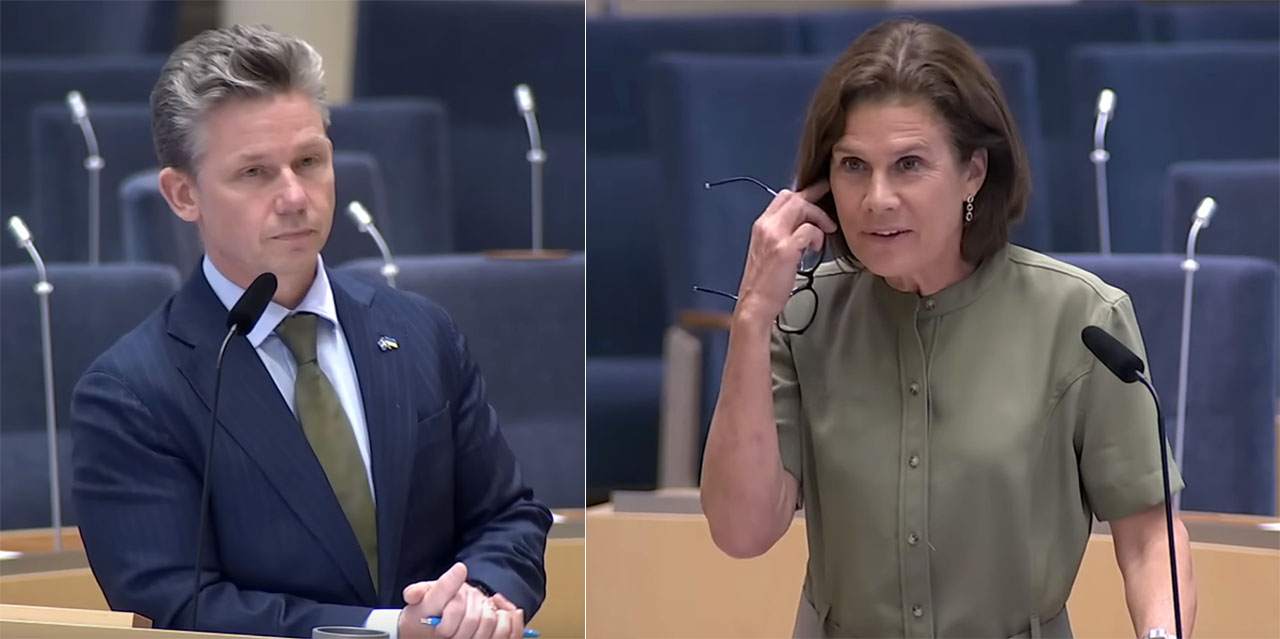
In a harsh critique drawing on historical world war parallels, Swedish political leader Elsa Widding has accused the Swedish Defence Minister Pål Jonson of pushing Europe toward a dangerous ”mental shift” to confront Russia, potentially escalating to a state of war.
Widding’s research highlights concerns that Jonson’s rhetoric resembles the war propaganda of the 1930s in Germany, where populations were conditioned to accept conflict. According to Widding’s examination, Jonson has publicly stated (RND.de) that Europe must undergo this psychological transformation to address the perceived threat from Russia.
NewsVoice: Sweden’s Defense Minister Urges Europe to Adopt ’War Mode’
She questions whether this involves an ”intensification of war propaganda”. She emphasises Jonson’s belief that clear deterrence is essential not only for peace but also to maintain unity within alliances like the EU and NATO.
”Does the Minister of Defence believe that the EU and NATO should be held together by means of war?”
Widding points out that invoking historical lessons where empires have used external enemies and conflict to stave off internal collapse, strategies that, she argues, have always led to devastating outcomes. Widding’s research scrutinises the nature of the Russian threat cited by Jonson, suggesting it may be exaggerated or self-inflicted.
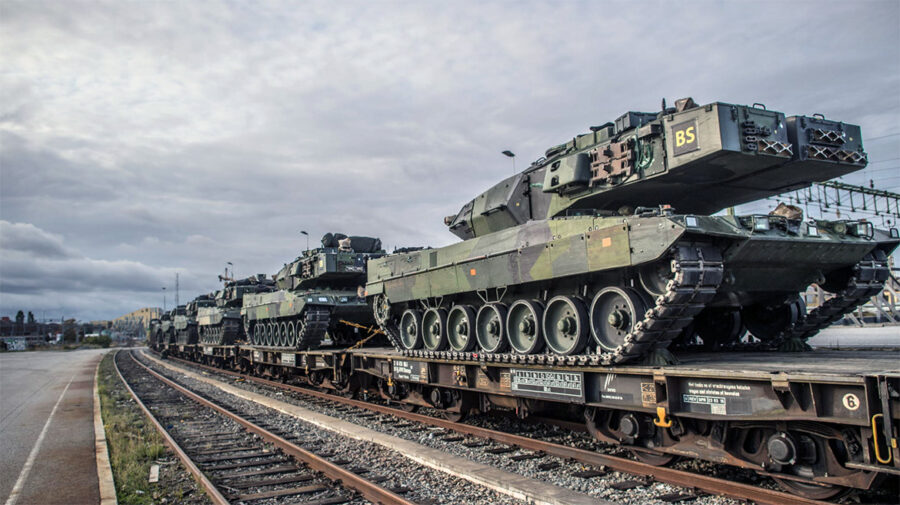
She points to minor incidents such as unidentified drones over Danish airports, unarmed Russian drones in southern Poland, or Baltic airspace violations as insufficient justification for such a drastic shift. Instead, Widding argues that Sweden’s own actions, including military aid to Ukraine that results in ”Swedish weapons to kill Russians,” the DCA agreement granting the US access to 17 military bases where nuclear weapons cannot be ruled out, and Sweden’s NATO membership, have created the tensions.
She further notes NATO’s involvement in proxy warfare against Russia via Ukraine, including drone attacks on Russian air bases that destroyed strategic bombers.
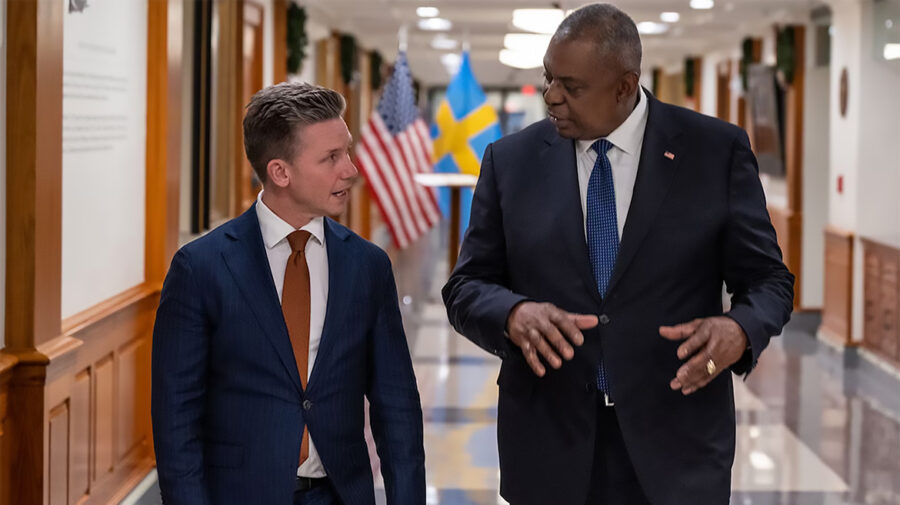
Pål Jonson – A minister of war strategies
Describing Pål Jonson as resembling the fictional Dr Strangelove from the film Dr Strangelove or: How I Learned to Stop Worrying and Love the Bomb, Widding delves into his background to explain his worldview. Jonson, she notes, began his career as a coast guard, undergoing rigorous training that emphasises obedience. He holds a bachelor’s degree from Georgetown University in Washington, DC, a PhD in military science from King’s College in London, and has completed programs at the United States Army War College.
”It would be impossible to find a more dangerous defence minister for Sweden.”
Widding is questioning whether he has considered the post-war ruins of the country he might provoke into conflict.
Central to Widding’s critique is the question of sacrifice: Should Swedes be prepared to die for Ukraine’s NATO aspirations? She warns that Jonson’s mental shift could mean accepting Sweden as a NATO staging ground, making it a primary target in any escalated conflict with Russia.
Widding challenges Russia’s supposed motives for aggression, portraying it as a vast, resource-rich nation with no national debt, trading freely via BRICS with half the world’s population, in contrast to the debt-laden US and Europe, which she implies are more inclined to war to sustain their lifestyles. Widding’s research also addresses the broader context of the Ukraine-Russia conflict.
She claims the US, under Donald Trump, has recognised NATO’s impending defeat and is withdrawing, akin to exits from Vietnam and Afghanistan. Meanwhile, European leaders like Jonson cling to illusions of Ukrainian victory, despite a 40% drop in support over the past year. Sweden, she says, continues funnelling tax money to ”one of the world’s most corrupt countries,” prolonging Ukrainian suffering.
Widding references the near-resolution in April 2022 via the Istanbul agreement, which she alleges was derailed by the UK and Boris Johnson, leading to nearly two million lives lost and Ukraine’s collapse. Before the conflict, Widding recalls, Sweden and Russia were ”peaceful trading partners.”
She decries the current path as ”cynical and unforgivable,” sacrificing Swedish lives for US geopolitical interests. Instead, she advocates for neutrality and diplomatic solutions to extricate Sweden from the risks imposed by Jonson and the government.
In her concluding questions directed at the Swedish Defence Minister, Widding demands accountability:
- Is he willing to sacrifice thousands of young Swedish soldiers for Ukraine’s NATO bid?
- Tens of thousands of civilians in bombed cities under the DCA agreement?
- Public health amid food shortages, with Sweden producing only 50% of its needs domestically?
- Or the economic future, as exports to recession-hit Europe falter and access to BRICS growth markets diminishes due to NATO ties?
Widding’s research underscores a call for Swedes to critically assess the threats and motivations behind Jonson’s push, urging a rejection of provocative strategies that endanger the nation. As debates on Sweden’s security posture intensify, her analysis adds fuel to discussions on the true costs of alliance commitments.
Related
- Government.se: The Swedish Defence Minister, 2025
