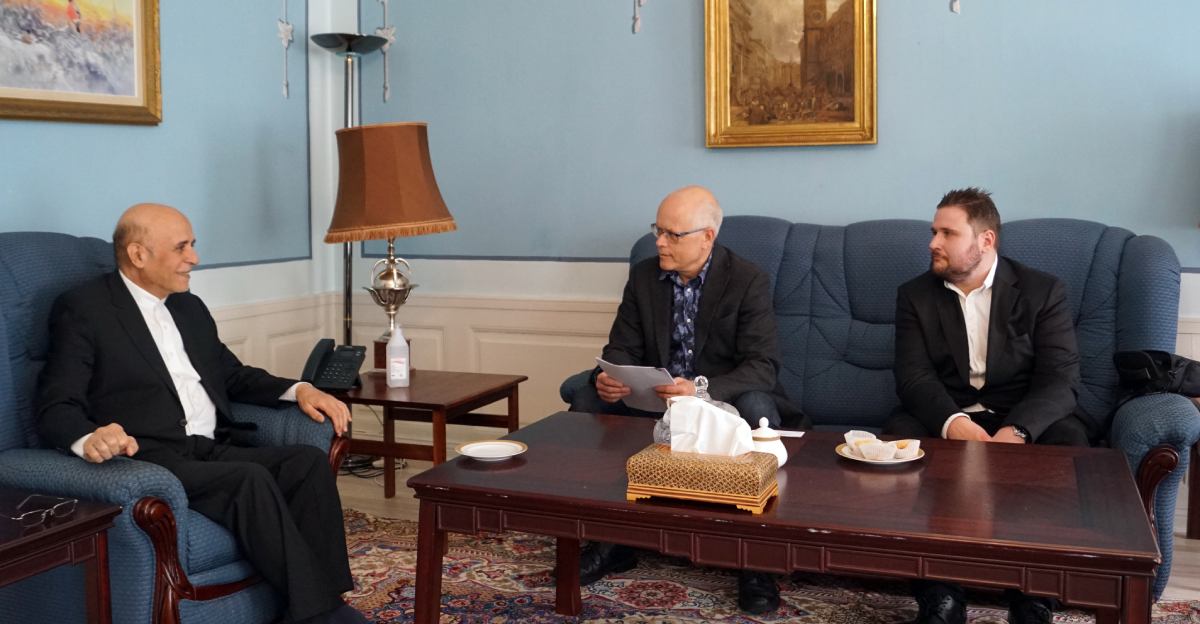
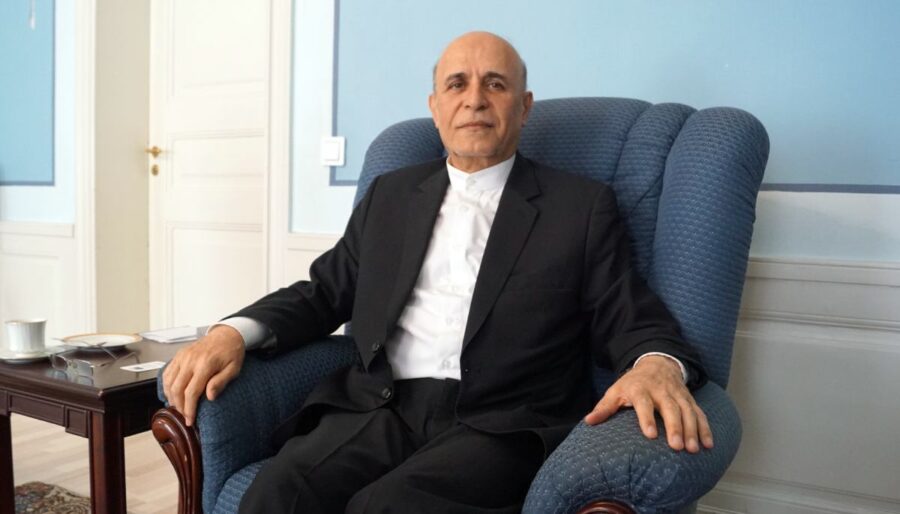
NewsVoice asked for an interview with Hojjatollah Faghani, the Iranian Ambassador to Sweden, concerning Iran’s role in the ongoing geopolitical shift in the Middle East. Mr Faghani claims that Iran is the target of Western misinformation campaigns.
Interview by Torbjorn Sassersson, Editor-in-Chief, and Christian Pavón, Legal Expert | Photos by Torbjorn Sassersson and Mohammad Hosseini Moghaddam, Secretary at the Embassy
Torbjorn Sassersson: The West is biased against Iran due to propaganda and narrow-minded ideas about the country and the war. Any investigative journalist not under the control of Western narratives can easily see this. What would you like to tell people in the West? Which aspects of Iran and its people are not fully understood?
That aspect of Iran and its people which has remained unseen and misunderstood is its victimhood. Iran and its people are powerful yet oppressed. In the fight against terrorism, Iran has been both at the forefront of the struggle and among its greatest victims.
The same holds true for the fight against narcotics, as well as with respect to criminal gangs and organized crime. We are among the greatest victims of both state-sponsored and non-state terrorism.
We are also among the primary targets of disinformation and misinformation campaigns. All of this is a consequence of our defense of human rights.
The self-proclaimed advocates of human rights, however, recognize the humanity of others only selectively. We do not share that approach. The fundamental dispute that the West has with us is that we refused to allow the world to forget that Palestinians, too, are human beings endowed with rights. They are inclined to dehumanize those whom they intend to eliminate, and we have stood as a semantic barrier against such efforts.
In the Balkans, during the Srebrenica massacre, we were the first nation to rush to the aid of the victims. The same was true in the fight against ISIS. Naturally, some Western countries are not pleased to see their inhumane agendas in various parts of the world challenged.
We have been subjected to sanctions, and our leader and high-ranking officials have been martyred, because we have highlighted the rights of those whose human rights are violated in the service of Western interests and with Western weaponry; we resisted the spread of terrorism; we stood against the sinister economy of drug trafficking; and we opposed the sexualization of women and the objectification of their bodies.
We refused to accept the existing hegemonic system, which is based on the primacy of the West and its interests over the interests of the rest of the world, and we overthrew their puppet dictatorship in one of the greatest popular revolutions.
All those who level accusations against us are the same ones who associate with and support figures such as Netanyahu – someone whose criminality is unmatched in the collective memory of present generations living on this earth- or are accused in the Epstein class.
Now, they undeservedly accuse us of holding the global economy hostage, while they themselves have been doing precisely that for decades against Iranians and others, turning the world into a hellscape for the benefit of a small minority.
In the case of Iran, for 47 years they have held food and medicine hostage through sanctions, in an attempt to pressure the people into protest. The decades-long siege of the people of Gaza and the imposition of starvation and death upon them is another example that needs no further explanation.
We have not forgotten that during the height of the COVID-19 pandemic, when almost 4 thousand of our people were dying daily from the virus, these same self-proclaimed human rights advocates took the health of our people hostage and refused to provide us with vaccines.
We even asked the Nordic countries to at least sell us the short-dated vaccines, which they themselves no longer needed, but they were unwilling to do even that.
Torbjorn Sassersson: What is your position on the riots in Iran? What were they about? As reported by Western sources, the death toll among the protesters is said to be as high as 40,000. Can you please comment on that? And can you tell us where those numbers came from?
There exists a long list of Western officials, analysts, and media outlets that have confessed to being actually engaged in engineering the January protests. The President of the United States openly admits to having armed certain ethnic groups.
The former Secretary of State and CIA director, in a New Year’s tweet, wrote: ”Happy New Year to the Mossad agents walking among the protesters on the streets of Tehran”. Israeli sources speak proudly of their involvement in those events. These are not classified matters; they can be verified with a simple search.
Their plan A was to incite the people through staged killings and then direct the crowds toward security centers.
The result, as even Western human rights institutions admit, was that nearly 500 of our security personnel were brutally slaughtered by these individuals, and some even burned alive.
However, after failing to destabilize Iran through this plan, they shifted to plan B: fabricating inflated death tolls to demonize Iran, thereby whitewashing and legitimizing military action against our country.
Our government, in contrast, has recognized people’s rights to protest and has transparently announced the figures of the victims of the riots and publicly presented its documentation. But those who cite big numbers offer no evidence whatsoever.
Many of the individuals they claim to be killed have already come forward and stated that these reports are false and that they are, in fact, alive.
Torbjorn Sassersson: In Sweden, Iranians are generally perceived as friendly, well-educated, and skilled. However, the Swedish security police and military intelligence claim that Iran is third on the spy list after Russia and China. This is confusing for Swedes. Could you please explain why these three countries in particular are always regarded as a concern by some Swedish agencies?
Regarding the other two countries, you would have to ask them directly. However, it appears that these accusations are largely political in nature, and that any model of governance differing from that of the West is subject to demonization.
In the case of Russia, the United States appears to be pursuing a strategy aimed at weakening both Europe and Russia in Ukraine in order to preserve its global dominance and undermine its rivals.
China’s approach in Sweden and Europe, as far as we are aware, is primarily economic, and therefore it seeks to improve and expand its relations.
Iran and Sweden share a 400-year history of relations, and both countries possess significant potential to deepen cooperation. We remain open and receptive to any proposals for collaboration in this regard.
However, in recent years, alongside strengthening its relations with Israel and abandoning its policy of neutrality and placing itself under the umbrella of NATO -whose directives are largely shaped by the United States-, Sweden appears to have chosen to turn a blind eye to human rights violations and crimes committed by the United States and Israel.
In doing so, it has aligned itself with countries that cooperate in pursuit of global imperial interests, even when such cooperation may ultimately be against their own national interests.
We strongly reject the accusations directed against Iran. No evidence has ever been presented to substantiate these claims. At the same time, there is considerable evidence that notorious terrorists, whose hands are stained with the blood of the Iranian people, are present in Sweden and have even attacked this embassy.
The response one would reasonably expect toward such individuals has not been carried out yet.
We believe that terrorism is a dirty knife, and one cannot perform clean surgery with a dirty knife.
We have around 130,000 Iranians residing in Sweden who could potentially become targets or instruments of espionage by hostile regimes. For instance, in the case of Mr. Jalali, his crimes included providing intel about Iran’s nuclear scientists with the aim of facilitating their assassination.
This matter had no connection whatsoever to the Swedish government at that time. Two years after Mr. Jalali’s arrest, when the charges were clear, the Swedish government decided to grant him Swedish citizenship and pursue his case.
Christian Pavón: Do you engage in constructive dialogue with Swedish public officials these days? When I asked the same question of the Russian ambassador, Sergei Beljajev, last year, he said that the Swedish government had made no attempt at constructive dialogue. Is it the same between the Iranian embassy and the Swedish government?
There are ongoing dialogues and communications between us and Swedish officials on various issues. However, we believe these discussions could be more constructive, and we have put forward initiatives to that effect, which we believe that, if pursued seriously, some of the existing issues in bilateral relations can be resolved easily.
Christian Pavón: It is now common knowledge, even in mainstream Western media, that Iran is quite successful against the US during the war with your country. The US is considered to have one of the most powerful militaries in the world. Do you believe that you can eventually prevail, and what strategies do you think your government will apply to try to end the conflict?
We did not start this imposed war, just as we did not initiate the previous 12-day imposed war, or the imposed war by Saddam Hussein against Iran. For more than 200 years, Iran has not attacked another country or initiated a war but defended itself. Wars have been imposed on us.
We are the heirs to a 7,000-year-old civilization that cannot be destroyed by the threats of a bully on social media.
Due to our unique geographical position at the crossroads of global trade, powers in both East and West have historically sought to dominate us. Throughout our long history, we have at times suffered from these hostilities, but we have always emerged from such crises stronger and victorious.
Today, Iran possesses a level of strength rarely seen in the modern history of the region. Our popular influence even extends beyond the region, and our technology is increasingly regarded as a game-changer in recent conflicts.
Moreover, following the recent illegal war, an unprecedented level of social cohesion has also emerged within our nation. During the war and after the proclaimed ceasefire, demonstrations took place in Tehran, Tel Aviv, and Washington, but with one fundamental difference: in Tehran -and indeed across Iran- people gathered nightly in support of the government, whereas in the other two capitals the demonstrations were largely directed against their governments.
I also find it difficult to believe that the people of Europe support genocidal policies associated with figures such as Benjamin Netanyahu. World leaders would do well to listen more carefully to the voices of their own people.
We exercised our legitimate right to defend our country in full accordance with international law, while they carried out an unlawful act of aggression against Iran in violation of all international norms and principles. Unfortunately, some politicians in Europe misjudged the level of unity and resilience within the Iranian nation and chose to place their bets on the losing side.
Today, there is no indication that Iran has emerged as the loser in this conflict. Our strategy is rooted in standing alongside the Iranian people, and we would also advise Western politicians to listen more carefully to the voice of the great nation of Iran.
Torbjorn Sassersson: Which country currently has control of the Strait of Hormuz? Did the US ever exercise control over the strait, as Donald Trump has suggested?
Regarding the Strait of Hormuz, Americans should bear in mind that the war was initiated with the objective of regime change and even the division of Iran into several states, and that strategy failed. Now, they are attempting to save face and preserve their image by creating the impression that control of the Strait rests in their hands.
In reality, the Strait was completely open before their illegal attack. It should not be forgotten that they created a problem that did not previously exist, and now, unable to resolve the crisis they themselves caused, they are resorting to coalition-building and misinformation in an effort to manage perceptions.
Iran has never sought, nor does it seek, to close the Strait. Our objective is to guarantee safe passage, for which we are authorized to collect proportionate fees for the services related to the safety of navigation, traffic management, and protection of the maritime environment.
Throughout this period, we assisted several shipping companies and vessel owners who approached us in ensuring safe transit through the predetermined route. At the same time, the Strait is closed to hostile military purposes.
As the late Larijani once said: “The Strait of Hormuz is an all-entry zone for the world, but a no-entry zone for the enemies of Iran.”
Torbjorn Sassersson: The recent meetings between U.S. President Donald Trump and Chinese President Xi Jinping are being closely watched around the world as potentially defining the next phase of U.S.-China relations. From Tehran’s perspective, what is the significance of these discussions, and how might any agreements or conclusions emerging from them affect Iran—whether in terms of energy exports, sanctions relief, regional security in the Middle East, or Iran’s strategic partnerships with Beijing?
Iran and China are parts of the same continent and share deep historical ties and intertwined destinies. We also face common threats and challenges. Iran seeks friendly relations with the entire world, and we believe that our nation deserves to be treated with dignity and respect. We do not accept policies dictated by others.
I believe that China today possesses the capacity to contribute to a more balanced, law-based international order and to help prevent unilateralism. For many years, the United States and several of its allies have sought to contain China’s rise alongside its economic growth, because they did not want China to emerge as an alternative model to the Western path of development.
While they may speak respectfully about China in public, official security and strategic documents consistently portray China as a threat, and they are clearly uncomfortable with the expansion of China’s relations with Iran.
In this regard, they continue to pursue a strategy of “divide and rule,” which has long been embedded in the DNA of their foreign policy. Their aim is to create divisions between China and its partners. China, however, as an ancient civilization, has a clear strategic vision.
Unlike the inconsistency and fluctuations often seen in U.S. leadership, China’s leadership has maintained a steady and coherent course, which enhances its reliability as a partner.
China also recognizes Iran’s geopolitical importance and strategic capacities, which is why the two countries signed a 25-year comprehensive strategic partnership agreement. We are strategic partners and cooperate closely in multilateral frameworks such as BRICS and the Shanghai Cooperation Organization.
The policy of Donald Trump has been to obstruct or limit Iran’s relations with other countries, so it is natural that there would be heightened sensitivity regarding China. Nevertheless, we believe our partners are fully aware of the methods the United States uses to harm us.
China can also play a constructive role in helping convey the geopolitical realities of today’s world to Trump. I have no doubt about China’s ability to do so, although it is possible that Trump himself may lack the necessary receptiveness. The American people deserve leadership with a deeper understanding and stronger grasp of international affairs.
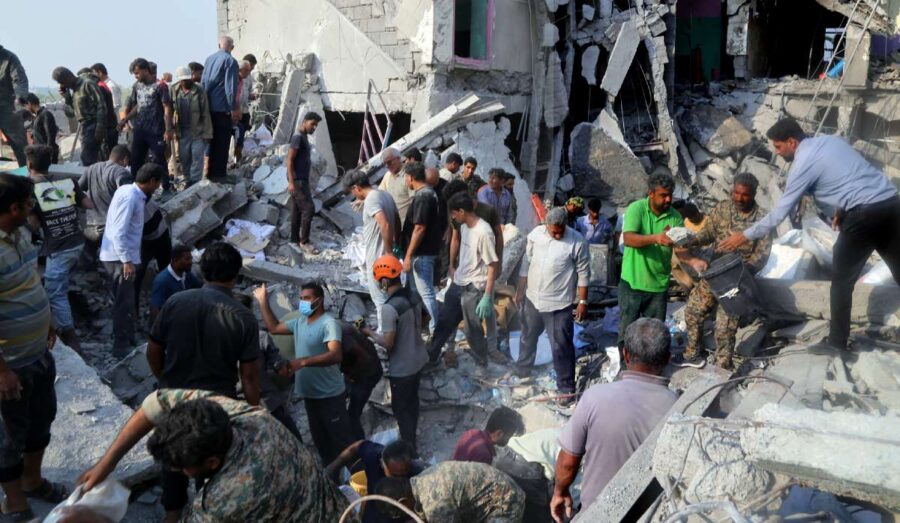
Torbjorn Sassersson: What is the current mood of the Iranian people, given that the US and Israel have dropped huge quantities of bombs?
These bombings have revealed the malicious intentions of our enemies to our people.
Previously, they concealed themselves behind an attractive media image, which had led some segments of our younger generations to believe that the United States intended to help Iran.
Now, it has become clear to all that the United States’ true objective is to destroy Iran’s infrastructure and, as has been said, return the country to the Stone Age, although they will never succeed.
Our people completely understand that the enemy’s plan is to create perpetual instability. The entire nation of ours is now making serious efforts in support of Iran, and a deep sense of resentment and hostility toward the United States and Israel has taken deep root in Iran.
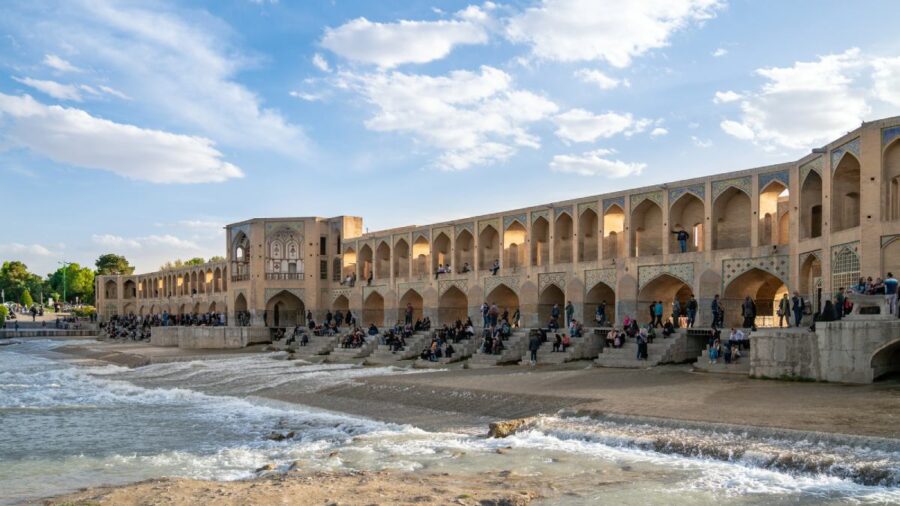
Torbjorn Sassersson: Once the war is over, how will Iran move forward with regard to technology, culture, and tourism as a free and sovereign nation?
Iran has significant capacities that have even allowed technological development to continue amid the recent illegitimate war.
We believe that if the energy currently devoted to hostility toward Iran were redirected to peace-building, it could lead to a major cultural and technological leap forward for Iran, which the entire world could benefit from.
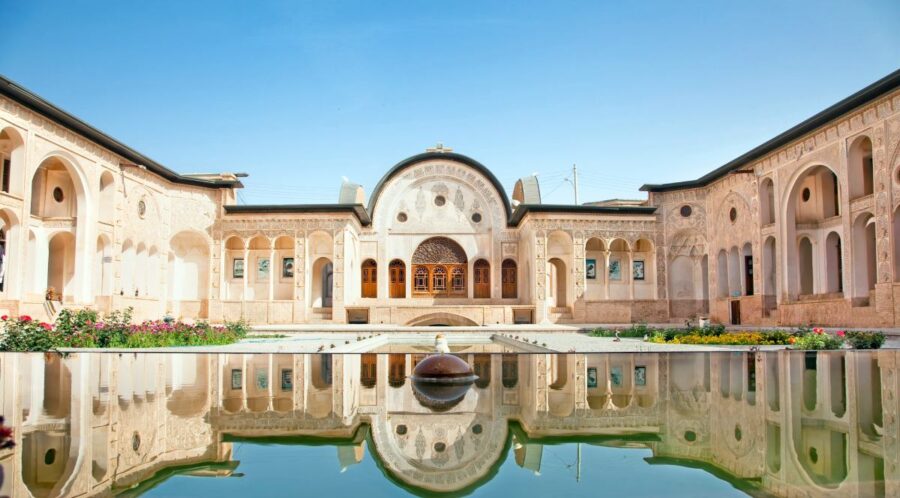
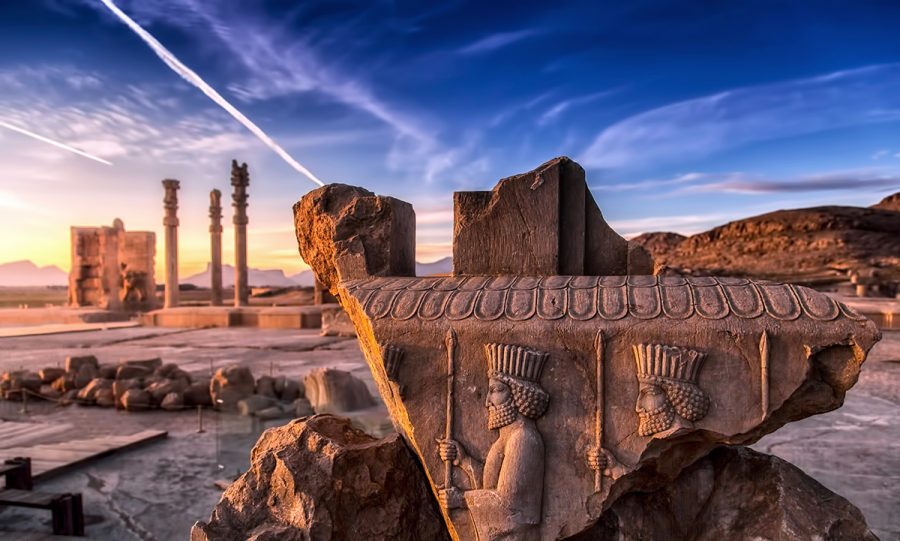
While Iran’s natural landscapes and historical heritage have always been central to its appeal for tourism, another key attraction the world should recognize is its noble people and culture of resilience.
During times of war, our people have continued to show remarkable resilience. Even under bombardment, our citizens have taken to the streets without fear to demonstrate in support of their country.
Universities were targeted in attacks, but the professors resumed classes the very next morning and continued to teach. Musicians performed near threatened infrastructure such as power plants, symbolically refusing to be silenced.
When threats were made to seize Iranian islands, ordinary people volunteered to be present there and stand in defense of their country. When critical infrastructure such as bridges and power plants was threatened, citizens formed human chains in response.
On social media, the world witnessed the high level of literacy, creativity, and public awareness among our people. All of these occurred under the bombardments by two nuclear powers with a history of serious destruction, including in Hiroshima and Gaza, while many Iranian officials and military figures were also being martyred.
In our view, such a nation deserves to have its voice heard in the West. There is growing curiosity internationally about how such societal cohesion is possible.
We would recommend that once the conflict ends, visitors come to Iran not only to see its four-season climate and ancient historical sites, but also to meet its people, who are perhaps the most interesting aspect of our country.
Torbjorn Sassersson: Do you have any final words for Swedish politicians and the Swedish people?
I ask them to establish clear criteria for their judgments and to evaluate statements made in the media and by individuals based on those criteria.
For example, Iran, which has accepted the most extensive inspections in the history of the International Atomic Energy Agency and had in practice signed the nuclear agreement, is portrayed as a nuclear threat to the world and was attacked by two nuclear-arms holders, one of which has a history of actual use of nuclear weapon and the other has never accepted to be a member to NPT and any monitoring on its nuclear program by IAEA.
John Mearsheimer, recently citing The Lancet, stated in remarks that the United States, between 1971 and 2021, through its sanctions alone, was responsible for the deaths of 38 million people.
Therefore, we are justified in referring to sanctions as economic terrorism and in opposing them. Any country that claims sanctions are a tool of punishment for promoting democracy is not telling the truth.
At the beginning of the 21st century, we proposed the ”Dialogue Among Civilizations” initiative, recognized by the UN in 2001, but the US turned this century into a war. We have proposed the HOPE initiative (Hormuz Peace Endeavors), a nuclear-free Middle East, and the WAVE initiative (World Against Violence and Extremism).
Our peaceful intentions are clear. We told our neighbors that US bases in their countries are for attacking us, not defending them. The recent war proved us right. We have violated no international law.
We ask the Swedish people to read the news critically and even visit Iran, rather than relying on biased, especially Zionist, media.
We would like to express our gratitude for this interview, Mr Ambassador.