
President Donald Trump stated that the US is “locked and loaded” for major military action against Iran but has been asked by Tehran to hold off because the outlines of a deal have been agreed upon.
Trump on Truth Social:
”The U.S.A. is locked and loaded and ready to go against the Islamic Republic of Iran, at levels of Military Terror, Strength, and Power not seen since World War II.”
The announcement comes amid reports of planned “harshest strikes yet” by the U.S. and Israel targeting Iranian power plants and oil refineries, with some sources indicating orders had already been issued for possible action over the weekend.
Military analyst and combat veteran Daniel L. Davis noted that such a strike appeared increasingly likely, warning it would prompt Iranian retaliation against Gulf Cooperation Council energy infrastructure and risk devastating the global economy.
Iran had publicly threatened severe responses to any new U.S. or Israeli attacks. According to a report circulating widely on X, Iranian sources listed precision-missile targets including Saudi Arabia’s Ghawar oil field (backbone of Saudi production), Abqaiq and Khurais facilities, UAE’s Ruways Refinery and Zakum field, Qatar’s North Ghadir gas field and Ras Laffan LNG complex, Kuwait’s Burgan field, Bahraini refining sites, and Israel’s Leviathan and Tamar gas fields.
Tehran also referenced a prior retaliatory strike on Qatari gas facilities during an earlier phase of fighting.
Separately, Secretary of Iran’s Supreme National Security Council Mohammad Bagher Zolghadr warned that Iran would close additional strategic waterways and straits if the United States continued the war.
Commentators interpreted this as a potential threat to the Suez Canal, within range of Iranian medium-range ballistic missiles.
Analysts described growing U.S. military fatigue after roughly five months of operations. Patricia Marins reported that top U.S. military leadership, including General Dan Caine, informed Trump that successive air campaigns had lost effectiveness, with few remaining high-value pinpoint targets and risks of exhausting regional air defenses.
Iran, she argued, shifted from a reactive posture during a previous truce to seizing the initiative by activating regional allies, including Houthis and Iraqi Popular Mobilization Forces, to pressure Saudi positions, disrupt routes near Bab el-Mandeb, and open new fronts.
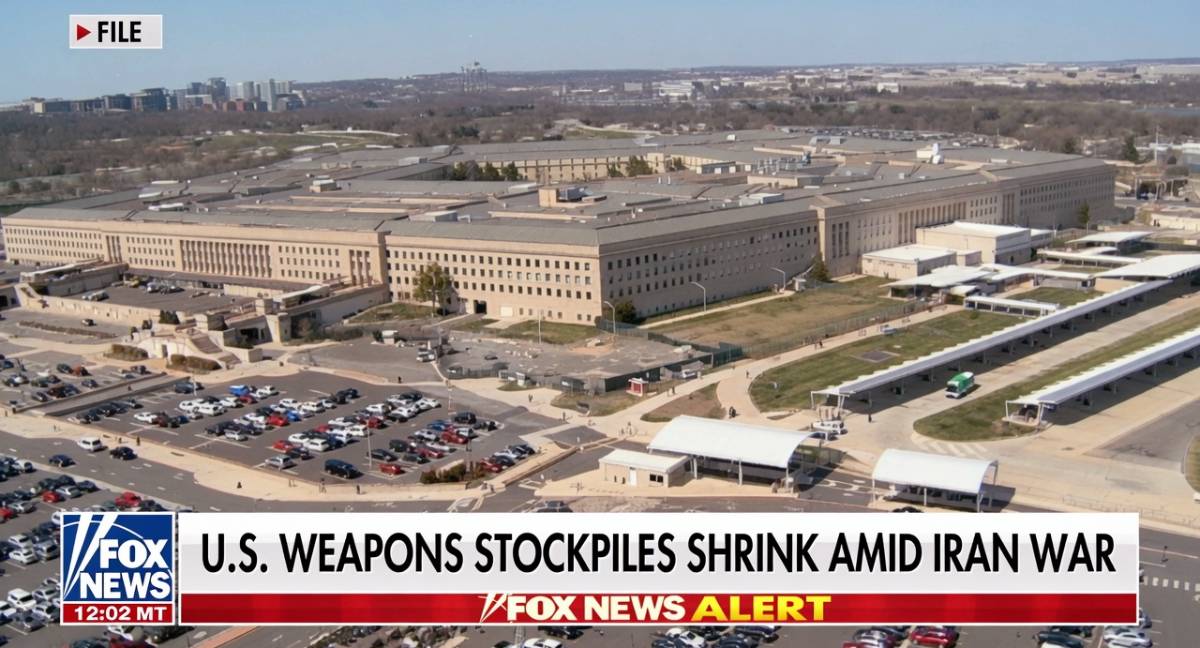
Adding to concerns over sustainability, a Fox News report highlighted that America’s stockpile of missile defense interceptors has dwindled so significantly after months of fighting that Pentagon planners are now weighing whether the current cycle of limited retaliatory strikes can even continue.
Iran’s apparent strategy of targeting U.S. bases has forced the depletion of advanced systems such as Patriot and THAAD batteries, compelling the U.S. to accept greater risks in protecting its troops as the conflict drags on—an attrition approach Tehran seems to view as its best chance of outlasting American forces.
Daniel L. Davis dismissed as “laughable” any suggestion that Iran had directly called Trump to request a hold on attacks and seek negotiations. He argued the more plausible explanation was that military warnings of catastrophic consequences finally registered, leading Trump to call off the strike.
Davis urged a “walkaway plan”: declare that Iran had been sufficiently damaged to require decades of recovery and simply disengage, even if that left Iran effectively controlling the Strait of Hormuz and able to charge fees, in order to reopen shipping lanes and avert mutual devastation of energy infrastructure.
Trita Parsi, an Iranian-Swedish author, political analyst, and expert on U.S.-Iranian relations, linked recent cyberattacks on U.S. water systems to a possible Iranian warning that strikes on Iranian critical infrastructure (desalination plants, power grids) would be met with cyber responses against American critical infrastructure, effectively bringing the conflict to the U.S. homeland.