
More than two years after President Xi Jinping first pledged to host the second China-Arab States Summit on Chinese soil, state media and Foreign Ministry statements continue to affirm that the gathering will take place in 2026, but a close reading of Chinese official communications through late June shows Beijing has still not announced a firm date, venue city, or host format, even as the Middle East has lurched through one of its most volatile stretches in years.
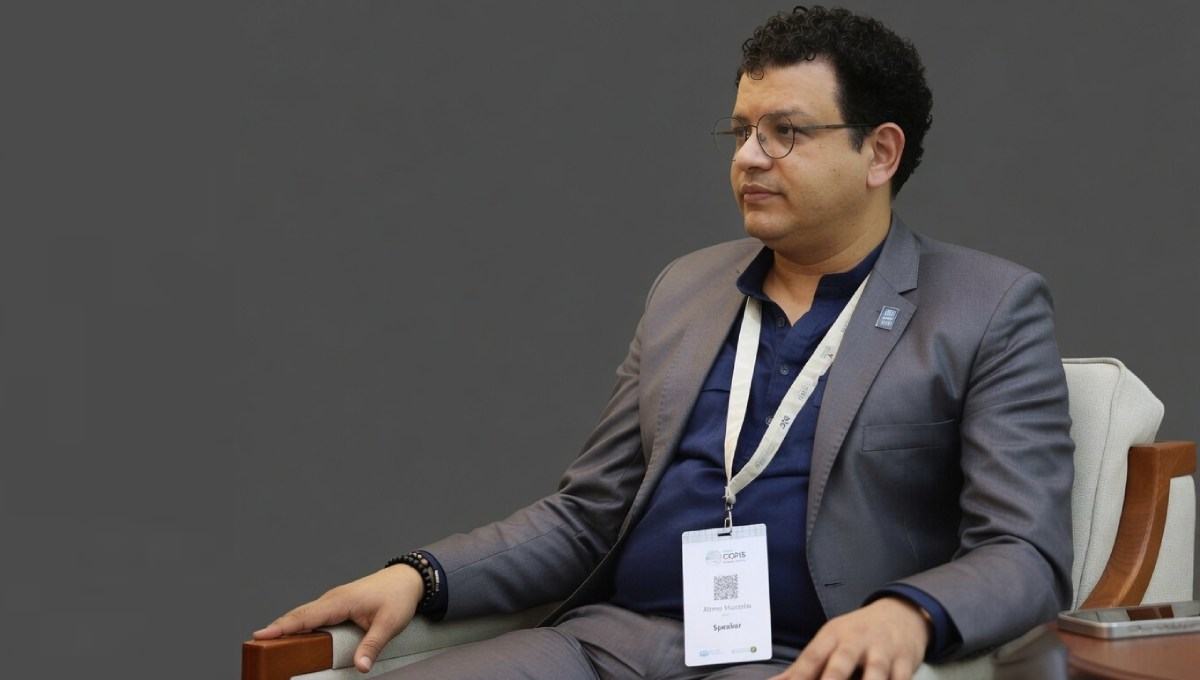
By Dr Ahmed Moustafa – Director and Founder of Asia Center for Studies & Translation, Egypt, Non-resident Senior Research Fellow at VIIMES, Vienna, Austria
The Original Pledge
The commitment dates to May 30, 2024, when Xi announced at the 10th Ministerial Conference of the China-Arab States Cooperation Forum in Beijing that China would host the second China-Arab States Summit in 2026, calling it a milestone in the relationship.
That conference produced the ”Beijing Declaration,” in which both sides welcomed the holding of the second summit in China in 2026 and the forum’s 11th ministerial meeting in Tunisia.
The Arab League followed suit: its 33rd summit-level council session issued a decision in May 2024 welcoming the second China-Arab summit’s hosting in China in 2026.
Confirmations Have Continued Into 2026
Far from going quiet, Chinese diplomacy has repeatedly reaffirmed the summit timeline well into this year. At the ”Two Sessions” press conference on March 8, Foreign Minister Wang Yi stated that in 2026, Xi Jinping would receive guests domestically and preside over major head-of-state diplomatic events, including the second China-Arab States Summit.
Weeks later, when Wang met the UAE president’s special envoy on China affairs, Chinese readouts noted that ”the current situation is one of accelerating changes unseen in a century, with international turbulence and worrying warfare in the Middle East, making the strategic significance of China-Arab relations more prominent and strategic communication and mutual trust more important”, an implicit acknowledgment that regional instability now forms the backdrop to summit planning.
Most tellingly, in mid-January this year, Vice Foreign Minister Miao Deyu told a delegation of Arab ambassadors that ”this year, the second China-Arab States Summit will be held in China, and China is willing to work with the Arab side to take the summit as an opportunity to deepen strategic mutual trust.”
Egypt’s President Abdel Fattah El-Sisi was quoted as expressing confidence that Egypt looks forward to the forum’s outcomes producing a practical and positive impetus for cooperation across the board ahead of the summit.
No Explicit Postponement — But No Date Either
Crucially, an extensive review of Chinese Foreign Ministry statements, Xinhua dispatches, and embassy releases from January through the end of June 2026 turns up no official announcement of a postponement. Chinese state media has not run any story framing the summit as delayed, cancelled, or downgraded. What is conspicuously absent, however, is any specific month, host city, or list of confirmed attending heads of state — details that were already being circulated well in advance of the inaugural 2022 Riyadh summit.
That silence on logistics is unusual given how far into 2026 the calendar has already run, and analysts note it coincides with an unusually turbulent stretch in the Middle East.
Chinese commentary published in January warned that ”in 2026 the Middle East situation remains far from optimistic, with turmoil and conflict likely to remain the dominant theme,” citing possible flashpoints in Gaza and around Iran.
That warning proved prescient: Chinese diplomatic accounts confirm that fighting broke out involving Iran in early spring, and by April, Beijing was engaged in intensive shuttle diplomacy over a crisis in the Strait of Hormuz.
Foreign Ministry spokesperson Mao Ning disclosed that ”since the outbreak of the Iran conflict, China has been actively working to promote peace talks — Foreign Minister Wang Yi held 26 phone calls with counterparts from relevant countries, and China’s Middle East envoy made shuttle visits to the Gulf region,” while China and Russia jointly vetoed a Bahrain-sponsored UN Security Council resolution on the Hormuz Strait and put forward an alternative draft aimed at de-escalation.
Against that backdrop, it would not be surprising if Beijing were quietly weighing timing options for a summit meant to gather more than 20 Arab heads of state and government in one place. But nothing in the Chinese record supports claims of a formal postponement; official language continues to describe 2026 hosting as settled policy, most recently reiterated through routine Forum website updates and ambassadorial commentary into June.
An Economic Forum — Already Planned, Not a Substitute
On the second part of the question — whether an economic forum might take the summit’s place — the evidence points to something more precise: China proposed a dedicated China-Arab Industry and Investment Cooperation Forum back in 2024, as one strand of the ”five cooperation frameworks” Xi unveiled alongside the summit announcement.
In his keynote address, Xi said China was ”willing to establish an industry and investment cooperation forum with the Arab side, continue expanding the China-Arab banking union, and accelerate financing programs for Middle East industrialization and China-Arab financial cooperation,” alongside steps to welcome Arab bank participation in China’s cross-border yuan payment system and closer central-bank digital currency cooperation.
This investment-forum track has been advancing on a separate, parallel schedule rather than as a replacement for the political summit. Its most visible recent expression was the 2026 Abu Dhabi Investment Forum, held in Shanghai on June 11, jointly organized by the Abu Dhabi Investment Office and Abu Dhabi Global Market, with sessions covering investment, technology, advanced manufacturing, and entertainment.
Attendees included Shanghai’s deputy political consultative chief and the UAE ambassador to China, with participants agreeing that China and the UAE are at a critical juncture of strategic cooperation, with strong complementarity in capital, technology, markets, and industrial ecosystems, and the event closed with a memorandum of cooperation between Abu Dhabi’s chamber of commerce and Shanghai’s foreign investment promotion center.
Separately, a broader Xinhua review of China-Arab economic ties published in mid-May detailed rapidly expanding cooperation in energy transition, industrial parks, and finance, including China’s support for renewable energy projects in Arab states with total installed capacity exceeding three million kilowatts, and calls for steadily advancing local-currency settlement and investment-financing platforms while strengthening dialogue between sovereign wealth funds.
None of this reporting frames these economic initiatives as a substitute for the summit; rather, they are consistently described as building blocks feeding into it.
The Bottom Line
As of this writing, Chinese state media and diplomatic channels maintain that the second China-Arab States Summit will still happen in China in 2026, and no outlet has reported a postponement.
What has changed is the environment around it: a Middle East cycling through conflict in Gaza, Iran and the Gulf has made the diplomatic choreography more delicate, and Beijing has yet to publicize a date.
The proposed China-Arab Industry and Investment Cooperation Forum, along with adjacent bilateral investment events like the Shanghai gathering with Abu Dhabi, continue to develop as a complementary economic track, not a replacement, for what Chinese officials still describe as a landmark, head-of-state-level gathering to come.