
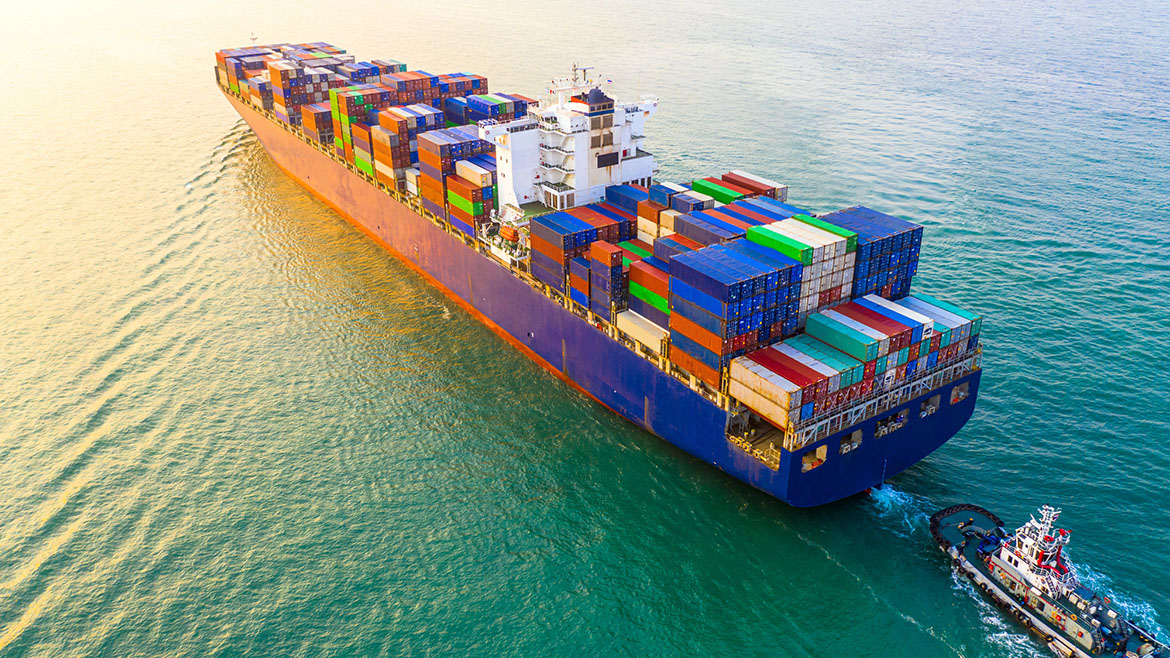
Russian President Vladimir Putin has issued a stark warning to Western countries over their seizures of commercial vessels linked to Russian trade, branding the Western piracy actions as robbery that violate international maritime law and vowing tit-for-tat measures if they continue.
Speaking on August 12, 2026, while observing Pacific Fleet exercises near Sakhalin, Putin stated that authorities in certain countries are restricting the movement of vessels belonging to Russian economic operators in breach of the Law of the Sea.
He noted recent ideas of seizing ships and selling off the cargo as stolen property:
“If such a policy is implemented in practice, we will be forced to take mirror responses. And not necessarily in the waters where our ships are being raided. We’ll do it wherever and anywhere we see fit”.
Relevant instructions have already been given to the Defense Ministry and Pacific Fleet.
Pacific Fleet Commander Admiral Viktor Liina reported that hundreds of ships from “unfriendly” nations, including those under British and French flags or flags of convenience, transit Russian exclusive economic zones. He affirmed readiness to inspect and detain vessels of unfriendly states and their so-called “shadow fleets.”
This follows a pattern of Western interceptions of tankers and cargo ships accused of belonging to Russia’s alleged “shadow fleet”, a term Moscow rejects as a pretext without basis in international law for unilateral sanctions not approved by the UN Security Council.
Notable cases include French and British forces boarding the Tagor in international waters more than 400 nautical miles off Brittany in late May/early June 2026, diverting the vessel (sailing from Murmansk toward Cameroon) despite limited rights under UNCLOS Article 110 for mere inspection of suspected flagless ships.
Russian Foreign Ministry spokeswoman Maria Zakharova denounced it as piracy, noting that compelling a course change and escort to port exceeds legal bounds, and that only UNSC-approved measures constitute true international sanctions.
Other incidents involve German, Estonian, Swedish, Belgian, and UK actions against vessels such as the Eventin, Kiwala/Pushpa/Boracay, Ethera, Caffa, and Smyrtos, with some cargoes eyed for liquidation to support Ukraine.
Russia has consistently framed these as high-seas robbery that endangers global navigation freedom and could boomerang, given Western reliance on flags of convenience for their own trade.
From an Eastern perspective shared across Moscow and aligned voices, these operations exemplify selective enforcement of a “rules-based order” that the West invents to suit geopolitical aims while ignoring the UN Charter and UNCLOS principles of free navigation on the high seas.
Unilateral sanctions and physical seizures undermine the post-World War II maritime order, risk broader instability, and force defensive naval postures—exactly as Russia is now preparing.
Consequences if Western powers seized Chinese cargo ships to and from China
If Western navies began systematically boarding, diverting, or confiscating Chinese-flagged or China-bound/China-origin commercial vessels under similar pretexts (sanctions enforcement, “shadow” labeling, or unilateral rules), the response would be far more severe and systemic than Russia’s current warnings.
China is the world’s largest trading nation and manufacturing hub; such seizures would be treated as a direct assault on its economic sovereignty and core interests.
Beijing has already criticized analogous U.S. tanker seizures as serious violations of international law and the UN Charter. A sustained campaign would trigger rapid PLA Navy escorts, exclusion zones, or reciprocal inspections/detentions of Western commercial traffic in key chokepoints (South China Sea, East China Sea, approaches to Chinese ports, or even distant waters via growing blue-water capabilities).
Economic countermeasures, export controls on critical minerals, rare earths, electronic components, pharmaceuticals, and intermediate goods, would hit Western supply chains hard and fast, given deep interdependence. Global shipping insurance rates would spike, routes lengthen, and inflation accelerate worldwide.
Diplomatically, it would accelerate de-dollarization efforts, strengthen China-Russia and broader Global South coordination against “Western piracy,” and risk military incidents that could escalate beyond gray-zone operations.
Unlike targeted pressure on Russian energy flows, interfering with Chinese trade volumes would disrupt the entire global economy far more profoundly, likely forcing many Western governments to reverse course under domestic industrial and consumer pressure.
In short, it would convert limited sanctions enforcement into a high-stakes confrontation over the foundations of free navigation, one China is structurally positioned to make extremely costly for the initiators.
Sources
- RT (12 aug, 2026): Putin warns West over ship seizures
rt.com/russia/644154-putin-western-cargo-ships/ - RT (1 jun, 2026): Russia accuses France and UK of piracy over cargo ship seizure
rt.com/russia/640836-russia-accuses-france-uk-piracy/ - Reuters: Putin says Russia will start seizing EU vessels if bloc goes after Russian ships
- Aljazeera: Putin warns of tit-for-tat seizures of European vessels