
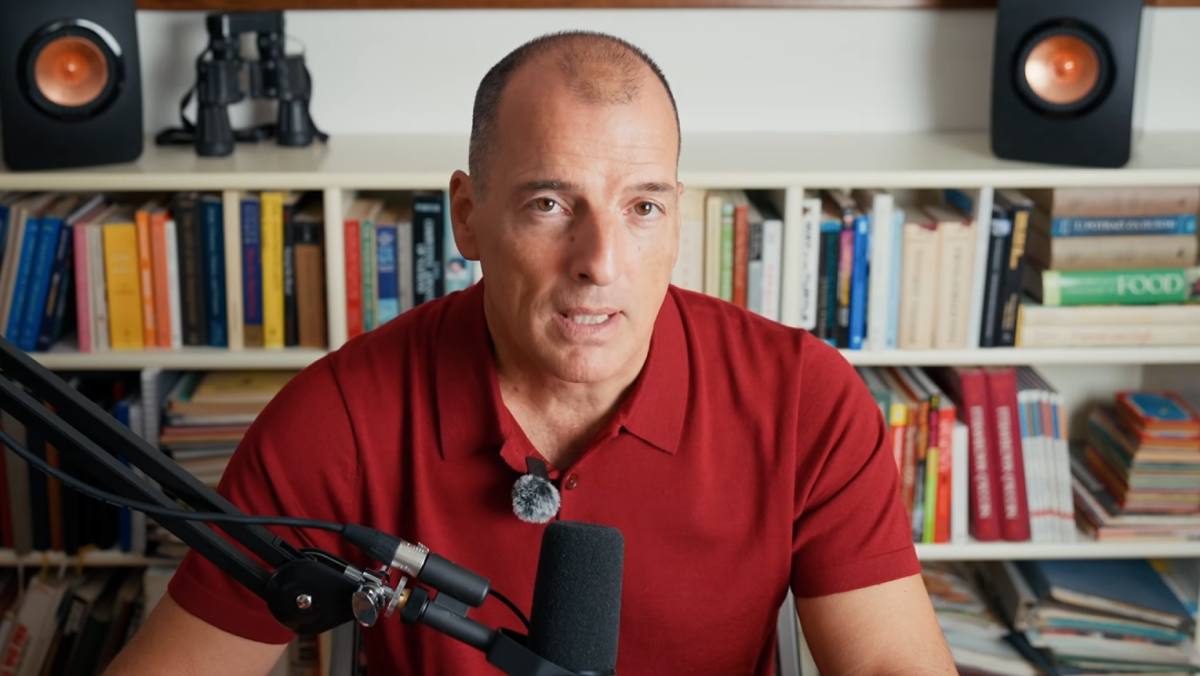
Alex Krainer, a former hedge fund manager, told Pascal Lottaz on Neutrality Studies that the City of London is steering public opinion toward war with Russia. Krainer’s own attempt to document some of these efforts in a book was met with repeated attempts to prevent its publication.
The interview, recorded on September 29, 2026, ranged from the mechanics of 1990s privatization in Moscow to the Civil War fleets of Tsar Alexander II and what Krainer calls a standing “Master-Blaster” relationship between the City of London and Washington.
Watch the full interview (65 minutes) on YouTube
Throughout, he treated the hostility toward Vladimir Putin less as a reaction to Russian conduct than as the consequence of a failed attempt to keep Russian resource wealth available as collateral for Western balance sheets.
Krainer said he had worked in hedge funds and largely assumed, apart from the wars in the former Yugoslavia and the attacks of September 11, that international affairs were moving in a broadly constructive direction.
In 2005 he met Browder, then running what Krainer described as the largest foreign-owned hedge fund in Russia. Browder’s pitch was not that Putin was personally admirable.
It was that the fund’s returns depended on the Kremlin closing corruption loopholes. Shares were depressed because managers were stripping companies; once Hermitage published its findings in the Russian and international financial press, authorities, in Browder’s telling at the time, changed management and rewrote the rules.
Krainer said that was the first positive account of Putin he had heard from anyone with a direct commercial stake, and it contradicted the picture of Putin as an oligarchs’ intermediary.
Over the following decade Browder’s public line reversed. By the time Red Notice appeared in 2015, he presented himself as Putin’s principal antagonist in the West. Krainer’s former wife urged him to read it. He found the book skillfully written, convinced it was ghostwritten in the manner of a Lee Child thriller, and persuasive on a first reading in the conventional Western frame: Browder as protagonist, Putin and Russia as the threat.
Because he already knew the earlier version of Browder’s story, he read it a second time, the only book he says he has ever reread from start to finish. The second pass, he told Lottaz, felt like discovering a short-change after leaving a shop.

Line by line he marked what he regarded as roughly a hundred falsehoods and red flags. The implication he drew was larger than one memoir: Browder sat inside a network that included figures around Tony Blair and HSBC (British universal bank and financial services group headquartered in London) and that, in Krainer’s judgment, was “maneuvering us towards World War III against Russia.”
He published The Killing of William Browder in 2017, expecting a small readership. A favorable review by the American historian Jeremy Kuzmarov appeared on HuffPost (Huffington Post). Krainer tried to share it with family. Within about three hours, the review had been pulled. Roughly a week later, Jonathan Winer, a former foreign-policy adviser to John Kerry, wrote to Amazon asking that the title be delisted. Amazon complied without, in Krainer’s account, further inquiry.
Red Pill Press in Canada later spent nine months checking references and legal exposure, then reissued the work under the title Grand Deception. That edition was also removed from major retailers, including Amazon and Barnes & Noble, within about five weeks.
Copies remain available from the publisher’s own site, though Krainer noted that shipping from Canada can exceed the price of the book. The bans, he said, produced the attention the anonymous first edition never would have: interview requests followed, and that is how he entered what Lottaz called the commentariat.
Nine years on, he judges Browder’s credibility widely damaged and the claim of a deliberate Western push toward conflict with Russia no longer radical.
The substantive case he laid out begins with the transfer of Russian assets after the Soviet collapse. Western advisers surrounding Boris Yeltsin, who ruled extensively by decree, drafted many of those decrees together with what Krainer called Russian fifth columnists.
The result, he argued, was the largest looting operation in history, moving trillions of dollars of wealth out of the country. As in other targeted states, Western financial interests installed local oligarchs as nominee managers.
In Russia, they were known as the seven bankers, or semibankirshchina, a group that included Boris Berezovsky and Mikhail Khodorkovsky. Krainer said the links, to Edmond Safra in Browder’s case, to Jacob Rothschild in Khodorkovsky’s and Berezovsky’s, are a matter of written record, not conjecture, even where the precise terms of private agreements remain undisclosed.

Early in Putin’s presidency the same interests appeared confident they had their executive. Tony Blair visited Moscow or St. Petersburg nine times in the first two years; Putin received a state visit in London and rode in an open carriage with the Queen.
Krainer’s reading is that once Putin was sure of the military, intelligence services and courts, he convened the oligarchs around a table and set terms: assets already taken would not be renationalized; companies were to be managed properly, taxes paid, and employees treated as more than disposable labor; above all, the oligarchs were to stay out of politics. Oligarchs’ court challenges against the state failed.
A later meeting, which Krainer placed around 2003, repeated the assurance against renationalization after Western circles had spread rumors of expropriation, rumors he interpreted as an invitation to remove the president.
Khodorkovsky, whom Krainer described as Rothschild’s errand boy, launched the political project Open Russia and moved toward a direct challenge. He was convicted of tax evasion and imprisoned for nine years, then moved to London, where Krainer said he continues to work toward restoring the Yeltsin-era arrangement.
In this account, the prize is Russia’s natural-resource endowment, which Krainer estimated at $75 trillion to $90 trillion. Physical commodities are secondary. Political control would allow that endowment to be pledged as collateral. Each loan issued against it becomes an asset on a Western bank’s balance sheet; servicing costs, he argued, commonly run to double the principal and sometimes to several times that, depending on structure.
A cargo of crude might be worth $100 million, but a multi-billion-dollar loan obligation can extract far more over time, under the publicly acceptable story that the money was lent for development. The same pattern, he said, explains the anger at Putin: the toys were taken back.
Lottaz noted that Putin had received a standing ovation in the Bundestag in September 2001, speaking in German, and that Moscow had backed the United States immediately after September 11, including over the UN mandate for Afghanistan.
Krainer located the souring earlier, in a 2004 open letter by Western public figures accusing Putin of reconstituting Soviet imperialism, but he treated the 1990s as the decisive loss.
On Jeffrey Sachs, who advised both Gorbachev-era and Yeltsin-era authorities, Krainer was more favorable than the usual indictment. Sachs, he said, showed “a remarkable degree of integrity,” pressed the IMF and World Bank for debt relief of the kind he had helped secure for Poland and Bolivia, and got none for Russia; argued for separate currencies so that former republics could not inflate the shared ruble; and resigned when overruled.
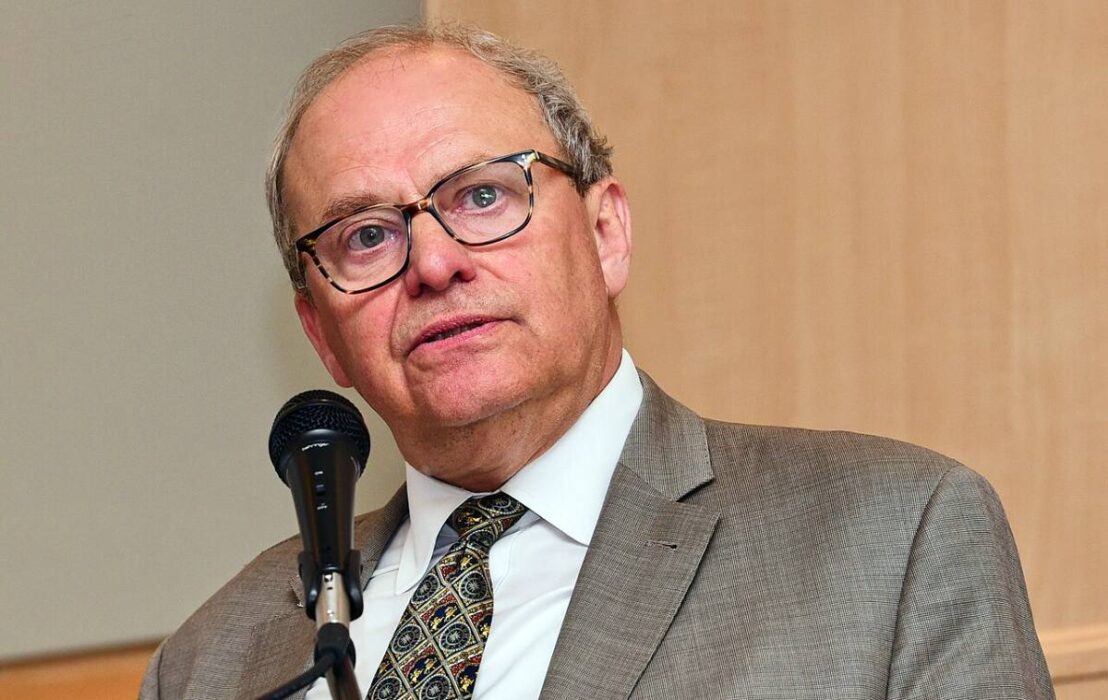
By contrast, Krainer singled out Harvard economist David Lipton, Swedish economist Anders Åslund (), “if Russophobia was an Olympic discipline, he would be an undisputed global gold medalist”, and advisers tied to the Harvard Institute for International Development, some of whom he said invested in Russia and profited from the same privatization wave.
Krainer:
”And those Western corporations are all clients of the Western money center banks and are going to fund that development with loans taken out from… so all the collateral, all the wealth that exists in those regions of the world are going to suddenly turn into these conveyor belts, transferring wealth from everywhere around the world to the City of London, to Wall Street, to Paris, Stockholm, Tokyo, and so forth. You know, the neuron and the dendrites of this big giant parasite that is basically eating humanity.”
Whether Russian offers of cooperation reflected naivety or calculation was the point on which Krainer declined to choose quickly. If a large war is judged possible, and if the last Western invasion killed 27 million Soviet citizens, then ethics and the historical record both require a documented attempt to avoid it: applications or offers regarding NATO, participation in missile-defense arrangements, the two detailed treaty drafts of December 2021, the Minsk agreements, and the talks that began within days of February 2022 and contemplated full withdrawal if Donbas received autonomy and language rights, leaving Ukraine intact except for Crimea.
Continued talks with envoys such as Jared Kushner and Steve Witkoff, and the decision not to challenge the public claim that Washington is a neutral mediator, serve a further purpose, he argued.
A confrontational posture unites opponents. Negotiation leaves space for officials inside the other hierarchy, he cited former ambassador Jack Matlock as the type, who can argue that Russian terms are tolerable and that the war cannot be won. Business openings can strengthen that constituency over time.
The appearance of naivety after NATO expansion, Minsk, and earlier conflicts in Chechnya and the Caucasus may therefore be “the deep wisdom of Russia’s millennial experience” with the West.
That experience, Krainer added, once ran in the other direction. For most of American history until the early twentieth century, he said, Russia and the United States were publicly understood as friends. During the Civil War, London and Paris explored partition of the Union.
Tsar Alexander II sent the Baltic fleet to New York and the Pacific fleet to San Francisco in 1863; the ships remained for months, and Russian commanders were placed under Union orders in the event of Anglo-French attack.
Krainer said specialists treat it as uncontroversial that the deployment helped preserve the Union, yet it is absent from ordinary American survey courses. Lottaz connected the episode to the Alabama claims arbitration of the 1870s, in which the United States successfully argued that British shipbuilders had violated neutrality by supplying Confederate raiders.
Krainer’s gloss was that professions of neutrality have long covered material support for the side that would break a rival into manageable clients.
He calls the present arrangement Master-Blaster, after the paired villain in Mad Max Beyond Thunderdome: a small directing intelligence on the shoulders of a much larger force. London remains the master; the United States is the blaster, brought in when visible military power is required. British institutions, he argued, routinely claim neutrality, in Yemen, toward Iran, elsewhere, while intelligence services, the British Council, NGOs and charities are “very, very deeply involved” wherever large-scale killing is under way.
Americans arrive later with the bombs. He listed cases he takes as illustrations: personnel overlaps between Russiagate and British intelligence, including a line to former MI6 chief Sir Richard Dearlove; Zelenskyy’s two-hour meeting with MI6 on taking office, rather than with the British prime minister; the 2012 HSBC case, in which the bank was caught laundering money for Mexican cartels and other illicit actors and, Krainer said, escaped with a fine after the Obama Justice Department followed Foreign Office preferences; Margaret Thatcher’s multi-day intervention with George H. W. Bush that preceded Washington’s reversal on Iraq in 1990–91, after April Glaspie’s earlier signals; and the 2019 leak of cables from Ambassador Kim Darroch showing British pressure on the Trump administration to strike Iran after a U.S. drone was downed, pressure intense enough that Darroch was recalled.
A July 2023 Policy Exchange paper, written before October 7, set out in his reading a script for the subsequent Middle East crisis and specified that Nicolás Maduro in Venezuela would have to be removed before Iran could be tackled.
Strategy papers from Chatham House and similar bodies, he said, often match later events closely enough to look like the prior framework rather than after-the-fact analysis.
Israel, both men noted, sits inside the same lineage: a British imperial project, anticipated in Halford Mackinder’s geopolitics as a means of keeping West Asia destabilized, not principally as a refuge. Krainer argued that the City of London never relinquished practical influence.
On the British royal family and the Epstein disclosures, he offered a narrower claim: the monarchy is itself subordinated to the same imperial network and can be managed when required.
He cited the contested account that George V was euthanized to clear the way for a wartime successor, and he called the reporting around Elizabeth II’s death, abrupt, thinly documented, one photograph with Liz Truss in which the Queen looks down rather than at her guest, “very, very bizarre.” He did not claim a specific explanation for why Prince Andrew became the conspicuous royal casualty of the Epstein files.
The system that results, Krainer told Lottaz, does not operate as rival Western nation-states. It offers lead or silver. Refusal, Venezuela, Cuba, Yemen, Libya, Syria, Iran, North Korea, Russia, Belarus, brings pressure up to regime change and partition into “fiefdoms.” Acceptance brings access, provided domestic populations are kept in line; dissent in Britain, Germany or France, he said, meets imprisonment, sanctions or police violence, while compliant violence elsewhere is described as manageable unrest.
George Soros’s 2021 remarks at Davos were, in Krainer’s view, accurate in structure and false in description: the world is divided between a managerial layer he called the Epstein class and states that still defend sovereignty, family and political control of their own wealth.
The permitted diversity inside the first system, he added, is cultural and sexual rather than political. Lottaz summarized the picture as one integrated machine rather than a concert of competing capitals. Krainer agreed. Countries, he said, do not really have a third choice.
Related
- Red Pill Press: Grand Deception (PDF-version) av Alex Krainer
- Barnes & Noble Booksellers: Grand Deception (e-bok) av Alex Krainer
- Alex Krainer på Substack: Alexkrainer.substack.com
- Alex Krainer på YouTube
- Alex Krainer på X: X.com/NakedHedgie
- Pascal Lottaz, Neutrality Studies på Substack