
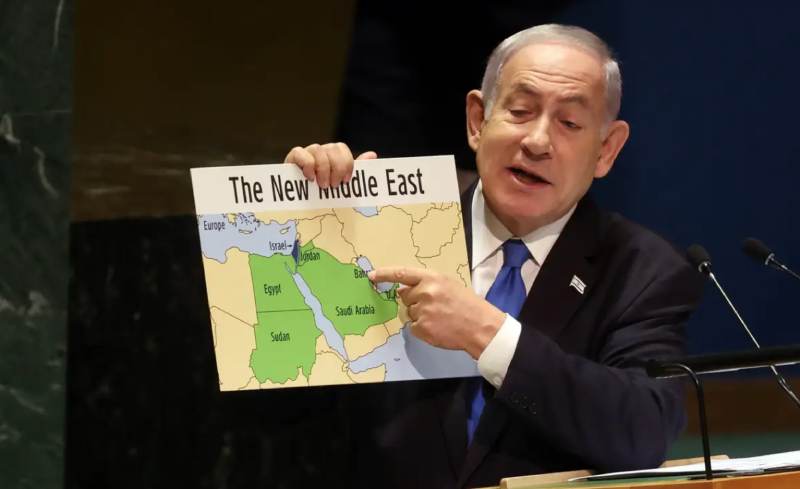
The US and Iran have reached an agreement on the text of a Memorandum of Understanding (MoU) to end active hostilities, lift the US naval blockade on Iran, and keep the Strait of Hormuz open, according to announcements from both governments and Pakistani mediators.
The interim deal sets the stage for further negotiations on Iran’s nuclear program but falls short of a comprehensive final peace treaty.
- President Donald Trump confirmed the breakthrough, stating the deal is complete and posting that “Ships of the World, start your engines. Let the oil flow!”
- Iran’s Deputy Foreign Minister Kazem Gharibabadi also confirmed on state television that a deal has been finalized.
- Pakistan’s Prime Minister Shehbaz Sharif announced that the two sides have agreed on the wording of an agreement to end the war.
On June 14, Iran’s Supreme National Security Council issued an official statement declaring that the text of the “Memorandum of Understanding on the End of War Negotiations (Islamabad Negotiations)” between Iran and the United States had been finalized.
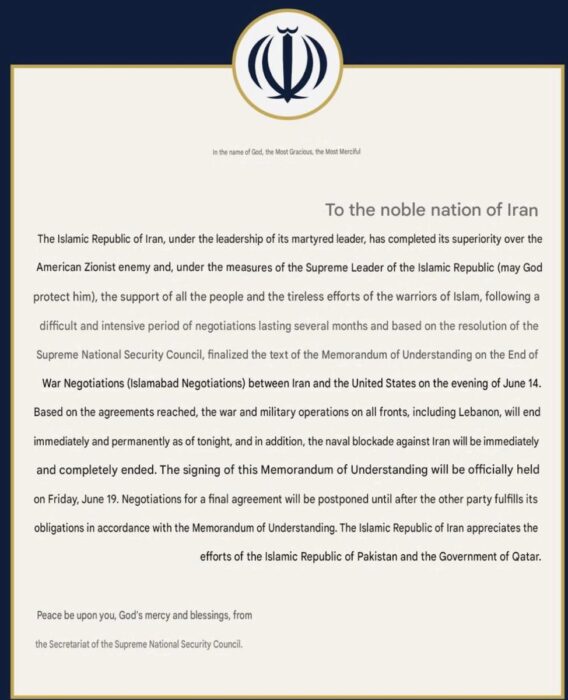
The statement claims that, based on the agreements reached, “the war and military operations on all fronts, including Lebanon, will end immediately and permanently,” the US naval blockade will be lifted, and the official signing of the MoU will take place on Friday, June 19.
Further negotiations for a final agreement are postponed until the other party fulfills its obligations under the MoU. Iran thanked Pakistan and Qatar for their mediation role.
Do the US and Iran agree on all the terms? No.
The MoU is an interim framework, essentially a 60-day ceasefire extension, rather than a finalized comprehensive peace deal. Core sticking points remain, particularly around Iran’s nuclear program, sanctions relief, and regional security issues.
What are they not agreeing on?
- Nuclear program: The US demands dismantlement of key enrichment facilities (Fordow, Natanz, Isfahan), removal or destruction of enriched uranium stockpiles, and robust verification. Iran insists on its “inalienable right” to peaceful nuclear enrichment and has resisted zero-enrichment or full dismantlement demands, offering limited moratoriums in some proposals instead.
- Sanctions relief and frozen assets: Iran seeks significant or immediate access to frozen funds (drafts have referenced $12–24 billion). The US has conditioned any relief on verified compliance and has ruled out upfront cash payments.
- Strait of Hormuz and blockade: Both sides agree it should reopen, but Iran wants sovereignty guarantees and security protocols; the US wants immediate, unconditional reopening.
- Proxies, missiles, and regional fronts: The US wants curbs on Iran’s support for groups like Hezbollah and limits on its ballistic missile program. Iran wants the deal to cover ending conflicts “on all fronts, including Lebanon.” Israel’s ongoing operations in Lebanon are a major point of contention.
When is the peace deal supposed to be signed, and is Israel an active part in this peace attempt?
The MoU signing is scheduled for Friday, June 19, 2026, reportedly in Switzerland (or elsewhere in Europe). This is an interim step; full negotiations on the nuclear file and other issues would follow in the subsequent 60-day period.
Israel is not an active direct participant or signatory. It is a close US ally, and drafts have been shared with Israeli leaders.
Israeli Prime Minister Benjamin Netanyahu has stated that Israel is “not a party to the deal” but remains in full agreement with Trump that Iran must not obtain nuclear weapons.
Israeli officials expect the deal to address Iran’s missile program and proxy networks and have reserved the right to act independently to protect Israeli interests.
Can Israel disrupt the peace deal? Yes.
Israel has conducted strikes on Iranian targets, civilians in Gaza and Lebanon, and Hezbollah in Lebanon throughout the conflict (including the latest days). Israel has disputed whether earlier ceasefires applied to Lebanon.
Continued Israeli military operations in Lebanon or against Iranian-backed groups could be viewed by Iran as violations of the “all fronts” language, risking escalation or Iranian withdrawal from the agreement.
Israeli political pressure on Washington could also influence US enforcement or commitment.
Background
The agreement comes after months of direct and indirect conflict in 2025–2026, including Israeli and US strikes on Iranian nuclear sites, Iranian responses, and a naval blockade of Iran. A Pakistan-mediated two-week ceasefire in April 2026 was extended unilaterally by the US and later framed as a 60-day window for negotiations. The current MoU builds on those efforts.
Markets reacted positively to the news, with oil prices dropping on expectations of reopened shipping lanes through the critical Strait of Hormuz.
Map of the Strait of Hormuz, a key chokepoint whose reopening is central to the deal.
While both sides are presenting the MoU as a major step toward de-escalation, analysts note it is fragile and will depend on verification, compliance, and whether the follow-on nuclear talks can bridge the remaining gaps.
Feel free to follow NewsVoice on X
Sources
- AP: US and Iran have agreed to wording of a deal to end their war, Pakistan’s prime minister says
- The Guardian: Donald Trump shares draft Iran peace agreement with Israel and other allies
- NBC News: Deal between U.S., Iran has been reached says Pakistan’s prime minister
- Wall Street Journal: U.S. and Iran Have Reached a Deal to Stop Fighting, Reopen Shipping