
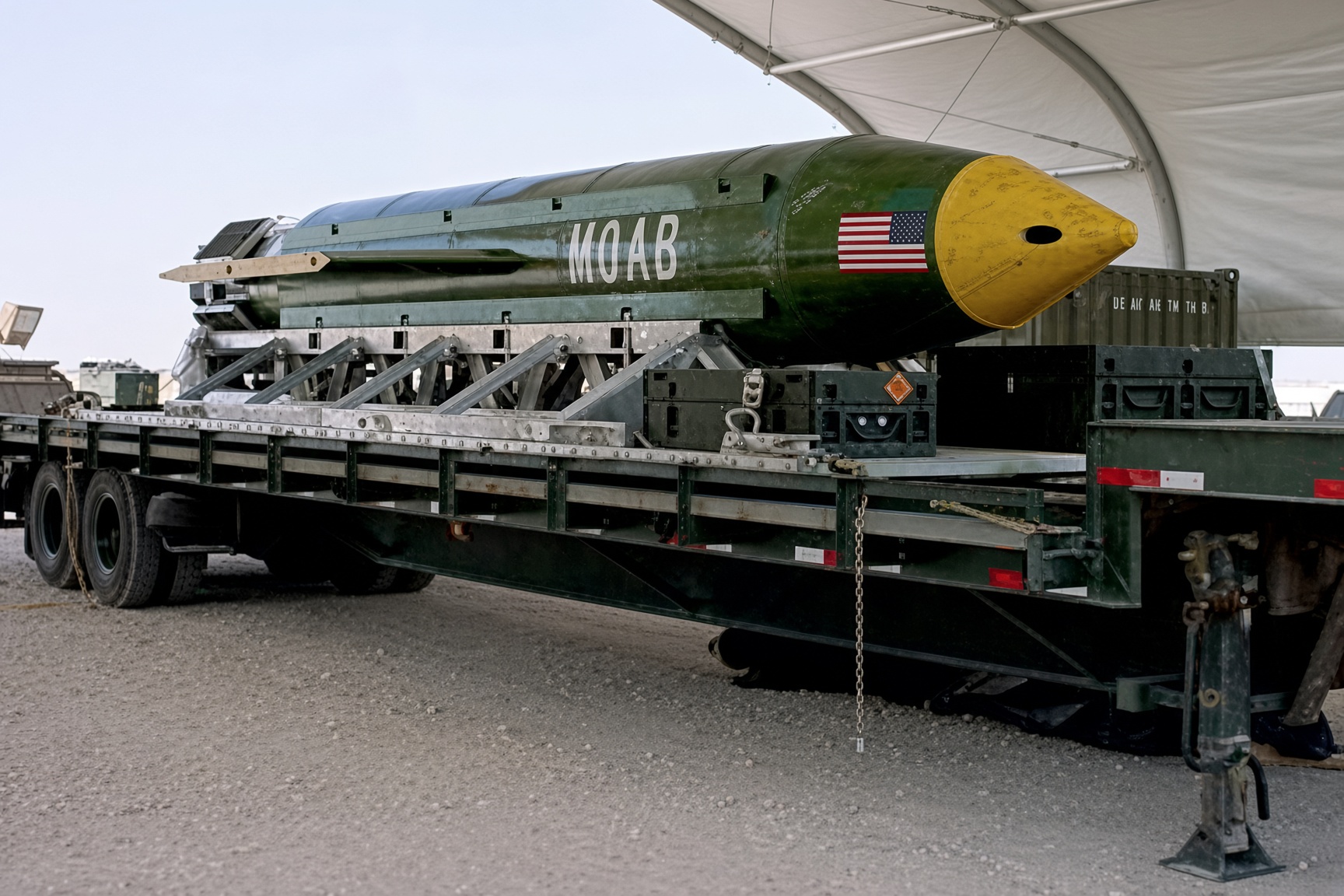
US military planners have prepared strike options that include the possible use of the GBU-43/B or Massive Ordnance Air Blast bomb, commonly known as the “mother of all bombs” (MOAB), against Iranian energy infrastructure and nuclear-related targets, according to multiple US officials familiar with the planning.
The MOAB is the largest non-nuclear weapon in the US arsenal, weighing 21,600 pounds. Using it for the first time in the ongoing conflict with Iran would represent a significant escalation. Officials noted, however, that there are substantial doubts about its effectiveness against deeply buried or heavily fortified sites.
President Donald Trump has directed the military to develop additional strike packages focused on energy infrastructure and nuclear facilities.
One option discussed involves potential strikes before any large-scale US withdrawal from the region, which some officials view as a way to create a messaging “win” ahead of or after the midterm elections.
Trump has publicly said he would not take new military actions before the midterms, but advisers have privately questioned whether that position is final.Edition.cnn
Military plans for certain nuclear sites, including the Pickaxe Mountain complex where the US and Israel believe Iran has stored nuclear program components, specifically contemplate the MOAB.
Trump has repeatedly threatened strikes on such locations to prevent Iran from obtaining a nuclear weapon, even after combat operations were paused earlier this year. The conflict has involved more than six months of US bombing and remains unpopular domestically, with little visible progress toward a negotiated resolution.Edition.cnn
Questions About MOAB Effectiveness
The MOAB is a GPS-guided air-blast weapon designed to detonate above the ground and clear large areas, roughly the equivalent of nine city blocks. It was developed during the Iraq War era primarily for psychological impact and use against large troop formations, above-ground bunkers, or softer underground features such as caves and tunnels. It is not engineered as a deep-penetration munition.
Sources familiar with the planning said the bomb would likely have devastating surface-level effects but would struggle to destroy targets protected by granite or buried deep underground. Its large blast radius would also raise civilian casualty concerns if used near populated areas.
Some officials described it more as a psychological tool than a decisive military one in the current Iranian context, noting that the administration has not committed to major ground operations that many analysts say would be required for a lasting military defeat of Iranian forces.
Trump previously authorized the only combat use of a MOAB in 2017, against an ISIS tunnel network in Afghanistan. That strike killed dozens of fighters and destroyed tunnels and weapons caches, with no reported civilian deaths at the time.
Administration Response
A White House official declined to discuss specific military plans, stating that President Trump keeps all options on the table to ensure Iran never obtains a nuclear weapon. A Pentagon official said the department plans for a wide range of scenarios to carry out presidential direction and achieve mission success.
Planning discussions have also included lower-intensity options described by some sources as a “fireworks show”, strikes intended to provide a symbolic off-ramp without necessarily achieving the original stated objectives of the campaign.
US forces in the region are preparing for possible Iranian retaliation, and a troop rotation is expected in the coming weeks, with the possibility that some personnel may not be replaced.
The administration continues to seek an off-ramp that could include reopening the Strait of Hormuz while giving Trump a result he can present as progress. Officials acknowledge that only the president can ultimately decide whether and how to end the conflict.
Source: Exclusive: US considering using ‘mother of all bombs’ against Iran, sources say, CNN | Related: War and Peace