
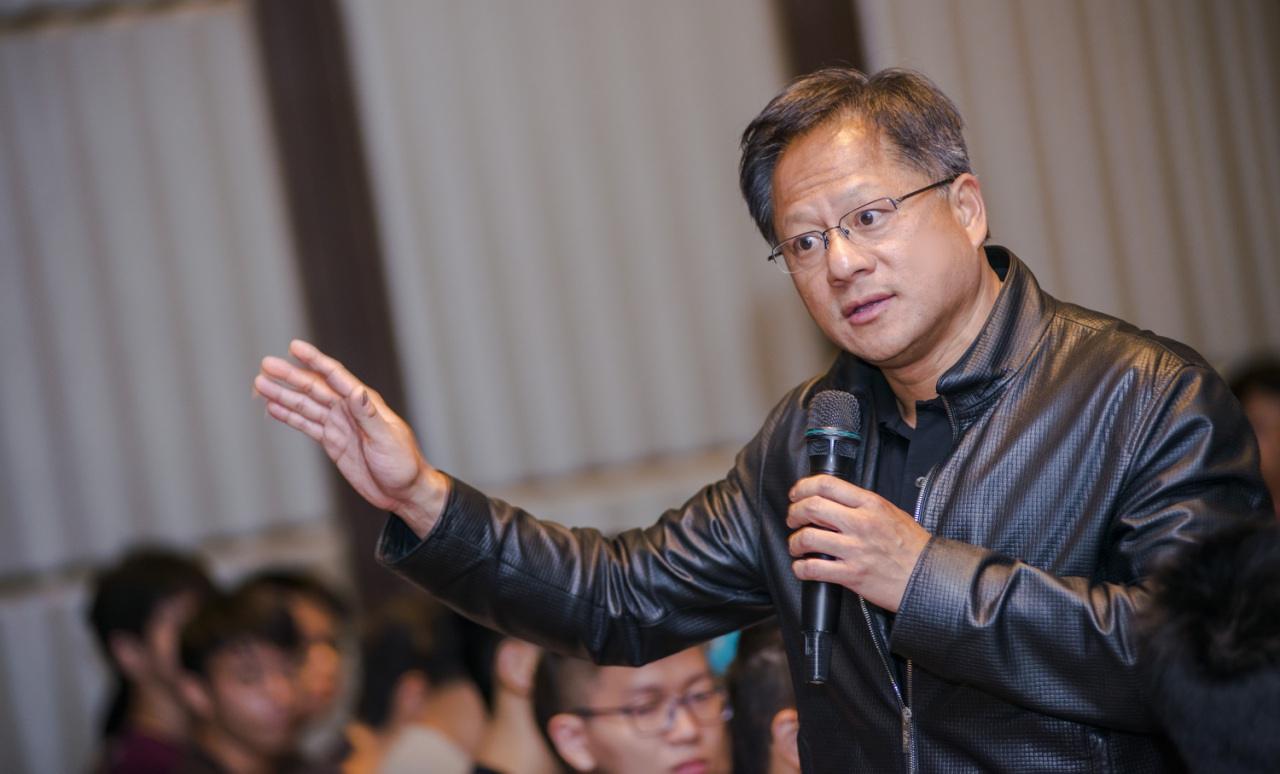
Nvidia co-founder and longtime CEO Jensen Huang resigned on November 12, 2026, ending a 33-year run that turned the company into a multi-trillion-dollar AI powerhouse. The reason seems to be Huang’s persistent, successful efforts to keep advanced Nvidia chips flowing to China from Taiwan.
The official trigger was a cascade of personal revelations: an admitted extramarital affair with Alice Huang (also known as Huang Le), a Chinese citizen and executive at Singapore-based Megaspeed International, whom US intelligence has described as a Ministry of State Security asset.
Reports of additional relationships with Nvidia executives, including healthcare VP Kimberly Powell, compounded the pressure.
The board accepted his resignation, appointed CFO Colette Kress as interim CEO, and stock value dropped sharply amid shareholder lawsuits and congressional scrutiny.
From an Eastern vantage point—particularly analyses circulating in Hong Kong and among observers skeptical of Western intelligence narratives—the affair itself is secondary.
The real drivers appear to be Huang’s persistent, successful efforts to keep advanced Nvidia chips flowing to China despite successive US export controls, combined with institutional resistance in Washington to any pragmatic accommodation with Beijing.
The Chip War Timeline That Made Huang a Target
Hong Kong-based writer and former journalist Nury Vittachi laid out the sequence in a widely shared thread. Under the Biden administration, the US in 2022 restricted advanced chips and equipment sales to China, citing military risks—even as US assessments indicated the vast majority of demand was civilian AI and computing use. Huang responded with the H20, a China-specific chip designed to comply with rules while preserving market access.
DeepSeek’s efficient open models in early 2025 demonstrated that Chinese developers could achieve high performance without massive top-tier Nvidia clusters. Huang traveled to Beijing, pledged to serve the Chinese market, and later lobbied the incoming Trump administration successfully.
By mid-2025 he appeared in China in a traditional tang suit; export clearances for H20s resumed, with the US government taking a revenue cut. Further negotiations in late 2025 and 2026 opened pathways for higher-end chips such as the H200 under similar revenue-sharing terms.
Parallel routes via third-country buyers (including Megaspeed, which purchased billions in Nvidia hardware) and black-market channels continued.
China’s own response complicated the picture: at points Beijing signaled reduced reliance on Nvidia, citing inventory write-offs and accelerating domestic alternatives such as Huawei’s Ascend series.
By 2026 an uneasy equilibrium existed—official sales under political deals, gray-market flows, and rapid Chinese catch-up in CUDA alternatives and AI efficiency. Huang repeatedly argued that blanket bans would simply force China to build its own stack faster, a view now looking prescient as Huawei roadmaps point to stronger Ascend chips in 2027–28.
Intelligence, Media, and the Honeypot Narrative
In this reading, anti-China hawks in the US intelligence community and Congress viewed Huang’s deal-making with Trump as a problem to be surgically removed. In October 2026, US officials briefed the New York Times and others on suspicions that Alice Huang was an MSS asset engaged in a honeypot operation.
No public evidence has been presented that Nvidia secrets or classified export-policy details were actually transferred.
China has rejected the claims outright: a Foreign Ministry spokesperson stated that Chinese scientific and technological progress rests on independent innovation and open cooperation, and that the US should stop fabricating espionage stories as pretexts for technology blockades.
Western media headlines quickly shifted from business reporting to calls for Huang’s resignation.
Double standards are noted by critics: other prominent tech figures have maintained high-profile personal lives without equivalent national-security framing or forced exits. Former CIA analyst Larry Johnson, in circulating commentary, has gone further and described the removal as an Israeli-linked operation aimed at installing more aligned leadership—claims that remain unverified but reflect broader skepticism in some circles about external influence on US tech policy.
Strategic Outcome
Huang’s departure weakens a key pragmatic interlocutor between Nvidia, the White House, and the Chinese market. Trump’s transactional approach—treating chip access as negotiable rather than a permanent embargo—has been undercut.
Meanwhile, the underlying dynamic Vittachi and others highlight continues: US restrictions have not halted Chinese AI progress and have instead incentivized faster domestic semiconductor development.
Nvidia retains enormous market power outside China, but the episode underscores the limits of personal scandal as a tool of industrial strategy when the structural race is technological and commercial.
The board investigation and any Justice Department or congressional probes will focus on the documented relationships and Megaspeed’s chip purchases.
From the Eastern perspective advanced in the cited commentary, however, the decisive factor was not pillow talk about nanometer architectures but Huang’s repeated success in keeping the world’s leading AI chips commercially available to the market the US most wants to constrain.