

The past week has brought a cluster of high-profile disruptions across aviation, banking, cryptocurrency, food supply systems, and digital services.
While officials attribute most incidents to aging equipment, routine maintenance issues, or known cyber risks rather than a coordinated attack, the events have fueled social media speculation and highlighted real dependencies on fragile infrastructure.
FAA Nationwide Ground Stop
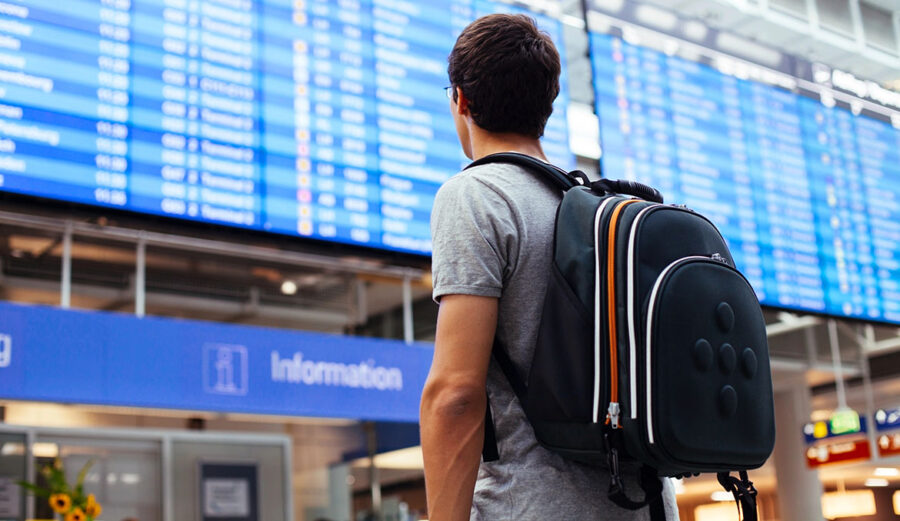
On Friday, November 13, the Federal Aviation Administration issued a rare nationwide ground stop lasting roughly four to five hours—the longest since the September 11, 2001, attacks. Instability in voice and radar communications affected up to 17 of 22 air route traffic control centers, according to BBC.
CNN writes that the transportation Secretary Sean Duffy and FAA officials blamed the outage on maintenance by contractor L3Harris upgrading decades-old copper wiring to fiber at a remote facility. Routers and switches became overloaded with data, producing inconsistent readings. Officials repeatedly stated there was “zero evidence” of a cyberattack or other nefarious activity. All airborne aircraft landed safely.
The disruption canceled or delayed thousands of flights (FlightAware tracked roughly 8,000–9,000 cancellations on Friday and over 6,000 on Saturday). Recovery was expected by late Sunday, though residual delays continued.
Banking and ATM Disruptions
Banking issues were more localized. On November 6, a system failure hit 128 Japanese shinkin banks (credit unions), disabling ATMs, counter services, and internet banking across roughly 3,430 branches for about 5–6 hours (Bloomberg). Operators attributed it to equipment failure following a system update, not a cyberattack. Services were restored the same evening.
Separately, a major Microsoft 365 outage lasting more than 24 hours (November 12–14) disrupted Outlook, Teams, Copilot, and related services for hundreds of millions of users worldwide. It delayed some high-value bank transactions that rely on email confirmations and affected government and business operations in multiple countries. Microsoft attributed it to server configuration issues after an update and ruled out a cyberattack (Ookla).
Scheduled maintenance closures occurred at some banks (including in Thailand and Australia), but no widespread global bank failures were reported.
Binance Cryptocurrency Heist
The largest crypto theft on record occurred on October 29 (slightly outside the last seven days but still dominating recent discussion): approximately $6.3–6.4 billion was stolen from Binance hot wallets across multiple blockchains. The FBI and blockchain analysts linked it to the North Korea-associated group TraderTraitor. Attackers used a months-long campaign involving fake job interviews, malware on employee laptops, and abuse of internal AI tools to reach wallet-signing systems.
Binance said it would cover all losses with company funds and reserves, froze or intercepted roughly $2.7–3 billion, and reported that the vast majority of impacted tokens had been replenished. Withdrawals resumed in stages (Ars Technica).
Refrigeration System Hacks
A wave of attacks targeted internet-connected commercial refrigeration controllers used in supermarkets and cold storage, primarily in Europe. Starting in France in mid-October and spreading to other countries in early November, attackers remotely raised temperatures (sometimes to 50°C / 122°F), spoiling large quantities of food and, in some cases, causing fires. Similar incidents affected some blood-storage facilities (quickly contained) and were reported at certain U.S. military commissaries.
The controllers (from manufacturers including Danfoss and others) suffered from known vulnerabilities such as weak authentication and outdated firmware. No group has claimed responsibility; researchers have noted possible ties to various state-linked actors, which have been denied. U.S. agencies issued warnings about the risks to food supply and equipment (Wired).
Home “smart” refrigerators carry analogous risks of network compromise, though the recent incidents focused on commercial systems.

Internet and Electricity Outages
Internet disruptions were dominated by the Microsoft 365 outage described above. Other incidents were regional and mostly tied to power problems (e.g., in parts of Ukraine linked to strikes, or grid issues in Peru and elsewhere) or local network faults.
No global internet shutdown occurred. Partial connectivity issues continued in places such as Venezuela (Worldmonitor).
Electricity outages remained at routine levels in the United States (tens of thousands of customers affected at any time, around 0.02% of total) and involved localized faults elsewhere. No major cascading blackouts were reported last week.
Social Media Theories
Social media quickly connected the events. Common theories included:
- Cyberattacks or foreign adversaries targeting critical systems.
- Problems linked to a newly deployed FAA AI-enhanced air traffic tool.
- Broader concerns about “rolling waves of chaos” from AI combined with outdated infrastructure.
- Separate circulating rumors of a November 17 “digital apocalypse” involving bank data wipes and a multi-month internet shutdown.
- The Great Reset in action, including forcing CBDC (digital currency) implementation.
Official statements consistently pointed to technical failures, maintenance, or known criminal cyber activity rather than a single coordinated campaign.
Risks and Practical Preparation
These incidents illustrate genuine risks: reliance on aging systems, insecure Internet-of-Things devices in the food chain, and concentration of digital services. Prolonged loss of cash access, heat, refrigeration, power, or internet could create secondary problems, especially for vulnerable populations.
Standard emergency preparedness remains the best response (not panic buying):
- Keep a modest cash reserve for ATMs or card networks going offline.
- Maintain at least a 72-hour supply of water, non-perishable food, and medications; longer if possible for your household.
- Have alternative heating options that are safe (and know carbon-monoxide risks); consider battery or generator backup where feasible.
- Use power banks, offline maps, and paper copies of important information.
- Update firmware and change default passwords on any internet-connected appliances.
- Follow official government and utility channels rather than unverified social media claims.
Most systems recovered within hours to a couple of days. The events underscore the value of resilient infrastructure and personal redundancy more than any imminent systemic collapse.
Sources
- BBC: How telecoms upgrade work sparked US flight chaos
- CNN: What we know about the cause of the nationwide FAA ground stop
- Worldmonitor: Internet outages around the world
- Ookla: Outages hit 128 Japan credit unions
- Ars Technica: Binance says hackers who stole billions in crypto spent months planning heist