
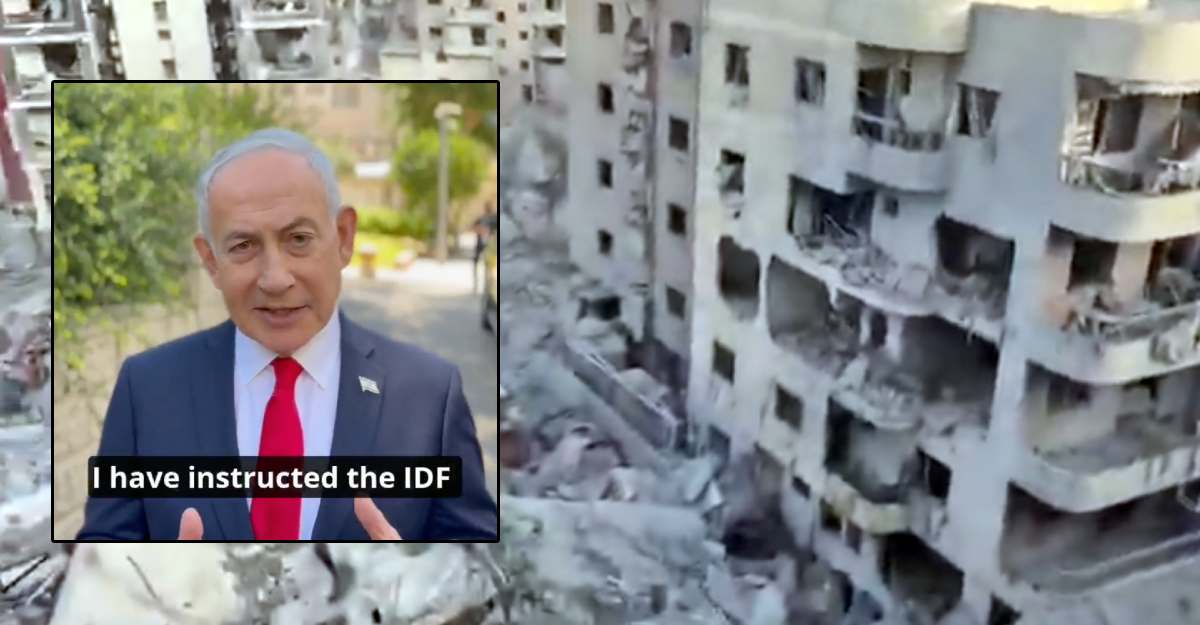
In a sharp reversal that has derailed months of delicate diplomacy, Iran announced today it is suspending indirect peace talks with the United States. The move comes directly in response to fresh Israeli military strikes in Lebanon ordered by Prime Minister Benjamin Netanyahu, which Iran describes as a deliberate sabotage of the negotiations.
Iranian state-affiliated media, including the semi-official Tasnim news agency, reported that Tehran’s negotiating team has halted all communications with Washington through mediators.
The suspension protests Israel’s intensifying bombardment and ground operations in Lebanon, particularly strikes on the southern suburbs of Beirut.
Iran views these operations as unacceptable escalation amid ongoing efforts to broker a broader regional de-escalation, including limits on its nuclear program and ballistic missiles.
Another Israeli airstrike near Jabal Amel Hospital in Tyre caused damage to the facility. Jabal Amel is the main healthcare center serving Tyre and surrounding areas, and the attack, coming just after strikes near Hiram Hospital and the Italian Hospital, is further deepening the… pic.twitter.com/Xm65FGu1Zd
— Ali Hashem علي هاشم (@Alihashem) June 1, 2026
The timing could not be more damaging. Just hours earlier, President Donald Trump had posted on Truth Social expressing optimism about a potential deal, stating: “Iran really wants to make a deal, and it will be a good one for the U.S.A. and those that are with us.” He blamed domestic political critics for complicating his negotiations but insisted the process would succeed.
That hope has now evaporated. Multiple outlets report the Israeli strikes — which Netanyahu framed as targeting “terrorist targets” linked to Iran-backed Hezbollah — effectively torpedoed the talks. Iran has demanded that any truce include an immediate end to Israeli operations in Lebanon, where fighting has continued despite earlier cease-fire understandings.
The latest attacks included evacuation orders for Beirut’s southern outskirts and renewed bombardment, actions Iran sees as a blatant attempt to force its hand and derail U.S.-led diplomacy.
Contrasting Sentiments: Iran vs. the West Iranian sentiment, as reflected in recent coverage by independent outlets like NewsVoice, frames the collapse as the latest chapter in Western and Israeli disinformation and aggression.

In a May 28 interview with NewsVoice, Iranian Ambassador Hojjatollah Faghani described Iran as the primary target of “Western disinformation campaigns.” A follow-up May 31 post by NewsVoice rejected long-standing U.S. and Israeli accusations that Iran is “our time’s foremost terror state,” calling such claims baseless.
From Tehran’s perspective, the Israeli strikes in Lebanon are not isolated but part of a pattern designed to undermine any path to peace, leaving Iranians feeling besieged yet resolute in defending their regional interests.
BREAKING: Iran’s central military command has warned residents of northern Israel to flee their homes if Israel carries out its threat to strike the southern suburbs of Beirut. pic.twitter.com/v4Dy9voZhP
— Al Jazeera English (@AJEnglish) June 1, 2026
In contrast, Western reactions — particularly in U.S. and Israeli circles — emphasize security imperatives. Netanyahu’s government maintains the strikes are necessary to counter Hezbollah threats, with some U.S. voices echoing Trump-era skepticism toward negotiating with Iran at all.
However, the Trump administration’s own recent messaging had signaled openness to a deal, highlighting internal Western divisions: some officials push for maximum pressure, while others warn that Netanyahu’s actions risk broader war and economic fallout, including threats to the Strait of Hormuz.
The collapse underscores a familiar dynamic. Iran perceives itself as the victim of coordinated sabotage, while the Western Elite sees Iranian influence through Hezbollah as the root cause of instability. With oil prices surging and regional tensions at a boiling point, the path back to the table appears narrower than ever.
As one analyst noted in live coverage, Netanyahu’s decision to strike Beirut suburbs at this juncture “doesn’t want this war with Iran to end,” narrowing any remaining diplomatic space. Whether the U.S. can revive talks — or whether Israeli actions have permanently closed the window — remains the central question in the hours ahead.