
The US- and Israeli-backed war against Iran drags into its third month. The Trump administration is stuck in the Hormuz Trap. What was sold as a swift victory, portrayed by Israeli intelligence as a four-day war, has instead become a grinding test of endurance.
With global oil flows at risk and the Strait of Hormuz emerging as the decisive battlefield, Tehran is signalling it has no intention of surrendering to economic pressure or naval blockade.
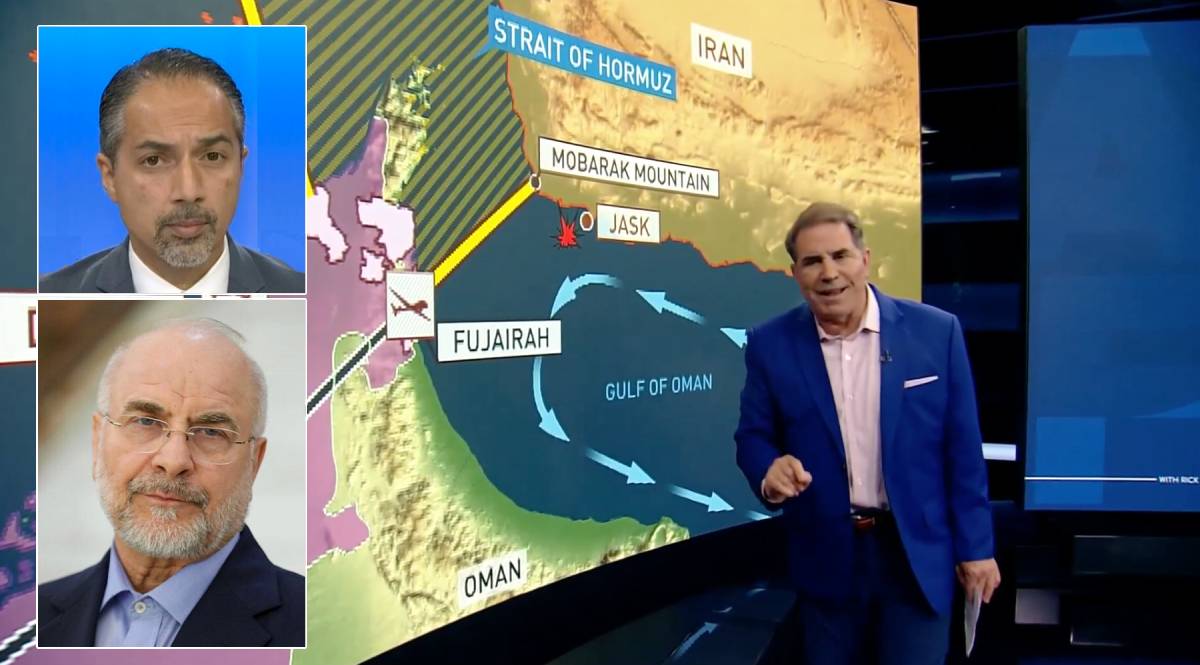
Iran has now expanded its declared control zone in the Gulf beyond the Strait of Hormuz itself, directly threatening the UAE’s Fujairah pipeline, the very bypass built to circumvent the chokepoint. Rick Sanchez reported that this move renders the workaround ineffective, placing oil, LNG, and fertiliser exports under Iranian leverage.
What the White House calls “Project Freedom” to escort tankers through the strait, Tehran views as an act of economic warfare that it is now countering on its own terms. Insurance premiums for Gulf shipping are already repricing upward, and the ripple effects on global energy markets are unmistakable.
Inside Iran, the posture is one of defiance rather than desperation. In a rare audio message, Parliament Speaker Mohammad Bagher Ghalibaf told the public the war has entered “a new phase,” with the enemy pursuing surrender through blockade and economic strangulation.
Military and even terrorist attacks remain possible, he warned, but “final victory” would elevate Iran to a major international player. He appealed to citizens of all political and religious backgrounds, and Iranians abroad, to rally behind the war effort. This is not the language of a government on the brink; it is a call for prolonged resistance.
Iranian society itself appears far more resilient than Western narratives suggest. Iranian-American journalist Christopher Helali, after travelling the country during the height of the crisis, described a people continuing daily life, craftsmen at work, families gathering, prayers observed, across diverse communities from Tabriz to Bandar Abbas.
“Life goes on,” he noted, highlighting synagogues, churches, and mosques coexisting. “Iranian society is far more resilient than the West ever imagined,” he said, accusing Western media of falling victim to its own propaganda.
The Hormuz Trap
The Trump administration’s response has been marked by legal manoeuvring and hints of escalation. Former diplomat Jim Jatras, speaking to Daniel Davis, described the abrupt end of “Operation Epic Fury” as a cynical reset of the war-powers clock. Jatras warned that the White House may be preparing a new phase of bombing “at a higher-level intensity” or even limited ground operations to seize strategic Gulf positions. “I’m 90 percent sure some kind of attack is in the works,” he said, dismissing optimistic talk of an imminent end as “smoke, mirrors and fog.”
Analyst Trita Parsi captured the bind sharply:
“To say that Trump underestimated Iran is an understatement. The Israelis sold him, and he ended up believing, a narrative that portrayed Iran as so weak that the war would be won within 4 days. Sixty plus days later, Trump is still stuck in the mess Israel sold him.”
Both sides, Parsi noted, actually need a deal: Iran for sanctions relief to lock in its battlefield gains, Trump to extract himself before the conflict further damages his presidency and the GOP. Yet Washington’s pattern of rebranding the same war under new names (from “Epic Fury” to “Project Freedom” to the newly announced “Battle of Hormuz”) suggests domestic legal and political theatre rather than genuine diplomacy.
The rhetoric from the top has only heightened alarm. In an interview with George Galloway, Professor Seyed Mohammad Marandi described Trump’s threats to “blow Iran from the face of the earth” as planning “the most horrific holocaust in history.” Western indifference, Marandi argued, stems from decades of portraying Iranians as sub-human. “We’ve been portrayed as sub-human for so long that it doesn’t bother anyone,” he said.
Meanwhile, unconditional US support for Israel continues to widen the regional fire. Redacted News reported Israeli strikes on civilian infrastructure in Beirut as the Lebanon ceasefire collapses, warning of a “Gaza 2.0” while the Trump administration offers blanket backing. The broader Middle East picture is one of expanding destruction, with American policy appearing reactive and increasingly detached from strategic reality.
Critics argue the United States has once again allowed itself to be drawn into a conflict based on inflated promises of quick success, only to confront a determined adversary that has absorbed sanctions, isolation, and bombardment for decades.
Tehran’s ability to project power into the Strait of Hormuz, despite heavy losses, demonstrates that military superiority on paper does not automatically translate into control on the water or in the court of global opinion.
What is already clear is that the war has not gone according to the Washington-Tel Aviv script. Iran is not collapsing. The Strait is not open on Washington’s terms.