
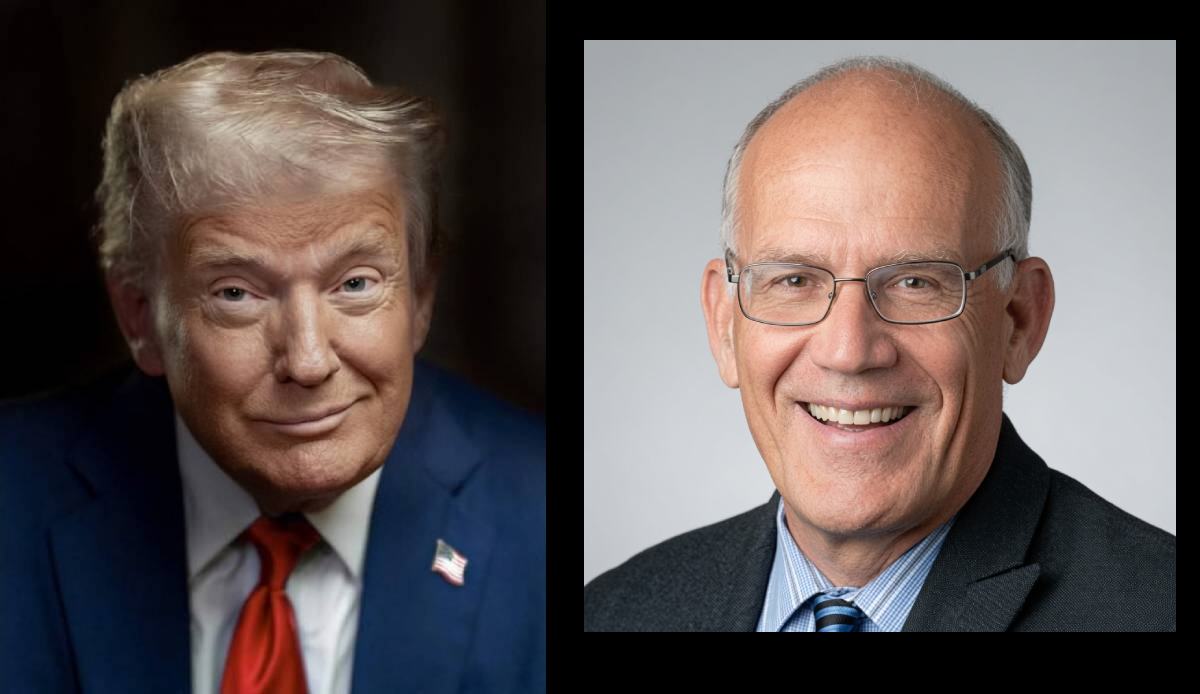
In a July 15 opinion piece for The Epoch Times, conservative historian Victor Davis Hanson declared that the world has grown “radically different” and far more aligned with U.S. interests than it was five years ago, crediting Trump’s unpredictable diplomacy.
Victor Davis Hanson, a senior fellow at Stanford’s Hoover Institution and author of The Case for Trump, argued that Trump’s “art-of-the-deal” approach, often described as boisterous or crude, has compelled allies to shoulder more defense burdens while weakening adversaries such as Russia, China, and Iran.
Hanson’s Case: Tangible Gains Through Disruption
In the transcript of his July 14 podcast, Hanson pointed to several developments:
Europe and NATO: Nearly all 32 members are meeting or exceeding the 2% of GDP defense spending target, with pledges aiming for 5%. European allies are ramping up investments, reexamining energy policies, and tightening borders.
Latin America: A wave of right-leaning governments in countries including Argentina, Chile, Ecuador, Peru, and Colombia has diminished Chinese and Russian influence, reviving Monroe Doctrine-style dynamics focused on secure borders and free-market policies.
Adversaries: Russia is economically and militarily strained; China faces losses in Belt and Road projects and oil access; Iran has seen its military capabilities degraded.
“The world that we’re looking at today is radically different than that of just five years ago… much more in the interest of the United States,” Hanson wrote, attributing most of the change to Trump’s unpredictability.
Recent data lend partial support to parts of this view. NATO’s European allies and Canada increased defense spending by about 20% in real terms in 2025, with further rises projected and commitments to higher long-term targets under Trump’s pressure.
Latin America has indeed experienced a notable rightward political shift, with conservative or populist leaders winning or consolidating power in multiple countries in 2025–2026.
Counter-Evidence from Global Public Opinion
However, major international surveys released around the same time paint a markedly less favorable picture of America’s global standing.
A Pew Research Center survey of 36 countries (conducted February–May 2026, ~42,000 respondents) found a median of just 37% favorable views of the United States, compared to 57% unfavorable. Favorable ratings declined significantly in 15 countries with available trends and hit or approached historic lows in several traditional allies, including Canada, France, Germany, Italy, South Korea, and the UK.
Confidence in Trump’s leadership of world affairs stood at a median of only 23%, with roughly three-quarters expressing no confidence. Perceptions of the U.S. as a reliable partner have dropped sharply since 2022.
A subsequent Pew analysis showed that in most of the 36 countries, China is now viewed more favorably than the United States—a reversal from prior years.
Other polls, including those from Ipsos and the Alliance of Democracies, have similarly registered declining U.S. reputation abroad.
Why Hanson Sees a Pro-American Shift
Hanson’s perspective aligns with his long-standing advocacy for Trump. As a military historian and classicist, he prioritizes hard-power outcomes, defense budgets, adversary constraints, and government alignments over public sentiment or soft power.
He has defended Trump’s style as “uncouth authenticity” that disrupts entrenched norms and forces better burden-sharing, arguing that short-term relational friction yields long-term strategic gains. Critics might see this as confirmation bias from a committed supporter, but Hanson frames it as a historically grounded view: strong, unpredictable leadership compels change.
A Tale of Two Metrics
Hanson’s analysis highlights real shifts in government behavior and security spending that could strengthen U.S. leverage. Yet the Pew data and similar surveys underscore widespread public skepticism, potentially fueled by Trump’s personal style, tariff policies, immigration enforcement, and specific foreign policy decisions.
Whether the world is truly becoming “more pro-American” depends on the definition: pragmatic elite alignments and military realities on one hand, versus broad public goodwill on the other. As of mid-2026, the two appear to be moving in opposite directions.
This is an AI analysis
Sources and related
- Epoch Times: The World Is Becoming More Pro-American Than It Has Been in Years
- Euro News: NATO’s European allies and Canada boosted military spending by 20% in 2025
- IPSOS: Latest U.S. opinion polls [2024/2025]
- Pew Research Center: Trump Gets Negative Reviews Internationally as Fewer Say U.S. Is a Reliable Partner
- Bulwark: As America Is Losing Friends, China Is Courting Them